


Note: Ingredients listed on restricted chemical lists
EC/CAS
63148-62-9
Name of the chemical
polydimethylsiloxane (Mw > 6 800 Da)
Concentration
1-5%
EC/CAS
7429-90-5
Name of the chemical
Aluminium
Concentration
0.1-1%
EC/CAS
1333-86-4
Name of the chemical
carbon black
Concentration
0.1-1%
General Information
Version
1.1
Revision date
2025-05-30
Product name
CD 85g
supplier name
ITW Polymers & Fluids (Aust)
Emergency telephone
1800 033 111
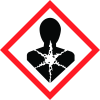
Icons in SDS


Company Information
company name
ITW Polymers & Fluids (Aust)
e-mail address of the competent person responsible for the Safety Data Sheet
sales@itwpf.com.au, sales@itwpf.co.nz
GHS Information
Signal word
Danger
Hazard Codes
Hazard statements (CLP)
H317, H319, H350, H370, H373
Hazard statements
Code
Statements
H317
May cause an allergic skin reaction
Section 2
SECTION 2: Hazards identification
This material is hazardous according to the criteria of Safe Work Australia GHS 7.
Signal word
Danger Hazard Classifications Eye Irritation - Category 2A Sensitisation - Skin - Category 1 Carcinogenicity - Category 1B Specific Target Organ Toxicity (Single Exposure) - Category 1 Specific Target Organ Toxicity (Repeated Exposure) - Category 2
Hazard statements
H317 May cause an allergic skin reaction. H319 Causes serious eye irritation. H350 May cause cancer. H370 Causes damage to organs. H373 May cause damage to organs through prolonged or repeated exposure.
Prevention
P102 Keep out of reach of children. P103 Read carefully and follow all instructions. P202 Do not handle until all safety precautions have been read and understood. P260 Do not breathe dust, fume, gas, mist, vapours or spray. P264 Wash hands, face and all exposed skin thoroughly after handling. P270 Do not eat, drink or smoke when using this product. P272 Contaminated work clothing should not be allowed out of the workplace. P280 Wear protective gloves/protective clothing including eye/face protection.
Response
P101 If medical advice is needed, have product container or label at hand. P302+P352 IF ON SKIN Wash with plenty of water and soap. P305+P351+P338 IF IN EYES Rinse cautiously with water for several minutes. Remove contact lenses, if present and easy to do. Continue rinsing P308+P311 IF exposed or concerned: Call a POISON CENTER/doctor (insert appropriate source of emergency medical advice). P308+P313 IF exposed or concerned: Get medical advice/attention. P314 Get medical advice/attention if you feel unwell. P333+P313 If skin irritation or rash occurs: Get medical advice/attention. P337+P313 If eye irritation persists: Get medical advice/attention. P362+P364 Take off contaminated clothing and wash it before reuse
Storage
P405 Store locked up.
Precautionary statements
P501 Dispose of contents/container in accordance with local, regional, national and international regulations. Poison Schedule: Not Applicable DANGEROUS GOOD CLASSIFICATION
2.1 Classification of the substance or mixture
Eye Irritation - Category 2A Sensitisation - Skin - Category 1 Carcinogenicity - Category 1B Specific Target Organ Toxicity (Single Exposure) - Category 1 Specific Target Organ Toxicity (Repeated Exposure) - Category 2 Hazard Statements H317 May cause an allergic skin reaction. H319 Causes serious eye irritation. H350 May cause cancer. H370 Causes damage to organs. H373 May cause damage to organs through prolonged or repeated exposure.



