

Note: Ingredients listed on restricted chemical lists
EC/CAS
1310-73-2
Name of the chemical
sodium hydroxide
Concentration
N/A
EC/CAS
7732-18-5
Name of the chemical
Water, distilled, conductivity or of similar purity H2O
Concentration
N/A
General Information
Revision date
2017-04-18
Product name
APPLIED HYPOCHLOR
Substance name
APPLIED HYPOCHLOR
1.2.1 Relevant identified uses
of Applied 4-972 is a liquid chlorine used for general sanitation in the Dairy
Icons in SDS

Company Information
company name
itw polymers & fluids
e-mail address of the competent person responsible for the Safety Data Sheet
info@itwpf.com.au
GHS Information
Signal word
DANGER
Section 2
2.1 Classification of the substance or mixture
Hazardous according to the criteria of the Globally Harmonised System of the Classification and Labelling of Chemicals (GHS) substance/mixture Skin Corrosion/Irritation: Category 1C Eye Damage/Irritation: Category 1
Signal word
DANGER
Hazard statements
Causes severe skin burns and eye damage
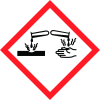
Hazard pictograms
Corrosion
Prevention
Do not breathe mist, vapours or spray. Do not get in eyes, on skin, or on clothing. Wash hands thoroughly after handling. Do not eat, drink or smoke when using this product. Wear protective gloves, protective clothing, eye protection and face protection as required.
Response
IF SWALLOWED: rinse mouth. Do NOT induce vomiting. IF ON SKIN: Wash with plenty of soap and water. IF IN EYES: Rinse cautiously with water for several minutes. Remove contact lenses, if present and easy to do. Continue rinsing. IF INHALED: Remove victim to fresh air and keep at rest in a position comfortable for breathing. For advice, contact Poisons Information Centre (AUS 131 126; NZ 0800 764 766) or a doctor. Precautionary Store in a well-ventilated place. Keep container tightly closed.
Storage
Store locked up. Container has vented cap to allow oxygen to dissipate. Check regularly to ensure caps are free from blockages. Blockages may cause containers to swell and burst. Dispose of contents/container in accordance with local/regional/national/international regulations.
HSNO Classifications
Classified as a Dangerous Good according to NZS 5433:2012 Transport of Dangerous Goods on Land. Classified as hazardous according to criteria in the HS (Minimum Degrees of Hazard) Regulations 2001. Subclass 8.2 Category C - Substances that are corrosive to dermal tissue. Subclass 8.3 Category A - Substances that are corrosive to ocular tissue. Subclass 9.1 Category B - Substances that are ecotoxic in the aquatic environment. Approval Number: HSR004692 Subclass 9.1 Category B - Substances that are ecotoxic in the aquatic environment. Approval Number: HSR004692



