



Note: Ingredients listed on restricted chemical lists
EC/CAS
101-68-8
Name of the chemical
4,4’-Methylenediphenyl diisocyanate
Concentration
90 - 100
EC/CAS
26447-40-5
Name of the chemical
Methylenediphenyl diisocyanate (see also specific isomers)
Concentration
1 - 10
General Information
Version
Notes
Revision date
2015-07-28
Product name
DEVCON Dev-Thane 5 grey [1 1] | Manufacturer | Revison 9/10/2015
Product name
DEVCON Dev-Thane 5 grey [1 1] | Manufacturer | Revison 9/10/2015
Identification on the label/Trade name
DEV-THANE I RESIN
Manufacturer Name
ITW
Emergency telephone
(800) 424-9300
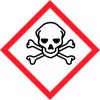
Icons in SDS


Company Information
company name
ITW
GHS Information
Signal word
DANGER
Hazard Codes
Hazard statements (CLP)
H315, H317, H319, H330, H334, H335, H373
Hazard statements
Code
Statements
H315
Causes skin irritation
Section 2
SECTION 2: Hazards identification
Signal word
DANGER. GHS Class: Acute Inhalation Toxicity. Category 2. Respiratory sensitisation. category 1. Specific Target Organ Toxicity -STOT Repeated exposure RE. Category 2 (Inhalation, respiratory system). Eye Irritation. Category 2. Skin Irritation. Category 2. Skin Sensitization. category 1. Specific Target Organ Toxicity - STOT, Single Exposure SE. Category 3.
Hazard statements
H330 - Fatal if inhaled. H334 - May cause allergy or asthma symptoms or breathing difficulties if inhaled. H373 - May cause damage to organs through prolonged or repeated exposure. H319 - Causes serious eye irritation. H315 - Causes skin irritation. H317 - May cause an allergic skin reaction. H335 - May cause respiratory irritation.
Precautionary statements
P260 - Do not breathe dust/fume/gas/mist/vapours/spray. P261 - Avoid breathing dust/fume/gas/mist/vapours/spray. P264 - Wash hands thoroughly after handling. P264 - Wash hands thoroughly after handling. P271 - Use only outdoors or in a well-ventilated area. P272 - Contaminated work clothing should not be allowed out of the workplace. P280 - Wear protective gloves/protective clothing/eye protection/face protection. P284 - In case of inadequate ventilation wear respiratory protection. P302+P352 - IF ON SKIN: Wash with plenty of water. P304+P340 - IF INHALED: Remove victim to fresh air and keep at rest in a position comfortable for breathing. P305+P351+P338 - IF IN EYES: Rinse cautiously with water for several minutes. Remove contact lenses, if present and easy to do. Continue rinsing. P310 - Immediately call a POISON CENTER or doctor/physician. P312 - Call a POISON CENTER or doctor/physician if you feel unwell. P314 - Get medical advice/attention if you feel unwell. P320 - Specific treatment is urgent (see ... on this label). P321 - Specific treatment (see ... on this label). P332+P313 - If skin irritation occurs: Get medical advice/attention. P333+P313 - If skin irritation or rash occurs: Get medical advice/attention. P337+P313 - If eye irritation persists: Get medical advice/attention. P342+P311 - If experiencing respiratory symptoms: Call a POISON CENTER or doctor/physician. P362+P364 - Take off contaminated clothing and wash it before reuse. P403+P233 - Store in a well-ventilated place. Keep container tightly closed. P405 - Store locked up. P501 - Dispose of contents/container in accordance with Local, State, Federal and Provincial regulations. Hazards not otherwise classified that have been identified during the classification process:
Principle Routes of Exposure
Eyes. Skin. Inhalation. Ingestion.
Potential health effects
Eye: Can cause moderate irritation, burning sensation, tearing, redness, and swelling. Overexposure may cause lacrimation, conjunctivitis, corneal damage and permanent injury. Skin: Can cause skin irritation; itching, redness, rashes, hives, burning, and swelling. Allergic reactions are possible. May cause skin sensitization, an allergic reaction, which becomes evident on reexposure to this material. Inhalation: MDI vapors at concentrations above the TLV can irritate the mucous embranes in the respiratory tract (nose, throat, lungs) causing a runny nose, soar throat, coughing, chest discomfort, shortness of breath and reduced lung function. Persons with pre-existing, nonspecific bronchial hyperreactivity can respond to concentrations below TLV with similar symptoms as well as asthma attack. Overexposure to isocyanates has also been reported to cause lung damage (including decrease in lung function) which may be permanent. Ingestion: Causes irritation, a burning sensation of the mouth, throat and gastrointestinal tract and abdominal pain.
Potential chronic health
Prolonged skin contact may lead to burning associated with severe reddening, swelling, and possible tissue destruction. Signs/Symptoms: Overexposure can cause headaches, dizziness, nausea, and vomiting. Target Organs: Eyes. Skin. Respiratory system. Digestive system. Aggravation of Pre-Existing Individuals with pre-existing skin disorders, asthma, allergies or known sensitization may be more Conditions: susceptible to the effects of this product. Isocyanate exposure levels must be monitored. Medical supervision of all employees who handle or come in contact with isocyanates is recommended (i.e. FEV, FVC). This should include pre-employment and periodic medical examinations. Persons with asthmatic-type conditions, chronic bronchitis, other chronic respiratory diseases, recurrent skin eczema or sensitization should be excluded from working with this product. Once sensitized no further exposure can be permitted.



