

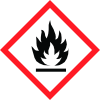

Note: Ingredients listed on restricted chemical lists
EC/CAS
25068-38-6
Name of the chemical
4,4'-Isopropylidenediphenol, oligomeric reaction products with 1-chloro-2,3-epoxypropane
Concentration
N/A
EC/CAS
94-36-0
Name of the chemical
Dibenzoyl peroxide
Concentration
N/A
General Information
Revision date
2018-04-23
Product name
MA205HVF Activator
Product Synonyms
None
Manufacturer Name
ITW
Emergency telephone
(800) 424-9300
Icons in SDS
Company Information
company name
ITW
GHS Information
Signal word
Danger
Hazard Codes
Hazard statements (CLP)
H242, H315, H317, H319
Hazard statements
Code
Statements
H242
Heating may cause a fire
Section 2
Signal word
WARNING. GHS Class: Organic peroxides. Type B. Eye Irritation. Category 2. Skin Irritation. Category 2. Skin Sensitization. category 1.
Hazard statements
H242 - Heating may cause a fire. H319 - Causes serious eye irritation. H315 - Causes skin irritation. H317 - May cause an allergic skin reaction.
Precautionary statements
P210 - Keep away from heat/sparks/open flames/hotsurfaces. — No smoking. P234 - Keep only in original container. P235 - Keep cool. P240 - Ground/Bond container and receiving equipment. P261 - Avoid breathing dust/fume/gas/mist/vapours/spray. P264 - Wash hands thoroughly after handling. P272 - Contaminated work clothing should not be allowed out of the workplace. P280 - Wear protective gloves/protective clothing/eye protection/face protection. P302+P352 - IF ON SKIN: Wash with plenty of water. P305+P351+P338 - IF IN EYES: Rinse cautiously with water for several minutes. Remove contact lenses, if present and easy to do. Continue rinsing. P321 - Specific treatment (see ... on this label). P332+P313 - If skin irritation occurs: Get medical advice/attention. P333+P313 - If skin irritation or rash occurs: Get medical advice/attention. P337+P313 - If eye irritation persists: Get medical advice/attention. P362+P364 - Take off contaminated clothing and wash it before reuse. P370+P378 - In case of fire: Use dry chemical, carbon dioxide to extinguish small fires. Use water for large fires. P403 - Store in a well-ventilated place. P410 - Protect from sunlight. P411 - Store at temperatures not exceeding …°C/…°F. P420 - Store separately. P501 - Dispose of contents/container in accordance with Local, State, Federal and Provincial regulations. Hazards not otherwise classified that have been identified during the classification process:
Principle Routes of Exposure
Eyes. Skin. Inhalation. Ingestion.
Potential health effects
Eye: Can cause moderate irritation, burning sensation, tearing, redness, and swelling. Overexposure may cause lacrimation, conjunctivitis, corneal damage and permanent injury. Skin: Can cause skin irritation; itching, redness, rashes, hives, burning, and swelling. Allergic reactions are possible. May cause skin sensitization, an allergic reaction, which becomes evident on reexposure to this material. Inhalation: Respiratory tract irritant. High concentration may cause dizziness, headache, and anesthetic effects. Ingestion: Causes irritation, a burning sensation of the mouth, throat and gastrointestinal tract and abdominal pain.
Potential chronic health
Prolonged skin contact may lead to burning associated with severe reddening, swelling, and possible tissue destruction. Signs/Symptoms: Overexposure can cause headaches, dizziness, nausea, and vomiting. Target Organs: Eyes. Skin. Respiratory system. Digestive system. Aggravation of Pre-Existing Individuals with pre-existing skin disorders, asthma, allergies or known sensitization may be more Conditions: susceptible to the effects of this product.



