



Note: Ingredients listed on restricted chemical lists
EC/CAS
14808-60-7
Name of the chemical
Silica, crystalline
Concentration
0.1-1
EC/CAS
239-701-3/15625-89-5
Name of the chemical
2-ethyl-2-[[(1-oxoallyl)oxy]methyl]-1,3-propanediyl diacrylate; 2,2-bis(acryloyloxymethyl)butyl acrylate; trimethylolpropane triacrylate
Concentration
1-5
EC/CAS
202-851-5/100-42-5
Name of the chemical
Styrene ( Vinyl benzene )
Concentration
10-30
EC/CAS
14807-96-6
Name of the chemical
Talc
Concentration
10-30
EC/CAS
13463-67-7
Name of the chemical
Reaction mass of titanium dioxide and silver chloride
Concentration
0.5-1.5
EC/CAS
7631-86-9
Name of the chemical
Silver adsorbed on silicon dioxide
Concentration
<0.1
EC/CAS
128-37-0
Name of the chemical
2,6-di-tert-butyl-p-cresol
Concentration
<0.1
EC/CAS
265-150-3/64742-48-9
Name of the chemical
Naphtha (petroleum), hydrotreated heavy
Concentration
<0.01
EC/CAS
203-625-9/108-88-3
Name of the chemical
Toluene
Concentration
<0.01
EC/CAS
204-617-8/123-31-9
Name of the chemical
1,4-Dihydroxybenzol (790/2009)
Concentration
<0.01 =10
EC/CAS
200-753-7/71-43-2
Name of the chemical
Benzol
Concentration
<0.01
General Information
Revision date
2017-06-20
Product name
Slick Sand
Product Synonyms
None Known
1.2.1 Relevant identified uses
Polyester Primer Surfacer
Emergency telephone
(NPIS
Icons in SDS


Company Information
company name
ITW Evercoat
e-mail address of the competent person responsible for the Safety Data Sheet
director.birmingham.unit@npis.org
GHS Information
Signal word
Danger
Hazard Codes
Hazard statements (CLP)
H225, H315, H317, H319, H341, H350, H361fd, H370, H372
Hazard statements
Code
Statements
H225
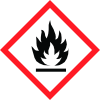
Highly Flammable liquid and vapour
Section 2
CLP CLASSIFICATION
Classification according to Regulation (EC) No 1272/2008 [CLP]: ]] Skin Sensitisation Category 1 Carcinogenicity Category 1A Specific Target Organ Systemic Toxicity (STOT) - Single Exposure Category 1 Specific Target Organ Systemic Toxicity (STOT) - Repeated Exposure Category 1 Flammable Liquid Category 2 Skin Corrosion/Irritation Category 2 Serious Eye Damage/Eye Irritation Category 2 Germ Cell Mutagenicity Category 2 Reproductive Toxicity Category 2
2.2 Label elements
Labelling according to Regulation (EC) No 1272/2008 [CLP]:
Signal word
Danger
Hazard statements
H225 - Highly flammable liquid and vapour H315 - Causes skin irritation H317 - May cause an allergic skin reaction H319 - Causes serious eye irritation H341 - Suspected of causing genetic defects H350 - May cause cancer H361fd - Suspected of damaging fertility Suspected of damaging the unborn child H370 - Causes damage to organs H372 - Causes damage to organs through prolonged or repeated exposure
Precautionary statements
P201 - Obtain special instructions before use. P210 - Keep away from heat, hot surfaces, sparks, open flames and other ignition sources. No smoking. P233 - Keep container tightly closed. P260 - Do not breathe dust/fume/gas/mist/vapours/spray. P280 - Wear protective gloves/protective clothing/eye protection/face protection. P303+P361+P353 - IF ON SKIN (or hair): Take off immediately all contaminated clothing. Rinse skin with water/shower.
Supplemental label elements
EUH208 - Contains Trimethylolpropane triacrylate. May produce an allergic reaction.
2.3 Other hazards
Reports have associated repeated and prolonged occupational overexposure to solvents with permanent brain and nervous system damage.



