


Note: Ingredients listed on restricted chemical lists
EC/CAS
98-82-8
Name of the chemical
Cumol (2022/692)
Concentration
N/A
EC/CAS
91-20-3
Name of the chemical
Naphthalene,3
Concentration
N/A
General Information
Revision date
2019-07-03
Product name
IPAC 9893
Product name
IPAC 9893
Identification on the label/Trade name
o/o
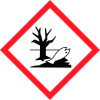
Icons in SDS


Company Information
company name
IPAC, lnc
GHS Information
Signal word
Warning
Hazard Codes
Hazard statements (CLP)
H317
Hazard statements
Code
Statements
H317
May cause an allergic skin reaction
Section 2
Hazard statements
see section 1 6 First-aid measures general Never give anything by mouth to an unconscious person. lf you feel unwell, seek medical advice (show the label rivhere possible). First-aid measures after inhalation lf inhaled and if breathing is difficult, remove victim to fresh air and keep at rest in a position comfortable for breathing. Allow the victim to rest. First-aid measures after skin contact Wash skin thoroughly with mild soap and water. Wash contaminated clothing before reuse. lf skin initation or rash occurs: Get medical advice/aftention. First-aid measures after eye contact Rinse cautiously with water for several minutes. Remove contact lenses, if present and easy to do. Continue rinsing. lmmediately call a POISON CENTERI/doctor. First-aid measures afier ingestion Rinse mouth. Do NOT induce vomiting. Obtain emergency medical attention. Symptoms/effects after skin contacl Causes skin initation. May cause an allergic skin reaction. Symptoms/effects after eye contact Causes serious eye irritation. Treat symptomatically. ffii#rritf,,l Suitable extinguishing media Foam. Dry powder. Carbon dioxide. Water spray. Sand. Unsuitable extinguishing media Do not use a heavy water stream. ffi$fitub.}r Fire hazard Buming produces irritating, toxic and noxious fumes. Reactivity No dangerous reactions known. till:?LW Firefi ghting instructions Use water spray or fog for cooling exposed containers. Exercise caution when fighting any chemical fire. Prevent fire fighting water from entering the environment. Protection during fi refi ghting Do not enter fire area without proper protective equipment, including respiratory protection. Wear a self contained breathing apparatus. Wear fire/flame resistanvretardant clothing. ffiitii"+ General measures Avoid all eye and skin contact and do not breathe vapour and mist. Ensure adequate ventilation. Safety shouers and eye wash stations should be located near areas with splash hazards. Stop leak without risks if possible. Use personal protective equipment as required. 03t07t2019 EN (English) 6.1,1. For non-emergency peeonngl Protective equipment Refer to section 8.2. Emergency procedures Evacuate unnecessary personnel. 6.1.2. For emergency responderc Protective equipment Refer to section 8.2. Emergency procedures Ventilate area. Prevent entry to sewers and public waters. Notify authorities if liquid entes seurers or public waters. Avoid release to lhe environment. contain any spitls with dikes or absorbents to prevent migralion and entry into sewers or sreams. Methods for cleaning up So.ak up spills withJ inert solids, such as clay or diatomaceous earth as soon as possible. Collect spillage. Store away fiom other materials. See Heading 8 Exposure controls and personal protection. Precautions for safe handling wash hands. and other e&osed areas. with mild soap and water before eating, drinking or smoking a$ 1fien baving work. Provide good ventiiation in process area to-prevent formation of vapour. Avoid all eye and skin contact and do not breathe vapour and mist. Hygiene measures Do not eat, drink or smoke wtren using this product. Take ofi immediately all contaminated clothing and wash it before reuse. Keep only in the original container in a cool well ventilated place. Keep container closed when not in use. Incompatible products Strong bases. Strong acids. Strong oxidizers. Incompatible materials Sources of ignition. Direct sunlight. mono, md dl€A,f o.alffl efi{t Appropriate engineering controls l .111e^1'lS. jT, _or:pTy. Av.oid sptashing. Emergency eye wash fountains and safety H ig i _?."_1y.1'lilf._i"Jl, provide immediate vicinity of any potential exposure. Ensure sood ventilation of the work station. locat exhaust'or geneial room ventilation. Environmental exposure controls Prevent leakage or spillage. prevent contaminated water run-off. Personal protective equipment: Avoid all unnecessary eposure- Hand protection: 03t07t2019 EN (English) Wear suitable gloves re$istant to chemical penetration. nitrile rubber gloves Eye protection: tightly fitting safety goggles. Use splash goggles wtren eye contac{ due to splashing is possible. Face shield Skin and body protection: Wear suitable protective clothing Respi ratory protection In case of inadequate ventilation wear respiratory protec{ion. Use an approved respirator equipped with oiUmist caftridges.
Further information
Do not eat, drink or smoke during use. Physical state Lhuid Colour No data available Odour No data available Odour threshold No datra available pH No data available Melting point No data available Frcezing point No data available Boiling point No data available Flash point 97 "C Relative evaporation rate (butylacetate=1 ) No data available Flammability (solid, gas) Non flammable. Vapour pressure No data available Relative vapour density at 20'C No data available Relalive density No data available Density 7.7 lb/US gal Solubility No data available Log Pow No data available Auto-ignition temperature No data available Decomposition temperature No data available Viscosity, kinematic 40 mm?s @ 40'C Viscosity, dynamic No data available Erplosive limits No data available Elplosive properties No data available Oxidising properties No data available No additional information available No dangerous reactions known. Stable under normal conditions. Hazadous polymerization will not occur. Direct sunlight. Extremely high or lolv temperatures' o3to7t2019 EN (English) IPAG 9893 Strong acids. Strong bases. Strong oxidizers Carbon monoxide. Carbon dioxide. Acute toxicity (oral) Not classified Acute toxicity (dermal) Not classified Acute toxicity (inhalation) Not classified Avoid release to the environment. Waste disposal recommendations Dispose in a safe manner in accordance with local/national regulations. Ecology - waste materials Avoid release to the environment. Department of Transportation (DOT) ln accordance with DOT Not regulated. Transport by sea UN 3082 ENVIRONMENTALLY HAZARDOUS SUBSTANCE, L|QUlD, N.O.S. Transport document description (IMDG) (Oleylamine), 9, III, MARINE POLLUTANT UN-No. (IMDG) 3082 Proper Shipping Name (IMDG) ENVIRONMENTALLY HAZARDOUS SUBSTANCE, LIQUID, N.O,S. Class (IMDG) 9 - Miscellaneous dangerous substances and articles Packing group (IMDG) lll - substanecs presenting low danger Limited quantities (IMDG) 5L Air transport Transport document description (IATA) UN 3082 ENVIRONMENTALLY HAZARDOUS SUBSTANCE, LlQUlD, N.O'S. (Oleylamine)' 9' ltl UN-No. (IATA) 3082 Proper Shipping Name (IATA) ENVIRONMENTALLY HAZARDOUS SUBSTANCE, LIQUID' N-O.S. Class (IATA) 9 - Miscellaneous Dangerous Goods 03t0712019 EN (English) Packing group (IATA) lll - Minor Danger All components of this product are listed, or excluded from listing, on the United States Environmental Protection Agency Toxic Substances Control Act (TSCA) inventory Ch-emical(s) subject to the reporting requirements of Section 313 or Title lll of the Superfund Amendments and Reauthorization Act (SARA) of 1986 and 40 CFR Parl372. 't,2,4{rimethylbenzene CAS-No.95€3€ cumene CAS-No. 98-82-8 P - P - indicates a commenced Premanufacture Notice CANADA Amirps, Gl Listed on the Canadian DSL
Ingredient(s) with unknown acute toxicity
6.030/o of the mixture consists of ingredient(s) of unknown acute toicity (Oral) 9.32% of the mixture consists of ingrcdient(s) of unknown acute toxicity (Dermal) 9.3206 of the mixure consists of ingredient(s) of unknown acute toxicity (lnhalation Aminee, Gl 2-14alkyl, G6-10-atkyt phosphaE(e80lt€+ey LD50 oral rat iqE100 - 1000) mg/ks ATE US (oral) 500 mg/kg body\,veight Phoeplorlc acid, mono- and di46-t0-atkyJ egtoE {6S307-$f-S} LD50 oral rat > 2500 qg/kg female LD50 dermal rat > 2000 mg/kg sutfurized isobutylene {6E5_r I S0-2! LD50 oral rat 8600 mgftg ATE US (oral) 8600 mg/kg bodylveight Skin conosion/initation Causes skin initation. Serious eye damage/initation Causes serious eye initation. Respiratory or skin sensitisation May cause an allergic skin reaction. Germ ccll mutagenicity Not classified Carcinogenicity Not classified Reproductive toxicity Not classified STOT-single exposure Not classified STOT-repeated exposure Not classified
Aspiration hazard
Not classified Viscosity, kinematic 40 mmz/s @ 40 "C
Principle Routes of Exposure
Inhalation. Skin and eye contact. Synptoms/effects afrer skin contact Causes skin iritation. May cause an allergic skin reaction. Symptoms/effects after eye contact Causes serious eye irritation. Phoephoric !cld, mono- and di-G6-t0-alkyl €sbre (69302-9rl{} LC50 fish 1 > 100 mg/l EC50 Daphnia 1 > 100 mg/l aulfurized LC50 fish 1 < 1000 mg/l EC50 Daohnia'1 1000 mg/l EC50 other aquatic orqanisms 1 (2e - 3e) ms/l 03t07t2019 EN (English) sulfurhed lsobutylene (6851 l -50-2) ErC50 (aloae) > 100 mo/l NOEC (acute) < 1000 mq/l NOEC chronic crustacea 1000 ms/l NOEC chronic alqae 10 mo/l |PAC 9893 Persistence and cause long-lerm adverse effects in the environment. cl c16-l 62 Yo Phcdroric acid, mono- and di€6-t0-alkyl esbrs (68307-944) Persistence and deqradabilitv Readilv biodeoradable Biodegradation o/o 115 28 d |PAC 9893 Bioaccumulative potential Not established. sulfurizod Pow |PAC S93 - soil Not established.



