



General Information
Version
3.01
Revision date
2025-01-31
Product name
COR-Grip Cmpd
supplier name
IP CORPORATION
Emergency telephone
800.424.9300, +1 703.741.5970
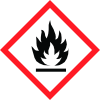
Icons in SDS


Company Information
company name
IP CORPORATION
GHS Information
Signal word
Danger
Hazard Codes
Hazard statements (CLP)
H226, H315, H319, H332, H335, H372
Hazard statements
Code
Statements
H226
Flammable liquid and vapour
Section 2
SECTION 2: Hazards identification
Ingredient(s) with unknown acute toxicity
toxicity: 9% HS label elemen
Signal word
Danger
Hazard statements
Flammable liquid and vapor. Causes skin irritation. Causes serious eye irritation. Harmful if inhaled. May cause respiratory irritation. Causes damage to organs through prolonged or repeated exposure. (hearing organs) Pr iona m Section 4. First aid measures Ingestion Wash out mouth with water. Remove dentures if any. If material has been swallowed and the exposed person is conscious, give small quantities of water to drink. Stop if the exposed person feels sick as vomiting may be dangerous. Do not induce vomiting unless directed to do so by medical personnel. If vomiting occurs, the head should be kept low so that vomit does not enter the lungs. Get medical attention following exposure or if feeling unwell. Never give anything by mouth to an unconscious person. If unconscious, place in recovery position and get medical attention immediately. Maintain an open airway. Loosen tight clothing such as a collar, tie, belt or waistband. Most im nt symptoms/effects, a and del Potential acute health effects Eye contact Causes Serious eye irritation. Inhalation Harmful if inhaled. May cause respiratory irritation. Skin contact Causes skin irritation. Ingestion No known significant effects or critical hazards. Over-ex re sign mptom Eye contact Adverse symptoms may include the following: pain or irritation watering redness Inhalation Adverse symptoms may include the following: respiratory tract irritation coughing Skin contact Adverse symptoms may include the following: irritation redness Ingestion No specific data. Indication of immediate medical attention and special treatment need if s Notes to physician Treat symptomatically. Contact poison treatment specialist immediately if large quantities have been ingested or inhaled. Specific treatments No specific treatment. Protection of first-aiders No action shall be taken involving any personal risk or without suitable training. If it is suspected that fumes are still present, the rescuer should wear an appropriate mask or self-contained breathing apparatus. It may be dangerous to the person providing aid to give mouth-to-mouth resuscitation. See toxicological information (Section 11) Fire-fighting measures Extinguishing media Suitable extinguishing Use dry chemical, CO2, water spray (fog) or foam. media Unsuitable extinguishing Do not use water jet. media Specific hazards arising Flammable liquid and vapor. Runoff to sewer may create fire or explosion hazard. Ina from the chemical fire or if heated, a pressure increase will occur and the container may burst, with the risk of a subsequent explosion. The vapor/gas is heavier than air and will spread along the ground. Vapors may accumulate in low or confined areas or travel a considerable distance to a source of ignition and flash back Section 7. Handling and storage Advice on general occupational hygiene : Eating, drinking and smoking should be prohibited in areas where this material is handled, stored and processed. Workers should wash hands and face before eating, drinking and smoking. Remove contaminated clothing and protective equipment before entering eating areas. See also Section 8 for additional information on hygiene measures. Conditions for safe storage, including any incompatibilities : Do not store above the following temperature: 38°C (100.4°F). Store in accordance with local regulations. Store in a segregated and approved area. Store in original container protected from direct sunlight in a dry, cool and well-ventilated area, away from incompatible materials (see Section 10) and food and drink. Eliminate all ignition sources. Separate from oxidizing materials. Keep container tightly closed and sealed until ready for use. Containers that have been opened must be carefully resealed and kept upright to prevent leakage. Do not store in unlabeled containers. Use appropriate containment to avoid environmental contamination. See Section 10 for incompatible materials before handling or use. Store containers in a safe place. Section 8. Exposure controls/personal protection Control parameter Occupational exposure limits Ingredient name styrene Exposure limits NIOSH REL (United States, 10/2020) TWA 10 hours: 50 ppm. TWA 10 hours: 215 mg/m’. STEL 15 minutes: 100 ppm. STEL 15 minutes: 425 mg/m’. OSHA PEL Z2 (United States, 2/2013) TWA 8 hours: 100 ppm. CEIL: 200 ppm. AMP 5 minutes: 600 ppm. CAL OSHA PEL (United States, 5/2018) Absorbed through skin. C: 500 ppm. TWA 8 hours: 215 mg/m’. TWA 8 hours: 50 ppm. OSHA PEL 1989 (United States, 3/1989) TWA 8 hours: 215 mg/m*. ACGIH TLV (United States, 1/2024) A3. Ototoxicant. TWA 8 hours: 10 ppm. STEL 15 minutes: 20 ppm. Silica, amorphous, fumed, cryst.-free NIOSH REL (United States, 10/2020) [SILICA, AMORPHOUS] NIA. TWA 10 hours: 6 mg/m*. Appropriate engineering controls : Use only with adequate ventilation. Use process enclosures, local exhaust ventilation or other engineering controls to keep worker exposure to airborne contaminants below any recommended or statutory limits. The engineering controls also need to keep gas, vapor or dust concentrations below any lower explosive limits. Use explosion-proof ventilation equipment. Section 9. Physical and chemical properties Solubility in water : Not applicable. Partition coefficient: n- octanol/water : Not applicable. Auto-ignition temperature : Not available. Viscosity : Dynamic (room temperature): Not available. Kinematic (room temperature): Not available. Kinematic (40°C (104°F)): Not available. VOC content : 26 % (w/w) As shipped, including monomers and additives. Section 10. Stability and reactivity Reactivity : No specific test data related to reactivity available for this product or its ingredients. Chemical stability : The product is stable. Possibility of hazardous : Hazardous reactions or instability may occur under certain conditions of storage or use. reactions Conditions to avoid : Avoid all possible sources of ignition (spark or flame). Do not pressurize, cut, weld, braze, solder, drill, grind or expose containers to heat or sources of ignition. Do not allow vapor to accumulate in low or confined areas. Polymerization may occur under certain conditions of storage and use. Keep away from heat and flame. Keep away from oxidizing agents. Incompatible materials : Reactive or incompatible with the following materials: oxidizing materials Reactive or incompatible with the following materials: acids and alkalis. Incompatible with alkali metals. Incompatible with some alkalis. Incompatible with some strong acids. Hazardous decomposition : Under normal conditions of storage and use, hazardous decomposition products should products not be produced. Section 11. Toxicological information Inf i fcolleulan! effecs Acute toxici Product/ingredient name Result Species Dose Exposure styrene LC50 Inhalation Gas. Rat 2770 ppm 4 hours LC50 Inhalation Vapor Rat 11800 mg/m? 4 hours LD50 Oral Rat 2650 mg/kg - Irritation/Corrosion Product/ingredient name Result Species Score Exposure Observation styrene Eyes - Mild irritant Human - 50 ppm - Eyes - Moderate irritant Rabbit - 24 hours 100 | - mg Eyes - Severe irritant Rabbit - 100 mg - Skin - Mild irritant Rabbit - 500 mg - Skin - Moderate irritant Rabbit - 100 % - Sensitization Not available. Date of issue/Date of revision 1/31/2025 Date of previous issue Section 11. Toxicological information Eye contact Adverse symptoms may include the following: pain or irritation watering redness Inhalation Adverse symptoms may include the following: respiratory tract irritation coughing Skin contact Adverse symptoms may include the following: irritation redness Ingestion No specific data. hort term ure Potential immediate Not available. effects Potential delayed effects Not available. Long term exposure Potential immediate Not available. effects Potential delayed effects Not available. Potential c! ic health eff Not available. General Causes damage to organs through prolonged or repeated exposure. Carcinogenicity No known significant effects or critical hazards. Mutagenicity No known significant effects or critical hazards. Teratogenicity No known significant effects or critical hazards. Developmental effects No known significant effects or critical hazards. Fertility effects No known significant effects or critical hazards. N ical F toxicl Acute toxicl imal Route ATE value Oral 7937.68 mg/kg Inhalation (gases) 10720.81 ppm Inhalation (vapors) 45.67 mg/l Section 12. Ecological information Toxicit Product/ingredient name Result Species Exposure styrene Acute EC50 1400 ug/l Fresh water Algae - Raphidocelis subcapitata |72 hours Acute EC50 720 ug/l Fresh water Algae - Raphidocelis subcapitata | 96 hours Acute EC50 4700 ug/l Fresh water Daphnia - Daphnia magna 48 hours Acute LC50 52 mg/l Marine water Crustaceans - Artemia salina 48 hours Acute LC50 4020 ug/l Fresh water Fish - Pimephales promelas 96 hours Chronic NOEC 63 g/l Fresh water Algae - Raphidocelis subcapitata | 96 hours Date of issue/Date of revision 1/31/2025 Date of previous issue
2.1 Classification of the substance or mixture
ACUTE TOXICITY (inhalation) - Category 4 SKIN IRRITATION - Category 2 EYE IRRITATION - Category 2A SPECIFIC TARGET ORGAN TOXICITY (SINGLE EXPOSURE) (Respiratory tract irritation) - Category 3 SPECIFIC TARGET ORGAN TOXICITY (REPEATED EXPOSURE) - Category 1 Percentage of the mixture consisting of ingredient(s) of unknown acute inhalation toxicity: 9% HS



