

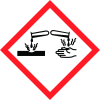


Note: Ingredients listed on restricted chemical lists
EC/CAS
12190-79-3
Name of the chemical
Cobaltate (CoO21-), lithium
Concentration
28.4%
EC/CAS
7440-50-8
Name of the chemical
Copper
Concentration
N/A
General Information
Revision date
2018-02-01
Product name
Lithium Ion
Emergency telephone
(800) 255-3924
Icons in SDS


Company Information
company name
Interstate All-Battery
Section 2
SECTION 2: Hazards identification
NOTE: Under normal conditions of battery use, internal components will not present a health hazard. The following information is provided for battery electrolyte (acid) for exposure that may occur during container breakage or under extreme heat conditions such as fire. EMERGENCY OVERVIEW: The battery should not be opened or burned. Exposure to the ingredients contained within or their combustion products could be harmful. If the battery is opened or broken then the following hazards apply: ROUTES OF ENTRY: EYE CONTACT: Contact with the battery electrolyte can cause severe irritation, burns, and cornea damage upon contact. SKIN CONTACT: Battery electrolyte (acid) can cause severe irritation, burns and ulceration. SKIN ABSORPTION: Not a significant route of entry INHALATION: Acid mist generated during battery charging or spillage of the electrolyte in a confined area may cause respiratory irritation. INGESTION: The electrolyte ingestion irritates the mouth and the throat seriously resulting in serious burns to the mouth and gastrointestinal tract.
Potential Acute Health Effects
Exposure and/or contact with battery electrolyte (acid) may lead to acute irritation of the skin, corneal damage of the eyes, and irritation of the mucous membranes of the eyes and upper respiratory system, including lung. 1
Potential chronic health
Chronic overexposure to nickel may result in cancer; dermal contact may result in dermatitis in sensitive individuals.
Medical Conditions Generally Aggravated by Exposure
A knowledge of the available toxicology information and of the physical and chemical properties of the material suggests that overexposure in unlikely to aggravate existing medical conditions.



