


Note: Ingredients listed on restricted chemical lists
EC/CAS
203-448-7/106-97-8
Name of the chemical
n-Butan, enthält 0,1% Butadien
Concentration
10 - < 25
EC/CAS
921-728-3/64741-66-8
Name of the chemical
Naphtha (petroleum), light alkylate
Concentration
649-276-
EC/CAS
200-857-2/75-28-5
Name of the chemical
iso-Butan, enthält 0,1% Butadien
Concentration
10 - < 25
EC/CAS
203-450-8
Name of the chemical
1,3-Butadien
Concentration
≥30%
General Information
Version
2.0
Revision date
2025-02-17
Product name
Interflon BufferGuard (Aerosol)
REACH No
not
Emergency telephone
(1) 809 2166, +353 (1) 809 2566
Icons in SDS


Company Information
company name
Interflon BV
e-mail address of the competent person responsible for the Safety Data Sheet
Service@Interflon.com, msds.ie@interflon.com
GHS Information
Signal word
danger
Hazard Codes
Hazard statements (CLP)
H222, H229, H315, H336, H412
Hazard statements
Code
Statements
H222
Extremely flammable aerosol
Section 2
SECTION 2: Hazards identification
According to Regulation (EC) No 1272/2008 [CLP Classification of the substance or mixture
Hazard categories
Category Hazard class and cat- Hazard state- egory ment 2.3 aerosols Aerosol 1 H222,H229 3.2 skin corrosion/irritation Skin Irrit. 2 H315 3.8D specific target organ toxicity - single exposure (narcotic ef- STOT SE 3 H336 fects, drowsiness) 4.1C hazardous to the aquatic environment - chronic hazard Aquatic Chronic 3 H412 For full text of abbreviations: see SECTION 16
Most important adverse effects
Spillage and fire water can cause pollution of watercourses
Signal word
danger
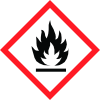
Hazard pictograms
GHS02, GHS07
Hazard statements
H222 Extremely flammable aerosol. H229 Pressurised container: May burst if heated. H315 Causes skin irritation. H336 May cause drowsiness or dizziness. H412 Harmful to aquatic life with long lasting effects.
Precautionary statements
P210 Keep away from heat, hot surfaces, sparks, open flames and other ignition sources. No smoking. P211 Do not spray on an open flame or other ignition source. P251 Do not pierce or burn, even after use. P403+P233 Store in a well-ventilated place. Keep container tightly closed. P410+P412 Protect from sunlight. Do not expose to temperatures exceeding 50 °C/122 °F. P501 Dispose of contents/container in accordance with local/regional/national/international regu- lations. Additional labelling according to Directive 75/324/EEC relating to aerosol dispensers Extremely flammable. Pressurized container: may burst if heated. Keep away from heat, hot surfaces, sparks, open flames and other ignition sources. No smoking. Do not pierce or burn, even after use. Protect from sunlight. Do not expose to temperatures exceeding 50 °C/122 °F.
Hazardous Ingredients
Hydrocarbons, C7-C9, isoalkanes
2.3 Other hazards
This mixture does not contain any substances that are assessed to be a PBT or a vPvB.
Results of PBT and vPvB assessment
Does not contain a PBT-/vPvB-substance at a concentration of ≥ 0,1%. Endocrine disrupting properties Does not contain an endocrine disruptor (ED) at a concentration of ≥ 0,1%.
2.1 Classification of the substance or mixture
Classification according to Regulation (EC) No 1272/2008 (CLP) Section Hazard class Category Hazard class and cat- Hazard state- egory ment 2.3 aerosols 1 Aerosol 1 H222,H229 3.2 skin corrosion/irritation 2 Skin Irrit. 2 H315 3.8D specific target organ toxicity - single exposure (narcotic ef- 3 STOT SE 3 H336 fects, drowsiness) 4.1C hazardous to the aquatic environment - chronic hazard 3 Aquatic Chronic 3 H412 For full text of abbreviations: see SECTION 16. The most important adverse physicochemical, human health and environmental effects Spillage and fire water can cause pollution of watercourses.



