






General Information
Revision date
2020-06-01
Product name
MS Solvent
Product Synonyms
None
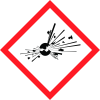
Icons in SDS
Company Information
company name
Inkcups Corporation
GHS Information
Signal word
Danger
Hazard Codes
Hazard statements (CLP)
H200, H226, H300, H304, H315, H320, H332, H335, H336, H371, H400, H402
Hazard statements
Code
Statements
H200
Unstable Explosive
Section 2
SECTION 2: Hazards identification
DANGER!!
Hazard statements
CAT = Hazard Category) (H200s) PHYSICAL Flammable Liquids(CAT 3) H226 COMBUSTIBLE LIQUID(N.America); FLAMMABLE LIQUID & VAPOR(Elsewhere). (H300s) HEALTH Aspiration Hazard(CAT 1) H304 MAY BE FATAL IF SWALLOWED AND ENTERS AIRWAYS. (H300s) HEALTH Skin Corrosion/Irritation(CAT 2) H315 CAUSES SKIN IRRITATION. (H300s) HEALTH Serious Eye Damage/Eye Irritation(CAT 2) H320 CAUSES EYE IRRITATION. (H300s) HEALTH Acute Toxicity, Inhalation(CAT 4) H332 HARMFUL IF INHALED. (H300s) HEALTH Target Organ Toxicity, Single Exposure(CAT 3) H335 MAY CAUSE RESPIRATORY IRRITATION. (H300s) HEALTH: Target Organ Toxicity, Single Exposure; Narcotic Effects(CAT:3) H336 MAY CAUSE DROWSINESS OR DIZZINESS. (H300s) HEALTH Target Organ Toxicity, Single Exposure(CAT 2) H371 MAY CAUSE DAMAGE TO ORGANS. (See Section 11 for Target Organ Information) (H400s) ENVIRONMENT Hazardous to Aquatic
Environmental hazards
Acute (CAT 3) H402 HARMFUL TO AQUATIC LIFE. SECTION 2. HAZARDS IDENTIFICATION (CONTINUED)
Prevention
STRICT HYGIENE! PREVENT DISPERSION OF MISTS OR DUST! P100s = General, P200s = Prevention, P300s = Response, P400s = Storage, P500s = Disposal P202 Do not handle until all safety precautions have been read and understood. P210 Keep away from heat, hot surfaces, sparks, open flames, and other ignition sources. No smoking. P233 Keep container tightly closed. P240 Ground/bond container and receiving equipment. P241 Use explosion-‐proof electrical/ventilating/lighting equipment. P242 Use only non-‐sparking tools. P243 Take precautionary measures against static discharge. P273 Avoid release to the environment. P500 Dispose of contents/container following local/regional/federal regulations. P264 Wash with soap & water thoroughly after handling. P270 Do not eat, drink or smoke when using this product. P271 Use only outdoors or in a well-‐ventilated area. P280 Wear protective gloves/protective clothing/eye protection/face protection. P301+310 IF SWALLOWED: Immediately call a POISON CENTER or doctor/physician. P302+352 IF ON SKIN: Wash with plenty of water. P304+340 IF INHALED: Remove victim to fresh air & keep at rest in a position comfortable for breathing. P305+351+338 IF IN EYES: Rinse cautiously with water for several minutes. Remove contact lenses if present & easy to do -‐ Continue rinsing. P308+311 IF exposed or concerned: Call a POISON CENTER/doctor/physician. P331 Do NOT induce vomiting. P332+313 If skin irritation occurs: Get medical advice/attention. P337+313 If eye irritation persists, get medical advice/attention. P361 Take off immediately all contaminated clothing. P363 Wash contaminated clothing before reuse. P202 Do not handle until all safety precautions have been read and understood. P405 Store locked up. P500 Dispose of contents/container following local/regional/federal regulations. 11.1.4 SWALLOWING: ASPIRATION HAZARD! Harmful or fatal if swallowed. Do NOT induce vomiting. If spontaneous vomiting occurs, keep victim's head below the waist to prevent aspiration. Swallowing can cause abdominal irritation, nausea, vomiting & diarrhea. The symptoms of chemical pneumonitis may not show up for a few days. SEE SECTIONS 8, 11 & 12 FOR TOXICOLOGICAL INFORMATION.



