



Note: Ingredients listed on restricted chemical lists
EC/CAS
68919-39-1
Name of the chemical
Petroleum, coal, tar and natural gas and their derivatives generated using distillation and/or other processing methods if they contain ≥ 0,1 % w/w benzene
Concentration
27.5%
EC/CAS
71-43-2
Name of the chemical
Benzol
Concentration
0.17-0.18%
EC/CAS
110-54-3
Name of the chemical
n-Hexan (790/2009)
Concentration
0-8%
General Information
Revision date
2021-11-09
Product name
DILBIT
1.2.1 Relevant identified uses
Feedstock
supplier name
Imperial Oil
Icons in SDS


Company Information
company name
Imperial Oil
GHS Information
Signal word
Danger
Hazard Codes
Hazard statements (CLP)
H224, H315, H336, H340, H350, H361, H373
Hazard statements
Code
Statements
H224
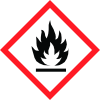
Extremely flammable liquid and vapour
Section 2
SECTION 2: Hazards identification
This material is considered to be hazardous according to regulatory guidelines. This product has been classified in accordance with hazard criteria of the Hazardous Products Regulations (HPR) SOR/2015-17 and the SDS contains all the information required by the HPR SOR/2015-17.
2.1 Classification of the substance or mixture
Flammable Liquids — Category 1 Skin Irritation — Category 2 Germ Cell Mutagenicity — Category 1B Carcinogenicity — Category 1B Reproductive Toxicity (Developmental) — Category 2 Specific Target Organ Toxicity — Single Exposure (Central Nervous System) — Category 3 Specific Target Organ Toxicity — Repeated Exposure — Category 2 LABEL:
Signal word
Danger
Hazard statements
H224 Extremely flammable liquid and vapour. H315 Causes skin irritation. H336 May cause drowsiness or dizziness. H340 May cause genetic defects. H350 May cause cancer. H361 Suspected of damaging the unborn child. H373: May cause damage to organs through prolonged or repeated exposure. Blood
Precautionary statements
P201 Obtain special instructions before use. P202 Do not handle until all safety precautions have been read and understood. P210: Keep away from heat, hot surfaces, sparks, open flames and other ignition sources. No smoking. P233 Keep container tightly closed. P240 Ground and bond container and receiving equipment. P241 Use explosion-proof electrical, ventilating and lighting equipment. P242 Use non-sparking tools. P243 Take action to prevent static discharges. P260 Do not breathe mist / vapours. P264 Wash skin thoroughly after handling. P271 Use only outdoors or in a well-ventilated area. P273 Avoid release to the environment. P280 Wear protective gloves/protective clothing/eye protection/face protection.P302 + P352 IF ON SKIN Wash with plenty of soap and water. P303 + P361 + P353 IF ON SKIN (or hair) Take off immediately all contaminated clothing. Rinse skin with water or shower. P304 + P340 IF INHALED Remove person to fresh air and keep comfortable for breathing. P308 P313 IF exposed or concerned Get medical advice/attention. P312 Call a POISON CENTER or doctor/physician if you feel unwell. P332 + P313 If skin irritation occurs Get medical advice/attention. P362 + P364 Take off contaminated clothing and wash it before reuse. P370 + P378 In case of fire Use water fog, foam, dry chemical or carbon dioxide (CO2) to extinguish. P391 Collect spillage.P403 + P235 Store in a well-ventilated place. Keep cool P405 Store locked up.P501 Dispose of contents and container in accordance with local regulations
Contains
NATURAL GAS CONDENSATE C2-8
Health hazards
Not Otherwise Classified None as defined under HPR SOR/2015-17 Under conditions of poor personal hygiene and prolonged repeated contact, some polycyclic aromatic compounds (PACs) have been suspected as a cause of skin cancer in humans. Overexposure to n-hexane may cause effects on the peripheral nerves, resulting in weakness or numbness of lower limbs. May be irritating to the eyes, nose, throat, and lungs. Exposure to benzene is associated with cancer (acute myeloid leukaemia and myelodysplastic syndrome), damage to the blood-producing system, and serious blood disorders (see Section 11).
Physical hazards
Not Otherwise Classified None as defined under HPR SOR/2015-17
Other physicochemical hazards
Thermal burn hazard - contact with hot material may cause thermal burns. Material can accumulate static charges which may cause an ignition. Material can release vapours that readily form flammable mixtures. Vapour accumulation could flash and/or explode if ignited.
Environmental hazards
Expected to be toxic to aquatic organisms. May cause long-term adverse effects in the aquatic environment. NFPA Hazard ID: Health: 2 Flammability: 3 Reactivity: 0 HMIS Hazard ID: Health: 2* Flammability: 3 Reactivity: 0 NOTE: This material should not be used for any other purpose than the intended use in Section 1 without expert advice. Health studies have shown that chemical exposure may cause potential human health risks which may vary from person to person.



