




General Information
Revision date
2021-04-03
Product name
ICE Glaciogenic Burn In Place Flare
1.2.1 Relevant identified uses
Pyrotechnic Article
Emergency telephone
1 800 424 9300
Icons in SDS


Company Information
company name
Ice Crystal Engineering, LLC
GHS Information
Signal word
Danger
Hazard Codes
Hazard statements (CLP)
H204, H271, H302, H315, H319, H341, H373
Hazard statements
Code
Statements
H204
Fire or projection hazard
Section 2
SECTION 2: Hazards identification
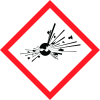
Classification (GHS-US) Classification of the substance or mixture This product as manufactured is not anticipated to have any health effects. The following hazard classification relates to the mixture contained within the flare and is applicable only if the casing is breached Classification (GHS-US) Expl. 1 .4 H204 Ox. Sol. 1 H271 Acute Tax. 4 (Oral) H302 Skin lrrit. 2 H315 Eye lrrit. 2A H319 Muta. 2 H341 STOT RE 2 H373 Full text of H-phrases: see section 16
2.2 Label elements
GHS-US .labeling
Hazard pictograms
GHS01 GHS03 GHSO? GHSOB
Signal word
Danger
Hazard statements
H204 - Fire or projection hazard H271 - May cause fire or explosion; strong oxidizer H302 - Harmful if swallowed H315 - Causes skin irritation H319 - Causes serious eye irritation H341 - Suspected of causing genetic defects H373 - May cause damage to organs through prolonged or repeated exposure
Precautionary statements
P201 - Obtain special instructions before use P202 - Do not handle until all safety precautions have been read and understood P21 O - Keep away from heat/sparks/open flames/hot surfaces. - No smoking P220 - Keep/Store away from clothing/ combustible materials P221 - Take any precaution to avoid mixing with combustibles P240 - Ground/bond container and receiving equipment P250 - Do not subject to grinding/shock/friction P260 - Do not breathe dust/fume/gas/mist/vapors/spray P264 - Wash thoroughly after handling P270 - Do not eat, drink or smoke when using this product P280 - Wear protective gloves/protective clothing/eye protection/face protection P283 - Wear fire/flame resistant/retardant clothing P301 + P312 - If swallowed: Call a poison center/doctor if you feel unwell P302 + P352 - If on skin: Wash with plenty of water P305+P351 +P338 - If in eyes: Rinse cautiously with water for several minutes. Remove contact 03/4/2021 EN (English US) Page 1 lenses, if present and easy to do. Continue rinsing P306+P360 - If on clothing: Rinse immediately contaminated clothing and skin with plenty of water before removing clothes P308 + P313 - If exposed or concerned: Get medical advice/attention P314 - Get medical advice/attention if you feel unwell P330 - Rinse mouth P332+P313 - If skin irritation occurs: Get medical advice/attention P337 +P313 - If eye irritation persists: Get medical advice/attention P362 - Take off contaminated clothing and wash before reuse P370+P378 - In case of fire: Use water to extinguish P370+P380 - In case of fire: Evacuate area P371 +P380+P375 - In case of major fire and large quantities: Evacuate area. Fight fire remotely due to the risk of explosion P372 - Explosion risk in case of fire P373 - DO NOT fight fire when fire reaches explosives P374 - Fight fire with normal precautions from a reasonable distance P405 - Store locked up P501 - Dispose of contents/container in accordance with local/regional/national/international regulations.
2.3 Other hazards
No additional information available
Ingredient(s) with unknown acute toxicity
Not applicable
2.1 Classification of the substance or mixture
This product as manufactured is not anticipated to have any health effects. The following hazard classification relates to the mixture contained within the flare and is applicable only if the casing is breached. Classification (GHS-US) Expl. 1 .4 H204 Ox. Sol. 1 H271 Acute Tax. 4 (Oral) H302 Skin lrrit. 2 H315 Eye lrrit. 2A H319 Muta. 2 H341 STOT RE 2 H373 Full text of H-phrases: see section 16 2.2. Label elements GHS-US .labeling Hazard pictograms (GHS-US) GHS01 GHS03 GHSO? GHSOB Signal word (GHS-US) Danger Hazard statements (GHS-US) H204 - Fire or projection hazard H271 - May cause fire or explosion; strong oxidizer H302 - Harmful if swallowed H315 - Causes skin irritation H319 - Causes serious eye irritation H341 - Suspected of causing genetic defects H373 - May cause damage to organs through prolonged or repeated exposure Precautionary statements (GHS-US) P201 - Obtain special instructions before use P202 - Do not handle until all safety precautions have been read and understood P21 O - Keep away from heat/sparks/open flames/hot surfaces. - No smoking P220 - Keep/Store away from clothing/ combustible materials P221 - Take any precaution to avoid mixing with combustibles P240 - Ground/bond container and receiving equipment P250 - Do not subject to grinding/shock/friction P260 - Do not breathe dust/fume/gas/mist/vapors/spray P264 - Wash thoroughly after handling P270 - Do not eat, drink or smoke when using this product P280 - Wear protective gloves/protective clothing/eye protection/face protection P283 - Wear fire/flame resistant/retardant clothing P301 + P312 - If swallowed: Call a poison center/doctor if you feel unwell P302 + P352 - If on skin: Wash with plenty of water P305+P351 +P338 - If in eyes: Rinse cautiously with water for several minutes. Remove contact 03/4/2021 EN (English US) Page 1 lenses, if present and easy to do. Continue rinsing P306+P360 - If on clothing: Rinse immediately contaminated clothing and skin with plenty of water before removing clothes P308 + P313 - If exposed or concerned: Get medical advice/attention P314 - Get medical advice/attention if you feel unwell P330 - Rinse mouth P332+P313 - If skin irritation occurs: Get medical advice/attention P337 +P313 - If eye irritation persists: Get medical advice/attention P362 - Take off contaminated clothing and wash before reuse P370+P378 - In case of fire: Use water to extinguish P370+P380 - In case of fire: Evacuate area P371 +P380+P375 - In case of major fire and large quantities: Evacuate area. Fight fire remotely due to the risk of explosion P372 - Explosion risk in case of fire P373 - DO NOT fight fire when fire reaches explosives P374 - Fight fire with normal precautions from a reasonable distance P405 - Store locked up P501 - Dispose of contents/container in accordance with local/regional/national/international regulations. 2.3. Other hazards No additional information available 2.4. Unknown acute toxicity (GHS-US) Not applicable SECTION 3: Composition/information on ingredients 3.1. Substance Not applicable 3.2. Mixture Name Product Identifier % Classlflcatlon (GHS-US) Proprietary Component 1 (CAS No) Proprietary Trade Secret Not classified Proprietary Component 2 (CAS No) Proprietary Trade Secret Flam. Liq. 4, H227 Acute Tox. 4 (Oral), H302 Proprietary Component 3 (CAS No) Proprietary Trade Secret Acute Tox. 4 (Oral), H302 Skin lrrit. 2, H315 Eye lrrit. '2A, H319 Proprietary Component 4 (CAS No) Proprietary Trade Secret Not classified Proprietary Component 5 (CAS No) Proprietary Trade Secret Not classified Proprietary Component 6 (CAS No) Proprietary Trade Secret Not classified Proprietary Component 7 (CAS No) Proprietary Trade Secret Not classified Proprietary Component 8 (CAS No) Proprietary Trade Secret Not classified Full text of H-phrases: see section 16 SECTION 4: First aid measures 4.1. Description of first aid measures First-aid measures after inhalation Remove to fresh air. If not breathing, give artificial respiration. If breathing is difficult, give oxygen. If irritation persists, seek medical assistance. First-aid measures after skin contact Wash the exposed area with copious amounts of soap and water. Remove contaminated clothing and wash before reuse. If irritation occurs seek medical advice. First-aid measures after eye contact Immediately flush the eyes with copious quantities of water. Eyelids to be held open. If irritation persists seek medical advice. First-aid measures after ingestion Give plenty of water to drink but only if conscious. Do not induce vomiting. Seek medical attention at once. 4.2. Most important symptoms and effects, both acute and delayed Symptoms/injuries after inhalation Smoke generated from product use may cause respiratory tract irritation. Symptoms/injuries after skin contact Smoke generated from product use may cause skin irritation. Symptoms/injuries after eye contact Smoke generated from product use may cause eye irritation. Symptoms/injuries after ingestion Not considered a likely route of exposure under normal product use conditions. 4.3. Indication of any Immediate medical attention and special treatment needed No additional information available 03/4/2021 EN (English US) 2/8 SECTION 5: Firefighting measures 6.1. Extinguishing media Suitable extinguishing media If flares are exposed to heat and flames, flood with water, or direct water spray on outside of container to cool it down. Continue spray until well after fire is out. Unsuitable extinguishing media None. 6.2. Special hazards arising from the substance or mixture Fire hazard In the event of a fire or intense heat that reaches the storage/cargo area, the pyrotechnic articles are likely to ignite. They will burn, spreading burning particles over a limited area. A mass explosion is not expected. Smoke and potentially irritating gases will be produced in a fire. Explosion hazard Explosion risk in case of fire. 6.3. Advice for firefighters Protection during firefighting Self-contained breathing apparatus (SCBA) and structural firefighter's protective clothing will provide some limited protection. Vehicle fire (other than cargo area): Flood with water. The fires may start again. Unhook and separate vehicle from trailer (if applicable and possible). Remove vehicles that are not involved in fire from fire area if you can do so without risk. If cargo area is exposed to heat and flames, direct water spray on outside of container to cool it down. Cargo Fire: Do not move cargo or vehicle if cargo has been exposed to fire. Withdraw from area if and when fire reaches cargo and let fire burn if situation allows. If fire must be fought, flood with water spray. Use firefighting team to prevent spread of fire to adjacent structures and ~~~~ • SECTION 6: Accidental release measures 6.1. Personal precautions, protective equipment and emergency procedures 6.1.1. For non-emergency personnel No additional information available 6.1.2. For emergency responders No additional information available


