


Note: Ingredients listed on restricted chemical lists
EC/CAS
231-633-2/7664-38-2
Name of the chemical
phosphoric acid
Concentration
N/A
EC/CAS
27083-27-8
Name of the chemical
Polyhexamethylene biguanide hydrochloride with a mean number-average molecular weight (Mn) of 1600 and a mean polydispersity (PDI) of 1.8
Concentration
0.25%
General Information
Revision date
2015-03-31
Product name
UNIPRED
1.2.1 Relevant identified uses
uses advised
1.2.2. Uses advised against
advised against
Manufacturer Name
HYPRED
Emergency telephone
Emergency direct
Icons in SDS


Company Information
company name
HYPRED
e-mail address of the competent person responsible for the Safety Data Sheet
hypred@hypred.fr, hypred.regulatory@roullier.com
GHS Information
Signal word
Danger
Hazard Codes
Hazard statements (CLP)
H290, H314, H411
Hazard statements
Code
Statements
H290
May be corrosive to metals
Section 2
SECTION 2: Hazards identification
1999/45/EEC identification 2.1.
Classifications
Classification of of of of the the the substance substance substance or or or or mixture mixture
2.1 Classification of the substance or mixture
Classification according according according to toto to Regulation Regulation Regulation 1272/2008/EC: 1272/2008/EC: The mixture meets the classification criteria provided for under Regulation (EC) No 1272/2008. -1/15 - EUH 208: Contains Polyhexamethylene biguanide (monomeric: monochlorhydrate of 1,5-bis(triméthylen)-guanylguanidinium). May produce an allergic reaction. Skin corrosion - Category H314: Causes severe skin burns and eye damage. 1B Chronic toxicity to the H411: Toxic to aquatic life with long lasting effects. aquatic environment - Category 2 Substance corrosive to H290: May be corrosive to metals. metals - Category 1 Classification according according according to toto to Directive Directive Directive 1999/45/EEC: 1999/45/EEC: The mixture meets the classification criteria provided for under Directive 1999/45/EEC. C CORROSIVE, N DANGEROUS FOR THE ENVIRONMENT R34 : Causes burns. R51/53 : Toxic to aquatic organisms, may cause long-term adverse effects in the aquatic environment. 2.2. 2.2. Label Label
2.2 Label elements
elements Labelling according according according to toto to 1272/2008/EC 1272/2008/EC 1272/2008/EC Regulation: Regulation:
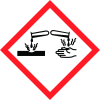
Hazard pictograms
pictograms(s) ::::
Signal word
Signal word :::: Danger
Hazard statements
Hazard statement(s) :::: H290: May be corrosive to metals. H314: Causes severe skin burns and eye damage. H411: Toxic to aquatic life with long lasting effects. EUH 208 P273: Avoid release to the environment. P280: Wear protective gloves/protective clothing/eye protection/face protection. -2/15 - P301 + P330 + P331 IF SWALLOWED rinse mouth. Do NOT induce vomiting P303 + P361 + P353 IF ON SKIN (or hair) Remove/Take off immediately all contaminated clothing. Rinse skin with water/shower. P304 + P340 IF INHALED Remove victim to fresh air and keep at rest in a position comfortable for breathing P305 + P351 + P338 IF IN EYES Rinse cautiously with water for several minutes. Remove contact lenses, if present and easy to do. Continue rinsing. P310: Immediately call a POISON CENTER or doctor/physician. P391: Collect spillage. P501: Dispose of contents/container in accordance with local/regional/national/international regulations. 2.3. 2.3. Other Other
Contains
Polyhexamethylene biguanide (monomeric monochlorhydrate of 1,5-bis(triméthylen)- guanylguanidinium). May produce an allergic reaction.
Precautionary statements
Precautionary statement(s)
2.3 Other hazards
No additional information available. SECTION 3 3 3 Composition/information



