



Note: Ingredients listed on restricted chemical lists
EC/CAS
1305-78-8
Name of the chemical
Calcium oxide
Concentration
<30
EC/CAS
14808-60-7
Name of the chemical
Silica, crystalline
Concentration
<10
General Information
Version
3.1
Revision date
2022-12-03
Product name
TerraFlow
Product Synonyms
Lafarge TerraFlow™
1.2.1 Relevant identified uses
TerraFlow™ is used as a mine backfill binder. TerraFlow is distributed as bulk shipment
Emergency telephone
1-800-255-3924
Icons in SDS


Company Information
company name
Holcim US
e-mail address of the competent person responsible for the Safety Data Sheet
us-sds-Inquiries@holcim.com
GHS Information
Signal word
Danger
Hazard Codes
Hazard statements (CLP)
H315, H317, H318, H335, H350, H372, H402, H412
Hazard statements
Code
Statements
H315
Causes skin irritation
Section 2
SECTION 2: Hazards identification
Classification of the Substance or Mixture GHS-US/CA Classification Skin Irrit. 2 H315 Eye Dam. 1 H318 Skin Sens. 1 H317 Carc. 1A H350 STOT SE 3 H335 STOT RE 1 H372 Aquatic Acute 3 H402 Aquatic Chronic 3 H412
Hazard statements
see section 16 : H315 - Causes skin irritation. H317 - May cause an allergic skin reaction. H318 - Causes serious eye damage. H335 - May cause respiratory irritation. H350 - May cause cancer (Inhalation). H372 - Causes damage to organs (lung/respiratory system) through prolonged or repeated exposure (Inhalation). H402 - Harmful to aquatic life. H412 - Harmful to aquatic life with long lasting effects.
2.2 Label elements
GHS-US/CA Labeling
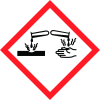
Hazard pictograms
GHS05 GHS07 GHS08
Signal word
Danger
Precautionary statements
P201 - Obtain special instructions before use. P202 - Do not handle until all safety precautions have been read and understood. P260 - Do not breathe vapors, mist, or spray. P264 - Wash hands, forearms, and other exposed areas thoroughly after handling. P270 - Do not eat, drink or smoke when using this product. P271 - Use only outdoors or in a well-ventilated area. P272 - Contaminated work clothing should not be allowed out of the workplace. P273 - Avoid release to the environment. P280 - Wear protective gloves, protective clothing, and eye protection. P302+P352 - IF ON SKIN: Wash with plenty of water. P304+P340 - IF INHALED: Remove person to fresh air and keep comfortable for breathing. P305+P351+P338 - IF IN EYES: Rinse cautiously with water for several minutes. Remove contact lenses, if present and easy to do. Continue rinsing. P308+P313 - If exposed or concerned: Get medical advice/attention. P310 - Immediately call a POISON CENTER or doctor. P314 - Get medical advice/attention if you feel unwell. P321 - Specific treatment (see section 4 on this SDS). P333+P313 - If skin irritation or rash occurs: Get medical advice/attention. P362+P364 - Take off contaminated clothing and wash it before reuse. P403+P233 - Store in a well-ventilated place. Keep container tightly closed. P405 - Store locked up. P501 - Dispose of contents/container in accordance with local, regional, national, and international regulations.
Other hazards
Exposure may aggravate pre-existing eye, skin, or respiratory conditions. Repeated or prolonged exposure to respirable (airborne) crystalline silica dust will cause lung damage in the form of silicosis. Symptoms will include progressively more difficult breathing, cough, fever, and weight loss
Ingredient(s) with unknown acute toxicity
No data available
2.1 Classification of the substance or mixture
GHS-US/CA Classification Skin Irrit. 2 H315 Eye Dam. 1 H318 Skin Sens. 1 H317 Carc. 1A H350 STOT SE 3 H335 STOT RE 1 H372 Aquatic Acute 3 H402 Aquatic Chronic 3 H412 Full text of hazard classes and H-statements : see section 16



