


Note: Ingredients listed on restricted chemical lists
EC/CAS
200-662-2/67-64-1
Name of the chemical
acetone
Concentration
60.0-100.0%
EC/CAS
212-828-1/872-50-4
Name of the chemical
N-Methyl-2-Pyrrolidone; 1-methyl-2-pyrrolidone (NMP)
Concentration
1.0-5.0%
EC/CAS
200-578-6/64-17-5
Name of the chemical
Ethanol
Concentration
0.5-4.0%
EC/CAS
200-661-7/67-63-0
Name of the chemical
Propan-2-ol
Concentration
0.05-1.0%
General Information
Revision date
2013-11-12
Product name
X Code
Emergency telephone
(800)424-9300
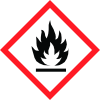
Icons in SDS


Company Information
company name
Hitachi America, Ltd
GHS Information
Signal word
Danger
Hazard Codes
Hazard statements (CLP)
H225, H315, H319, H335, H360
Hazard statements
Code
Statements
H225
Highly Flammable liquid and vapour
Section 2
SECTION 2: Hazards identification
According to Regulation (EC) No 1272/2008 [CLP Classification of the Substance or Mixture
Signal word
Danger
Hazard statements
H225 - Highly flammable liquid and vapor. H319 - Causes serious eye irritation. H335 - May cause respiratory irritation. H315 - Causes skin irritation. H360 - May damage fertility or the unborn child .
Precautionary statements
P233 - Keep container tightly closed. P210 - Keep away from heat/sparks/open flames/hot surfaces. - No smoking. P280 - Wear protective gloves/protective clothing/eye protection/face protection. P240 - Ground/bond container and receiving equipment. P241 - Use explosion-proof electrical/ventilating/lighting/.../ equipment. P243 - Take precautionary measures against static discharge. P242 - Use only non-sparking tools. P264 - Wash hands thoroughly after handling. P271 - Use only outdoors or in a well-ventilated area. P261 - Avoid breathing dust/fume/gas/mist/vapours/spray. P201 - Obtain special instructions before use. P202 - Do not handle until all safety precautions have been read and understood. P281 - Use personal protective equipment as required.
Response
P370+378 - In case of fire, use ... to extinguish. Revision: 11/12/2013 P303+361+353 - IF ON SKIN (or hair): Remove/take off immediately all contaminated clothing. Rinse skin with water/shower. P305+351+338 - IF IN EYES: Rinse cautiously with water for several minutes. Remove contact lenses, if present and easy to do. Continue rinsing. P337+313 - If eye irritation persists, get medical advice/attention. P309+311 - Call a POISON CENTER or doctor/physician if exposed or you feel unwell. P304+340 - IF INHALED Remove victim to fresh air and keep at rest in a position comfortable for breathing. P302+352 - IF ON SKIN Wash with plenty of soap and water. P321 - Specific treatment see ... on this label. P332+313 - If skin irritation occurs, get medical advice/attention P362 - Take off contaminated clothing. P308+313 - IF exposed or concerned: Get medical attention/advice.
Storage
P403+235 - Store in cool/well-ventilated place. P501 - Dispose of contents/container to .... P405 - Store locked up. P403+233 - Store container tightly closed in well-ventilated place - if product is as volatile as to generate hazardous atmosphere.
Potential health effects
Chronic: Prolonged or repeated skin contact may cause dermatitis. Chronic inhalation may cause effects similar to those of acute inhalation. Matsushita et al. exposed human volunteers 6 hours/day for 6 days at 500 ppm acetone and found hematologic changes including significantly increased leukocyte and eosinophil counts and decreased neutrophil phagocytic activity. Adverse reproductive effects have been reported in animals. Testicular effects in rats were noted after repeated, high-dose oral and inhalation exposures. (BASF) Human occupational exposure has been associated with chronic eye irritation, headaches, and irritant contact dermatitis. Airborne concentrations of 49 to 83 ppm are intolerable. (REPROTEXT) Prolonged or repeated skin contact may cause defatting and dermatitis. May cause reproductive and fetal effects. Laboratory experiments have shown mutagenic effects. Animal studies have reported the development of tumors. Prolonged exposure may cause liver, kidney, and heart damage. 2.3.1 Inhalation Inhalation of high concentrations may cause central nervous system effects characterized by nausea, headache, dizziness, unconsciousness and coma. Causes respiratory tract irritation. May cause motor incoordination and speech abnormalities. May cause headache. Material has a very low vapor pressure at room temperature, so inhalation exposures are not expected unless material is heated or misted. May cause narcotic effects in high concentration. Causes upper respiratory tract irritation. Inhalation of vapors may cause drowsiness and dizziness. 2.3.2 Skin Contact May be absorbed through the skin. Repeated or prolonged exposure may cause drying and cracking of the skin. Causes skin irritation. May be harmful if absorbed through the skin. Not expected to cause an allergic skin reaction. Because of the high permeability rate of N-methylpyrrolidone in human skin, prolonged exposures should be avoided. Causes moderate skin irritation. May cause cyanosis of the extremities. May cause irritation with pain and stinging, especially if the skin is abraded. Isopropanol has a low potential to cause allergic skin reactions; however, rare cases of allergic contact dermatitis have been reported. Dermal absorption has been considered toxicologically insignificant. The cases of deep coma associated with skin contact are thought to be a consequence of gross isopropanol vapor inhalation in rooms with inadequate ventilation, rather than being attributable to percutaneous absorption of isopropanol per se. 2.3.3 Eye Contact Produces irritation, characterized by a burning sensation, redness, tearing, inflammation, Revision: 11/12/2013 and possible corneal injury. Vapors may cause eye irritation. Causes eye irritation. May cause temporary corneal clouding. Causes severe eye irritation. May cause painful sensitization to light. May cause chemical conjunctivitis and corneal damage. May cause transient corneal injury. 2.3.4 Ingestion May cause irritation of the digestive tract. May cause central nervous system depression, characterized by excitement, followed by headache, dizziness, drowsiness, and nausea. Advanced stages may cause collapse, unconsciousness, coma and possible death due to respiratory failure. Aspiration of material into the lungs may cause chemical pneumonitis, which may be fatal. May cause gastrointestinal irritation with nausea, vomiting and diarrhea. May cause systemic toxicity with acidosis. Causes gastrointestinal irritation with nausea, vomiting and diarrhea. May cause kidney damage. The probable oral lethal dose in humans is 240 ml (2696 mg/kg), but ingestion of only 20 ml (224 mg/kg) has, but in gestion of only 20 ml (224 mg/kg) has caused poisoning.
2.1 Classification of the substance or mixture
2.1.1 Classification according to Regulation (EC) No 1272/2008 [CLP]: Flammable Liquids, Category 2 Serious Eye Damage/Eye Irritation, Category 2A Target Organ Systemic Toxicity (single exposure), Category 3 Skin Corrosion/Irritation, Category 2



