

Note: Ingredients listed on restricted chemical lists
EC/CAS
5989-27-5
Name of the chemical
(R)-p-mentha-1,8-diene
Concentration
N/A
General Information
Revision date
2016-03-31
1.2.1 Relevant identified uses
Non-butyl cleaner/degreaser
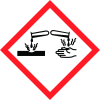
Icons in SDS
Company Information
company name
Hesco, Inc
GHS Information
Signal word
DANGER
Section 2
SECTION 2: Hazards identification
GHS Classification ***************************************************************************************************************************************** EMERGENCY OVERVIEW: Color: Yellow Physical State: Liquid
Appearance/Odor
Clear Orange
Signal word
DANGER
2.1 Classification of the substance or mixture
Acute Toxicity; Category 3 Severe Eye Damage/Irritation; Category 2A Skin Corrosion/Irritation; Category 2
Health hazards
SEVERE IRRITATION TO RESPIRATORY TRACT, EYES, SKIN AND DIGESTIVE TRACT . MAY CAUSE PERMANENT EYE DAMAGE. HARMFUL IF SWALLOWED.
Physical hazards
MAY BE CORROSIVE TO METALS
Precautionary statements
Keep only in original container. Wear protective gloves, protective clothing, eye, and face protection. Do not breathe dust. Wash thoroughly after handling. Do not eat, drink or smoke when using this product. *****************************************************************************************************************************************
Potential health effects
1 of 7 Inhalation: Inhalation of mists may cause irritation of the upper respiratory tract with sore throat, coughing and shortness of breath. Upon contact with moist mucous membranes, sodium metasilicate is highly alkaline and may cause corrosive damage. May cause severe irritation of the respiratory tract with coughing, choking, pain and possibly burns of the mucous membranes. In some cases, pulmonary edema and/or pneumonia may develop, either immediately or more often within 72 hours. The symptoms may include tightness in the chest, dyspnea, frothy sputum, cyanosis, and dizziness. Physical findings may include moist rales, low blood pressure and high pulse pressure. Skin contact: Direct contact with wet material or by moist skin may cause severe irritation, pain, and possibly burns. Eye contact: Dust or mist may cause severe irritation, pain and corneal burns (possibly leading to blindness). The full extent of the injury may not be immediately apparent. Ingestion: May cause immediate pain and severe burns of the esophagus and gastrointestinal tract with vomiting, nausea, and diarrhea. Edema of the epiglottis and shock may occur. See Section 11: TOXICOLOGICAL INFORMATION



