

Note: Ingredients listed on restricted chemical lists
General Information
Product name
Color Developer
Product Synonyms
None
CAS No.
124-68-5
1.2.1 Relevant identified uses
Used as kit component recommended for confirmation of successful pasteurization in milk, butter, cream and cheese, using the Rutgers method
Emergency telephone
(800) 424-9300 ChemTrec (24hr service
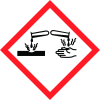
Icons in SDS
Company Information
company name
Hardy Diagnostics
GHS Information
Signal word
Danger
Hazard Codes
Hazard statements (CLP)
H290, H314, H318, H402, H412
Hazard statements
Code
Statements
H290
May be corrosive to metals
Section 2
OSHA HCS Classification
Corrosive to Metals (Category 1), H290 Skin Corrosion (Category 1A), H314 Eye Damage (Category 1), H318 Aquatic Toxicity, Acute (Category 3), H402 Aquatic Toxicity, Chronic (Category 3), H412
Signal word
Danger
Hazard statements
H290 May be corrosive to metals. H314 Causes severe skin burns and eye damage. H318 Causes serious eye damage. H402 Harmful to aquatic life. H412 Harmful to aquatic life with long lasting effects.
Precautionary statements
P234 Keep only in original packaging. P260 Do not breathe dust/fume/gas/mist/vapours/spray. P264 Wash hands thoroughly after handling. P273 Avoid release to the environment. P280 Wear protective gloves. P301+P330+P331 IF SWALLOWED: Rinse mouth. Do NOT induce vomiting. P303+P361+P353 IF ON SKIN (or hair): Take off immediately all contaminated clothing. Rinse skin with water. P304+P340 IF INHALED: Remove person to fresh air and keep comfortable for breathing. P305+P351+P338 IF IN EYES: Rinse cautiously with water for several minutes. Remove contact lenses, if present and easy to do. Continue rinsing. P310 Immediately call a doctor for emergency medical advice. P321 Specific treatment (see additional information on this label). P363 Wash contaminated clothing before reuse. P390 Absorb spillage to prevent material-damage. P405 Store locked up. P501 Dispose of contents or container at an approved waste disposal facility, according to applicable regulations. 2.3. Hazards not otherwise classified or not covered by GHS No data available.



