




General Information
Revision date
2021-09-27
Product name
NITROGEN TRIFLUORIDE
Product Synonyms
NITROGEN FLUORIDE (NF3); PERFLUOROAMMONIA; TRIFLUOROAMINE; TRIFLUOROAMMONIA; TRIFLUORAMINE; TRIFLUORAMMONIA
Chemical name
inorganic, gas
CAS No.
7783-54-2
1.2.1 Relevant identified uses
semi-conductor fabrication, general synthetic chemical
supplier name
한국 인테그리스 주식회사 (Hanguk Entegris Co., Ltd.)
Icons in SDS


Company Information
company name
한국 인테그리스 주식회사 (Hanguk Entegris Co., Ltd.)
e-mail address of the competent person responsible for the Safety Data Sheet
Product.stewardship@entegris.com
GHS Information
Signal word
Danger
Hazard Codes
Hazard statements (CLP)
H270, H280, H332, H371, H372
Hazard statements
Code
Statements
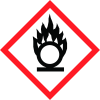
H270
May cause or intensify fire; oxidizer
H280
Contains gas under pressure; may explode if heated
H332
Harmful if inhaled
H371
May cause damage to organs
H372
Causes damage to organs through prolonged or repeated exposure
Section 2
SECTION 2: Hazards identification
Hazard/Risk Classification Oxidizing Gases - Category 1 Gases Under Pressure - Liquefied gas Acute Toxicity - Inhalation - Gas - Category 4 Specific Target Organ Toxicity - Single Exposure - Category 2 ( Hematopoietic System ) Specific Target Organ Toxicity - Repeated Exposure - Category 1 ( kidneys , liver )
Signal word
Danger Hazard/Risk Statement H270 May cause or intensify fire; oxidizer. H280 Contains gas under pressure; may explode if heated. H332 Harmful if inhaled. H371 May cause damage to organs. (Hematopoietic System ) H372 Causes damage to organs through prolonged or repeated exposure. (kidneys , liver )
Prevention
P220 Keep/Store away from clothing/combustible materials. P244 Keep reduction valves free from grease and oil. P260 Do not breathe gas. P264 Wash thoroughly after handling. P280 Wear protective gloves/protective clothing/eye protection/face protection. P270 Do not eat, drink or smoke when using this product. P271 Use only outdoors or in a well-ventilated area.
Response
P370+P376 In case of fire: Stop leak if safe to do so. P308+P311 If exposed or concerned: Call a POISON CENTER or doctor/physician. P304+P340 IF INHALED: Remove person to fresh air and keep comfortable for breathing. P312 Call a POISON CENTER or doctor/physician if you feel unwell.
Storage
P410+P403 Protect from sunlight. Store in a well-ventilated place. P405 Store locked up.
Disposal
P501 Dispose of contents/container in accordance with local/regional/national/international regulations (depending on the information set out in the Waste Control Act).
Other hazards which do not result in classification
May cause frostbite upon sudden release of liquefied gas.


