



General Information
Version
6.4
Revision date
2021-08-10
Product name
Potassium Persulfate
CAS No.
7727-21-1
1.2.2. Uses advised against
Consumer use
Emergency telephone
+1(303) 623-5716 - 24
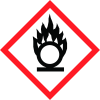
Icons in SDS


Company Information
company name
Hach Company P.O.Box 389 Loveland, CO 80539 USA
GHS Information
Signal word
Danger
Hazard Codes
Hazard statements (CLP)
H272, H302, H315, H317, H319, H334, H335
Hazard statements
Code
Statements
H272
May intensify fire; oxidizer
H302
Harmful if swallowed
H315
Causes skin irritation
H317
May cause an allergic skin reaction
H319
Causes serious eye irritation
H334
May cause allergy or asthma symptoms or breathing difficulties if inhaled
H335
May cause respiratory irritation
Section 2
SECTION 2: Hazards identification
This chemical is considered hazardous by the 2012 OSHA Hazard Communication Standard (29 CFR 1910.1200) Classification Regulatory Status
Signal word
Danger
Hazard statements
H272 - May intensify fire; oxidizer H302 - Harmful if swallowed H315 - Causes skin irritation H317 - May cause an allergic skin reaction H319 - Causes serious eye irritation H334 - May cause allergy or asthma symptoms or breathing difficulties if inhaled H335 - May cause respiratory irritation
Precautionary statements
P270 - Do not eat, drink or smoke when using this product P301 + P312 - IF SWALLOWED: Call a POISON CENTER or doctor/physician if you feel unwell P330 - Rinse mouth P501 - Dispose of contents/ container to an approved waste disposal plant P302 + P352 - IF ON SKIN: Wash with plenty of soap and water P362 - Take off contaminated clothing and wash before reuse P280 - Wear protective gloves, protective clothing, eye protection, and face protection P305 + P351 + P338 - IF IN EYES: Rinse cautiously with water for several minutes. Remove contact lenses, if present and easy to do. Continue rinsing P337 + P313 - If eye irritation persists: Get medical attention P261 - Avoid breathing dust/fume/gas/mist/vapors/spray P285 - In case of inadequate ventilation wear respiratory protection P304 + P341 - IF INHALED: If breathing is difficult, remove victim to fresh air and keep at rest in a position comfortable for breathing P342 + P311 - If experiencing respiratory symptoms: Call a POISON CENTER or doctor/physician P272 - Contaminated work clothing should not be allowed out of the workplace P333 + P313 - If skin irritation or rash occurs: Get medical advice/attention P363 - Wash contaminated clothing before reuse P271 - Use only outdoors or in a well-ventilated area P304 + P340 - IF INHALED: Remove person to fresh air and keep comfortable for breathing P312 - Call a POISON CENTER or doctor if you feel unwell P403 + P233 - Store in a well-ventilated place. Keep container tightly closed P405 - Store locked up P210 - Keep away from heat/sparks/open flames/hot surfaces. - No smoking P220 - Keep/Store away from clothing/ combustible materials P221 - Take any precaution to avoid mixing with combustibles P370 + P378 - In case of fire: Use dry sand, dry chemical or alcohol-resistant foam to extinguish
Other hazards
Known Harmful to aquatic life
2.1 Classification of the substance or mixture
Regulatory Status This chemical is considered hazardous by the 2012 OSHA Hazard Communication Standard (29 CFR 1910.1200) Oxidizing solids Category 3 Acute toxicity - Oral Category 4 Skin corrosion/irritation Category 2 Serious eye damage/eye irritation Category 2A Respiratory sensitization Category 1 Skin sensitization Category 1 Specific target organ toxicity (single exposure) Category 3 Hazards not otherwise classified (HNOC) Not applicable


