


Note: Ingredients listed on restricted chemical lists
EC/CAS
232-674-9/9004-34-6
Name of the chemical
cellulose
Concentration
45-55%
EC/CAS
236-675-5/13463-67-7
Name of the chemical
Reaction mass of titanium dioxide and silver chloride
Concentration
0.5-0.8%
EC/CAS
209-150-3
Name of the chemical
Aluminium, zinc, magnesium and calcium stearates
Concentration
1-2%
General Information
Revision date
2018-02-09
Product name
Biktarvy
Product Synonyms
Bictegravir: GS-9883-01 (sodium salt); GS-9883
Chemical name
Mixture
1.2.1 Relevant identified uses
Bulk formulated pharmaceutical product/Formulated pharmaceutical product packaged in final form for patient use and uses advised against
Emergency telephone
+1 (800) 424-9300, +1 (703) 527-3887
Icons in SDS


Company Information
company name
Gilead Sciences, Inc
e-mail address of the competent person responsible for the Safety Data Sheet
sdscoordinator@gilead.com
GHS Information
Signal word
Warning
Hazard Codes
Hazard statements (CLP)
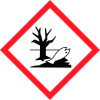
H373, H411
Hazard statements
Code
Statements
H373
May cause damage to organs through prolonged or repeated exposure
Section 2
SECTION 2: Hazards identification
2.1 Classification of the substance or mixture
The classification and labeling listed below is for bulk drug product. substance or mixture Globally Harmonized Specific Target Organ Toxicity (repeated exposure) - Category 2. Aquatic toxicity System [GHS] (chronic) - Category 2.
2.2 Label elements
SECTION 2 - HAZARDS IDENTIFICATION …continued
Signal word
Warning
Hazard statements
H373 - May cause damage to liver, bone, or kidneys through prolonged or repeated exposure. H411 - Toxic to aquatic life with long-lasting effects. medical advice/attention if you feel unwell. P391 - Collect spillage. P501 - Dispose of contents/container to location in accordance with local/regional/national/ international regulations.
Precautionary statements
P260 - Do not breathe dust. P273 - Avoid release to the environment. P314 - Get
2.3 Other hazards
In clinical studies conducted to date with bictegravir, single oral doses (up to 600 mg), multiple doses administered for 14 days (up to 300 mg), and 100 mg co-administered with F/TAF for seven days in healthy adult subjects were generally well tolerated, without evidence of clinically meaningful drug-related adverse effects. TAF monofumarate has been generally well-tolerated in human clinical trials; adverse effects have included headache, nausea, flatulence, and insomnia, considered mild to moderate in severity. Common adverse effects seen in clinical trials with emtricitabine alone or in combination with other antiretrovirals include headache, diarrhea, nausea, fatigue, dizziness, depression, insomnia, abnormal dreams, rash, abdominal pain, weakness, increased cough and runny nose. Serious effects including lactic acidosis and effects on the liver have also been reported with the use of nucleoside analogues. Adverse effects generally occur at doses that are not occupationally relevant. Note This mixture is classified as hazardous under GHS as implemented by Regulation



