


Note: Ingredients listed on restricted chemical lists
EC/CAS
7732-18-5
Name of the chemical
Water, distilled, conductivity or of similar purity H2O
Concentration
N/A
General Information
Revision date
2017-05-11
Product name
Quenching Buffer
Substance name
Quenching Buffer
Product Synonyms
1-amino-2-hydroxyethane, 10%≤conc<25%, aqueous solutions / 2-amino-1-ethanol, 10%≤conc<25%, aqueous solutions / 2-aminoaethanol, 10%≤conc<25%, aqueous
CAS No.
141-43-5
Emergency telephone
1-800-424-9300 (USA/Canada), +1-703-527-3887 (Intl
Icons in SDS
Company Information
company name
Geno Technology, Inc.
e-mail address of the competent person responsible for the Safety Data Sheet
technical@GBiosciences.com
GHS Information
Signal word
Danger
Hazard Codes
Hazard statements (CLP)
H314, H335
Hazard statements
Code
Statements
H314
Causes severe skin burns and eye damage
Section 2
CLP CLASSIFICATION
Mixtures/Substances SDS EU 2015 According to Regulation (EU) 2015/830 (REACH Annex II) Skin corrosion/irritation, Category 1A H314 Specific target organ toxicity — Single exposure, Category 3, H335 Respiratory tract irritation
Hazard statements
see section 16 Specific concentration limits: ( 5 =<C < 100) STOT SE 3, H335 : H314 - Causes severe skin burns and eye damage. H335 - May cause respiratory irritation.
Adverse physicochemical, human health and environmental effects
May cause respiratory irritation. Causes severe skin burns and eye damage.
2.2 Label elements
Labelling according to Regulation (EC) No. 1272/2008 [CLP]Extra labelling to displayExtra classification(s) to display
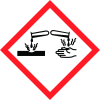
Hazard pictograms
GHS05 GHS07
Signal word
Danger
Precautionary statements
P260 - Do not breathe dust/fume/gas/mist/vapours/spray. P264 - Wash hands, forearms and face thoroughly after handling. P271 - Use only outdoors or in a well-ventilated area. P280 - Wear protective gloves/protective clothing/eye protection/face protection. P301+P330+P331 - IF SWALLOWED: Rinse mouth. Do NOT induce vomiting. P304+P340 - IF INHALED: Remove person to fresh air and keep comfortable for breathing. P305+P351+P338 - IF IN EYES: Rinse cautiously with water for several minutes. Remove contact lenses, if present and easy to do. Continue rinsing. P310 - Immediately call a POISON CENTER or doctor. P312 - Call a POISON CENTRE or doctor if you feel unwell. P321 - Specific treatment (see supplemental first aid instruction on this label). P403+P233 - Store in a well-ventilated place. Keep container tightly closed. P405 - Store locked up. P501 - Dispose of contents/container to hazardous or special waste collection point, in accordance with local, regional, national and/or international regulation.
2.3 Other hazards
No additional information available



