



Note: Ingredients listed on restricted chemical lists
EC/CAS
108-88-3
Name of the chemical
Toluene
Concentration
N/A
EC/CAS
141-78-6
Name of the chemical
acetic acid, ethyl ester
Concentration
N/A
EC/CAS
13463-67-7
Name of the chemical
Reaction mass of titanium dioxide and silver chloride
Concentration
N/A
General Information
Revision date
2016-04-15
Product name
TIMBERWOLF
1.2.1 Relevant identified uses
A protective and/or decorative finish or accompanying product (reference label or product data sheet for more information)
Manufacturer Name
Spill
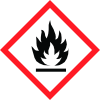
Icons in SDS
Company Information
company name
Gemini Coatings
GHS Information
Signal word
Danger
Hazard Codes
Hazard statements (CLP)
H225, H304, H315, H319, H332, H351, H360
Hazard statements
Code
Statements
H225
Highly Flammable liquid and vapour
Section 2
Classifications
Flammable liquid 2 Flash point < 23°C and initial boiling point > 35°C (95°F) Inhalation Toxicity Acute Tox. 4 Gases>2500+<=5000ppm, Vapors>10+<=20mg/l, Dusts&mists>1+<=5mg/l Skin corrosive 2 Reversible adverse effects in dermal tissue, Draize score: >= 2.3 < 4.0 or persistent inflammation Eye corrosive 2A Eye irritant: Subcategory 2A, Reversible in 21 days Carcinogen 2 Limited evidence of human or animal carcinogenicity Reproductive toxin 1A Based on human evidence
Aspiration hazard
1 Aspiration Toxicity Category 1: Known (regarded)- human evidence - hydrocarbons with kinematic viscosity ? 20.5 mm2/s at 40° C.
Precautionary statements
H225 Highly flammable liquid and vapour P201 Obtain special instructions before use H304 May be fatal if swallowed and P202 Do not handle until all safety enters airways precautions have been read and H315 Causes skin irritation understood H319 Causes serious eye irritation P210 Keep away from heat/sparks/open H332 Harmful if inhaled flames/hot surfaces – No smoking H351 Suspected of causing cancer P233 Keep container tightly closed H360 May damage fertility or the P240 Ground/bond container and receiving unborn child equipment P241 Use explosion-proof electrical/ventilating/light/mixers/equipm ent P242 Use only non-sparking tools P243 Take precautionary measures against static discharge P261 Avoid breathing dust/fume/gas/mist/vapours/spray P264 Wash any exposed skin thoroughly after handling P271 Use only outdoors or in a well-ventilated area P280 Wear protective gloves/protective clothing/eye protection/face protection P281 Use personal protective equipment as required P312 Call a POISON CENTER or doctor/physician if you feel unwell P321 Specific treatment (see First Aid section on this label) P331 Do NOT induce vomiting P362 Take off contaminated clothing and wash before reuse P301+P310 IF SWALLOWED: Immediately call a POISON CENTER or doctor/physician P302+P352 IF ON SKIN: Wash with soap and water P303+P361+P35 IF ON SKIN (or hair): Remove/Take off 3 immediately all contaminated clothing. Rinse skin with water/shower P304+P340 IF INHALED: Remove victim to fresh air and keep at rest in a position comfortable for breathing P305+P351+P33 IF IN EYES: Rinse continuously with 8 water for several minutes. Remove contact lenses if present and easy to do – continue rinsing P308+P313 IF exposed or concerned: Get medical advice/attention P332+P313 If skin irritation occurs: Get medical advice/attention P337+P313 Get medical advice/attention P370+P378 In case of fire: Use the NFPA Class B extinguisher for extinction P405 Store locked up P403+P235 Store in a well ventilated place. Keep cool P501 Do not flush to sewer, watershed or waterway. Dispose of product in accordance with applicable local, county, state and federal regulations.
Signal word
Danger



