

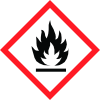
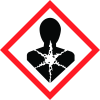
Note: Ingredients listed on restricted chemical lists
EC/CAS
64742-95-6
Name of the chemical
Solvent naphtha (petroleum), light arom
Concentration
5 - 10
EC/CAS
9016-87-9
Name of the chemical
4,4'-Methylendiphenyldiisocyanat tech. (Polymeres) MDI, pMDI (in Form atembarer Aerosole, A-Fraktion)
Concentration
1 - 5
EC/CAS
26447-40-5
Name of the chemical
Methylenediphenyl diisocyanate (see also specific isomers)
Concentration
1 - 5
EC/CAS
1314-13-2
Name of the chemical
Zinc oxide; C.I. 77947
Concentration
1 - 5
General Information
Version
1.0
Revision date
2023-01-17
Product name
Rust-Anode Primer
1.2.2. Uses advised against
No additional information available
supplier name
Galvatech
Emergency telephone
1-855-780-0599
Icons in SDS


Company Information
company name
Galvatech
GHS Information
Signal word
Danger
Hazard Codes
Hazard statements (CLP)
H225, H304, H317, H334, H340, H350, H373
Hazard statements
Code
Statements
H225
Highly Flammable liquid and vapour
Section 2
SECTION 2: Hazards identification
2.1 Classification of the substance or mixture
GHS CA) Flammable liquids, Category 2 Respiratory sensitisation, Category 1 H225 Highly flammable liquid and vapour. H334 May cause allergy or asthma symptoms or breathing difficulties if inhaled. Skin sensitisation, Category 1 H317 May cause an allergic skin reaction. Germ cell mutagenicity, Category 1B H340 May cause genetic defects (Inhalation). Carcinogenicity, Category 1B H350 May cause cancer (Inhalation). Specific target organ toxicity – Repeated exposure, Category 2 H373 May cause damage to organs (Respiratory tract) through prolonged or repeated exposure (Inhalation). Aspiration hazard, Category 1 H304 May be fatal if swallowed and enters airways.
Hazard statements
see section 16 : H225 - Highly flammable liquid and vapour. H304 - May be fatal if swallowed and enters airways. H317 - May cause an allergic skin reaction. H334 - May cause allergy or asthma symptoms or breathing difficulties if inhaled. H340 - May cause genetic defects (Inhalation). H350 - May cause cancer (Inhalation). H373 - May cause damage to organs (Respiratory tract) through prolonged or repeated exposure (Inhalation).
2.2 Label elements
GHS CA labelling
Signal word
Danger
Precautionary statements
P201 - Obtain special instructions before use. P202 - Do not handle until all safety precautions have been read and understood. P210 - Keep away from heat, hot surfaces, sparks, open flames and other ignition sources. No smoking. P233 - Keep container tightly closed. P240 - Ground/bond container and receiving equipment. P241 - Use explosion-proof electrical, lighting, ventilating equipment. P242 - Use only non-sparking tools. P243 - Take action to prevent static discharges. P260 - Do not breathe fume, mist, spray, vapours. P261 - Avoid breathing dust/fume/gas/mist/vapours/spray. P272 - Contaminated work clothing should not be allowed out of the workplace. P280 - Wear protective gloves/protective clothing/eye protection/face protection. P284 - [In case of inadequate ventilation] wear respiratory protection. P301+P310 - IF SWALLOWED: Immediately call a POISON CENTER, a doctor. P302+P352 - IF ON SKIN: Wash with plenty of water. P303+P361+P353 - IF ON SKIN (or hair): Take off immediately all contaminated clothing. Rinse skin with water or shower. P304+P340 - IF INHALED: Remove person to fresh air and keep comfortable for breathing. P308+P313 - IF exposed or concerned: Get medical advice/attention. P314 - Get medical advice/attention if you feel unwell. P321 - Specific treatment (see supplemental first aid instruction on this label). P331 - Do NOT induce vomiting. P333+P313 - If skin irritation or rash occurs: Get medical advice/attention. P342+P311 - If experiencing respiratory symptoms: Call a POISON CENTER, a doctor. P362+P364 - Take off contaminated clothing and wash it before reuse. P370+P378 - In case of fire: Use dry extinguishing powder, carbon dioxide (CO2), alcohol resistant foam to extinguish. P403+P235 - Store in a well-ventilated place. Keep cool P405 - Store locked up. P501 - Dispose of contents / container by a local waste disposal company according to regional regulations.
2.3 Other hazards
No additional information available 2.4. Unknown acute toxicity (GHS) No additional information available



