


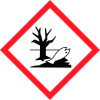
Note: Ingredients listed on restricted chemical lists
EC/CAS
21645-51-2
Name of the chemical
Aluminium hydroxide
Concentration
N/A
EC/CAS
1314-13-2
Name of the chemical
Zinc oxide; C.I. 77947
Concentration
N/A
EC/CAS
13463-67-7
Name of the chemical
Reaction mass of titanium dioxide and silver chloride
Concentration
N/A
EC/CAS
107-21-1
Name of the chemical
Ethane-1,2-diol
Concentration
N/A
General Information
Revision date
2019-03-06
Product name
TOPCOAT MEMBRANE
Manufacturer Name
GAF
Emergency telephone
800 – 424 – 9300
Icons in SDS
Company Information
company name
GAF
GHS Information
Signal word
Danger
Section 2
SECTION 2: Hazards identification
GHS Classification NFPA and HMIS RATINGS: NFPA Hazard HMIS Hazard Rating Health 2 Health 2 Flammable 0 Flammable 0 Reactive 0 Reactive 0 Special Hazards - Personal Protection X
2.1 Classification of the substance or mixture
Eye Irritant - Category 2B Skin Irritant - Category 2 Target Organ (SE) - Category 3 Target Organ (RE) - Category 2 Carcinogen - Category 2 Acute Toxicity - Category 4 Hazardous to the Aquatic Environment (chronic) - Category 1 Hazardous to the Aquatic Environment (acute) – Category 1
Signal word
Danger
Hazard statements
May cause damage to organs through prolonged or repeated exposure. Causes skin irritation. Causes eye irritation May cause respiratory irritation. Harmful if inhaled or swallowed. Suspected of causing cancer. Very toxic to aquatic life with long lasting effects.
Precautionary statements
Obtain special instructions before use. Do not handle until all safety precautions have been read and understood. Use personal protective equipment as required. Wash face, hands and any exposed skin thoroughly after handling. Avoid breathing dust/fume/gas/mist/vapors/spray. Use only outdoors or in a well-ventilated area. IF exposed or concerned: Get medical advice/attention. IF IN EYES: Rinse cautiously with water for several minutes. Remove contact lenses, if present and easy to do. Continue rinsing. If eye irritation persists: Get medical advice/attention. IF ON SKIN: Wash with plenty of soap and water. If skin irritation occurs: Get medical advice/attention. Take off contaminated clothing and wash before reuse. IF INHALED: Remove victim to fresh air and keep at rest in a position comfortable for breathing. ADDITIONAL HAZARD IDENTIFICATION INFORMATION:
Principle Routes of Exposure
Inhalation, Skin Contact, Eye Contact SIGNS & SYMPTOMS OF EXPOSURE EYES: Exposure to vapors can cause conjunctivitis or irritation to the eyes. SKIN: Slight irritation of the skin. Prolonged contact can cause reddening of the skin. INGESTION: Not expected to be ingested. INHALATION: Vapors or mists can cause mental sluggishness, irritation of nasal passages, throat and lungs. Can cause headaches.
Acute Health Hazards
Excessive exposure can cause pulmonary edema.
Health hazards
None known CARCINOGENICITY: IARC has determined that occupational exposure to Titanium Dioxide is possibly carcinogenic to humans (Group 2B). IARC concluded lung tumors were observed in rats following high dose exposure by inhalation and in female rats exposed by intra-tracheal instillation. Other studies have shown no tumors in rats following inhalation exposure and no tumors in mice or rats following oral exposure.



