




Note: Ingredients listed on restricted chemical lists
EC/CAS
64742-49-0
Name of the chemical
Naphtha (petroleum), hydrotreated light
Concentration
N/A
EC/CAS
64742-89-8
Name of the chemical
Solvent naphtha (petroleum), light aliph
Concentration
N/A
EC/CAS
68410-97-9
Name of the chemical
Distillates (petroleum), light distillate hydrotreating process, low-boiling
Concentration
N/A
EC/CAS
13463-67-7
Name of the chemical
Reaction mass of titanium dioxide and silver chloride
Concentration
N/A
EC/CAS
110-82-7
Name of the chemical
Cyclohexane
Concentration
N/A
EC/CAS
71-43-2
Name of the chemical
Benzol
Concentration
N/A
EC/CAS
108-88-3
Name of the chemical
Toluene
Concentration
N/A
EC/CAS
14808-60-7
Name of the chemical
Silica, crystalline
Concentration
N/A
EC/CAS
7631-86-9
Name of the chemical
Silver adsorbed on silicon dioxide
Concentration
N/A
General Information
Revision date
2016-07-07
Product name
EPDM Primer
1.2.1 Relevant identified uses
Coating
Emergency telephone
CHEMTREC [DAY OR NIGHT] 1-800-424-9300
Icons in SDS


Company Information
company name
GAF
GHS Information
Signal word
Danger
Hazard Codes
Hazard statements (CLP)
H225, H304, H315, H336, H340, H350, H361, H401, H411
Hazard statements
Code
Statements
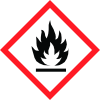
H225
Highly Flammable liquid and vapour
Section 2
Classification (GHS-US)
Flam. Liq. 2 H225 Skin Irrit. 2 H315 Muta. 1B H340 Carc. 1A H350 Repr. 2 H361 STOT SE 3 H336 Asp. Tox. 1 H304 Aquatic Acute 2 H401 Aquatic Chronic 2 H411
Hazard statements
see section 16 : H225 - Highly flammable liquid and vapor. H304 - May be fatal if swallowed and enters airways. H315 - Causes skin irritation. H336 - May cause drowsiness or dizziness. H340 - May cause genetic defects. H350 - May cause cancer. H361 - Suspected of damaging fertility or the unborn child. H401 - Toxic to aquatic life. H411 - Toxic to aquatic life with long lasting effects.
2.2 Label elements
GHS-US Labeling
Hazard pictograms
GHS02 GHS07 GHS08 GHS09
Signal word
Danger
Precautionary statements
P201 - Obtain special instructions before use. P202 - Do not handle until all safety precautions have been read and understood. P210 - Keep away from extremely high or low temperatures, ignition sources, and incompatible materials. - No smoking. P233 - Keep container tightly closed. P240 - Ground/bond container and receiving equipment. P241 - Use explosion-proof electrical, ventilating, and lighting equipment. P242 - Use only non-sparking tools. P243 - Take precautionary measures against static discharge. P261 - Avoid breathing vapors, mist, or spray. P264 - Wash hands, forearms, and other exposed areas thoroughly after handling. P271 - Use only outdoors or in a well-ventilated area. P273 - Avoid release to the environment. P280 - Wear protective gloves, protective clothing, and eye protection. P301+P310 - If swallowed: Immediately call a poison center or doctor. P303+P361+P353 - If on skin (or hair): Take off immediately all contaminated clothing. Rinse skin with water/shower. P304+P340 - If inhaled: Remove person to fresh air and keep at rest in a position comfortable for breathing. P308+P313 - If exposed or concerned: Get medical advice/attention. P312 - Call a poison center or doctor if you feel unwell. P321 - Specific treatment (see section 4 on this SDS). P331 - Do NOT induce vomiting. P332+P313 - If skin irritation occurs: Get medical advice/attention. P362+P364 - Take off contaminated clothing and wash it before reuse. P370+P378 - In case of fire: Use appropriate media (see section 5) to extinguish. P391 - Collect spillage. P403+P233 - Store in a well-ventilated place. Keep container tightly closed. P403+P235 - Store in a well-ventilated place. Keep cool. P405 - Store locked up. P501 - Dispose of contents/container in accordance with local, regional, national, and international regulations.
2.3 Other hazards
Exposure may aggravate pre-existing eye, skin, or respiratory conditions. If this product is allowed to dry and dust is generated, inhalable fractions may contain hazardous ingredients listed in section 3 that may cause cancer, damage to organs through prolonged or repeated exposure, and respiratory irritation. 2.4.
Ingredient(s) with unknown acute toxicity
No data available



