




Note: Ingredients listed on restricted chemical lists
EC/CAS
124-38-9
Name of the chemical
Carbon dioxide CO2
Concentration
10% 696-9 10% 897-7
General Information
Revision date
2013-06-04
Product name
G Isoflurane (0.1 - 10%), Carbon Dioxide (0.1 - 10%), Oxygen (23.5 - 30%), Nitrous Oxide (Balance)
Product Synonyms
G 47944
1.2.1 Relevant identified uses
G Calibration Gas
Manufacturer Name
G Air Liquide
Emergency telephone
800-424-9300, +1 703-527-3887
Icons in SDS


Company Information
company name
G Air Liquide
e-mail address of the competent person responsible for the Safety Data Sheet
sds@airliquide.com
GHS Information
Signal word
DANGER
Hazard Codes
Hazard statements (CLP)
H270, H280, H315, H319, H336, H341, H361, H373
Hazard statements
Code
Statements
H270
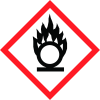
May cause or intensify fire; oxidizer
H280
Contains gas under pressure; may explode if heated
H315
Causes skin irritation
H319
Causes serious eye irritation
H336
May cause drowsiness or dizziness
H341
Suspected of causing genetic defects
H361
Suspected of damaging fertility or the unborn child
H373
May cause damage to organs through prolonged or repeated exposure
Section 2
SECTION 2: Hazards identification
OSHA HCS 2012 EU/EEC
2.2 Label elements
CLP DANGER
Hazard statements
G H270 - May cause or intensify fire; oxidizer H280 - Contains gas under pressure; may explode if heated H315 - Causes skin irritation H319 - Causes serious eye irritation H336 - May cause drowsiness or dizziness H341 - Suspected of causing genetic defects. H361 - Suspected of damaging fertility or the unborn child. H373 - May cause damage to organs -Nervous System, Bone Marrow through prolonged or repeated exposure G R8 - Contact with combustible material may cause fire. R48/20 - Harmful: danger of serious damage to health by prolonged exposure through inhalation. R63 - Possible risk of harm to the unborn child. R67 - Vapours may cause drowsiness and dizziness. R68 - Possible risk of irreversible effects. G May cause or intensify fire; oxidizer - H270 Contains gas under pressure; may explode if heated - H280 Causes skin irritation - H315 Causes serious eye irritation - H319 May cause drowsiness or dizziness - H336 Suspected of causing genetic defects. - H341 Suspected of damaging fertility or the unborn child. - H361 May cause damage to organs (Nervous System, Bone Marrow) through prolonged or repeated exposure - H373
Prevention
G P201 - Obtain special instructions before use. P202 - Do not handle until all safety precautions have been read and understood. P220 - Keep/Store away from clothing and other combustible materials. P244 - Keep reduction valves free from grease and oil. P264 - Wash thoroughly after handling. P260 - Do not breathe gas. P271 - Use only outdoors or in a well-ventilated area. P280 - Wear protective gloves/protective clothing/eye protection/face protection. P281 - Use personal protective equipment as required. G Obtain special instructions before use. - P201 Do not handle until all safety precautions have been read and understood. - P202 Keep/Store away from clothing and other combustible materials. - P220 Keep reduction valves free from grease and oil. - P244 Do not breathe gas. - P260 Wash thoroughly after handling. - P264 Use only outdoors or in a well-ventilated area. - P271 Wear protective gloves/protective clothing/eye protection/face protection. - P280
Response
G P370+P378 - In case of fire: Use appropriate media for extinction. P304+P340 - IF INHALED: Remove victim to fresh air and keep at rest in a position comfortable for breathing. P312 - Call a POISON CENTER or doctor/physician if you feel unwell. P302+P352 - IF ON SKIN: Wash with plenty of soap and water. P321 - Specific treatment, see supplemental first aid information. P332+P313 - If skin irritation occurs: Get medical advice/attention. P362 - Take off contaminated clothing and wash before reuse. P305+P351+P338 - IF IN EYES: Rinse cautiously with water for several minutes. Remove contact lenses, if present and easy to do. Continue rinsing. P337+P313 - If eye irritation persists: Get medical advice/attention. P314 - Get medical advice/attention if you feel unwell. P308+P313 - IF exposed or concerned: Get medical advice/attention. Storage/Disposal G P403+P233 - Store in a well-ventilated place. Keep container tightly closed. P405 - Store locked up. P501 - Dispose of content and/or container in accordance with local, regional, national, and/or international regulations. DSD/DPD G In case of fire: Stop leak if safe to do so. - P370+P376 IF INHALED: Remove victim to fresh air and keep at rest in a position comfortable for breathing. - P304+P340 Call a POISON CENTER or doctor/physician if you feel unwell. - P312 If on skin: Wash with plenty of water. Specific treatment, see supplemental first aid information. - P321 If skin irritation occurs: Get medical advice/attention. - P332+P313 Take off contaminated clothing and wash before reuse. - P362 IF IN EYES: Rinse cautiously with water for several minutes. Remove contact lenses, if present and easy to do. Continue rinsing. - P305+P351+P338 If eye irritation persists: Get medical advice/attention. - P337+P313 Get medical advice/attention if you feel unwell. - P314 IF exposed or concerned: Get medical advice/attention. - P308+P313 Storage/Disposal G Store in a well-ventilated place. Keep container tightly closed. - P403+P233 Store locked up. - P405 Dispose of content and/or container in accordance with local, regional, national, and/or international regulations. - P501
Precautionary statements
G S37 - Wear suitable gloves.
Other hazards
CLP G
Further information
NFPA
2.1 Classification of the substance or mixture
CLP G Oxidizing Gases 1 - H270 Compressed Gas - H280 Skin Irritation 2 - H315 Eye Irritation 2 - H319 Specific Target Organ Toxicity Single Exposure 3: Narcotic Effects - H336 Germ Cell Mutagenicity 2 - H341 Reproductive Toxicity 2 - H361 Specific Target Organ Toxicity Repeated Exposure 2 - H373 DSD/DPD G Oxidizing (O) Harmful (Xn) Substances Toxic To Reproduction - Category 3 Mutagenic Substances - Category 3 R8, R48/20, R63, R67, R68


