


Note: Ingredients listed on restricted chemical lists
EC/CAS
13478-00-7
Name of the chemical
Nickel(II) nitrate, hexahydrate (1:2:6)
Concentration
-485
General Information
Version
3.08
Revision date
2024-02-26
Product name
Nickel(II) Nitrate Hexahydrate
CAS No.
13478-00-7
1.2.1 Relevant identified uses
For research use only
1.2.2. Uses advised against
Seek expert judgment when using for purposes other than those recommended
supplier name
FUJIFILM Wako Pure Chemical Corporation
Emergency telephone
+81-6-6203-3741, +81-3-3270-8571
Icons in SDS


Company Information
company name
FUJIFILM Wako Pure Chemical Corporation
GHS Information
Signal word
Danger
Hazard Codes
Hazard statements (CLP)
H272, H317, H334, H350, H361, H372, H373
Hazard statements
Code
Statements
H272
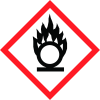
May intensify fire; oxidizer
H317
May cause an allergic skin reaction
H334
May cause allergy or asthma symptoms or breathing difficulties if inhaled
H350
May cause cancer
H361
Suspected of damaging fertility or the unborn child
H372
Causes damage to organs through prolonged or repeated exposure
H373
May cause damage to organs through prolonged or repeated exposure
Section 2
SECTION 2: Hazards identification
GHS classification Classification of the substance or mixture Oxidizing solids Category 3 Respiratory sensitization Category 1 Skin sensitization Category 1 Carcinogenicity Category 1A Reproductive Toxicity Category 2 Specific target organ toxicity (repeated exposure) Category 1, Category 2 Category 1 respiratory system Category 2 central nervous system, liver, Male reproductive system Pictograms
Signal word
Danger Hazard statements H272 - May intensify fire; oxidizer H334 - May cause allergy or asthma symptoms or breathing difficulties if inhaled H350 - May cause cancer H361 - Suspected of damaging fertility or the unborn child H317 - May cause an allergic skin reaction H372 - Causes damage to the following organs through prolonged or repeated exposure: respiratory system H373 - May cause damage to the following organs through prolonged or repeated exposure: central nervous system, liver, Male reproductive system Precautionary statements-(Prevention) Obtain special instructions before use Do not handle until all safety precautions have been read and understood Use personal protective equipment as required In case of inadequate ventilation wear respiratory protection Contaminated work clothing should not be allowed out of the workplace Wear protective gloves Do not breathe dust/fume/gas/mist/vapors/spray Wash face, hands and any exposed skin thoroughly after handling Do not eat, drink or smoke when using this product Keep away from heat, hot surfaces, sparks, open flames and other ignition sources. No smoking Keep/Store away from clothing/ combustible materials Take any precaution to avoid mixing with combustibles Precautionary statements-(Response) IF exposed or concerned: Get medical advice/attention IF ON SKIN: Wash with plenty of soap and water If skin irritation or rash occurs: Get medical advice/attention Wash contaminated clothing before reuse IF INHALED: If breathing is difficult, remove victim to fresh air and keep at rest in a position comfortable for breathing If experiencing respiratory symptoms: Call a POISON CENTER or doctor/physician Precautionary statements-(Storage) Store locked up Precautionary statements-(Disposal) • Dispose of contents/container to an approved waste disposal plant Others
2.3 Other hazards
Not available
2.1 Classification of the substance or mixture
Classification of the substance or mixture Oxidizing solids Category 3 Respiratory sensitization Category 1 Skin sensitization Category 1 Carcinogenicity Category 1A Reproductive Toxicity Category 2 Specific target organ toxicity (repeated exposure) Category 1, Category 2 Category 1 respiratory system Category 2 central nervous system, liver, Male reproductive system Pictograms Signal word Danger Hazard statements H272 - May intensify fire; oxidizer H334 - May cause allergy or asthma symptoms or breathing difficulties if inhaled H350 - May cause cancer H361 - Suspected of damaging fertility or the unborn child H317 - May cause an allergic skin reaction H372 - Causes damage to the following organs through prolonged or repeated exposure: respiratory system H373 - May cause damage to the following organs through prolonged or repeated exposure: central nervous system, liver, Male reproductive system


