

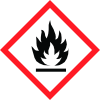
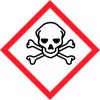


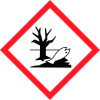
Note: Ingredients listed on restricted chemical lists
EC/CAS
71-43-2
Name of the chemical
Benzol
Concentration
<1
EC/CAS
108-88-3
Name of the chemical
Toluene
Concentration
0.1-1.0
EC/CAS
110-54-3
Name of the chemical
n-Hexan (790/2009)
Concentration
8042-05- 7704-34-
General Information
Revision date
2015-06-23
Product name
Dilbit
Chemical name
Diluted Bitumen
CAS No.
8052-42-4
Emergency telephone
Within the U.S. or Canada 1 800 424 9300
Icons in SDS


Company Information
company name
Freepoint Commodities, LLC
e-mail address of the competent person responsible for the Safety Data Sheet
LSantore@freepoint.com
GHS Information
Signal word
Danger
Hazard Codes
Hazard statements (CLP)
H224, H225, H304, H315, H319, H330, H336, H340, H350, H361, H373, H411
Hazard statements
Code
Statements
H224
Extremely flammable liquid and vapour
Section 2
2.1 Classification of the substance or mixture
Flammable Liquids - Category 2 Acute Toxicity – Inhalation, Category 2 * Germ Cell Mutagenicity – Category 1B Carcinogenicity - Category 1A Toxic to Reproduction, Category 2 Specific Target Organ Toxicity Single Exposure - Category 3 – Narcotic Effects Specific Target Organ Toxicity Repeat Exposure - Category 2 Aspiration Hazard, Category 1 * Classification is due to the potential for Hydrogen sulphide (H2S) accumulation
Signal word
Danger
Physical hazards
H224: Extremely flammable liquid and vapor.
Environmental hazards
H411: Toxic to aquatic life with long lasting effects.
Health hazards
H225: Highly flammable liquid and vapor. H304: May be fatal if swallowed and enters airways. H315: Causes skin irritation. H319: Causes serious eye irritation. H330: Fatal if inhaled. H340: May cause genetic effects. H336: May cause drowsiness or dizziness. H350: May cause cancer. H361: Suspected of damaging fertility or the unborn child. H373: May cause damage to organs or organ systems through prolonged or repeated exposure. EUH066: Repeated exposure may cause skin dryness or cracking. Hydrogen sulphide is highly toxic and may be fatal if inhaled. Hydrogen sulphide (H2S), an extremely flammable and toxic gas, and other hazardous vapors may evolve and collect in the headspace of storage tanks, transport vessels and other enclosed containers. May dull the sense of smell, so do not rely on odor as an indication of hazard. H2S has a broad range of effects dependent on the airborne concentration and length of exposure: 0.02 ppm odor threshold, smell of rotten eggs; 10 ppm eye and respiratory tract irritation; 100 ppm coughing, headache, dizziness, nausea, eye irritation, loss of sense of smell in minutes; 200 ppm potential for pulmonary edema after >20-30 minutes; 500 ppm loss of consciousness after short exposures, potential for respiratory arrest; >1000ppm immediate loss of consciousness, may lead rapidly to death, prompt cardiopulmonary resuscitation may be required. Do not depend on sense of smell for warning. H2S causes rapid olfactory fatigue. There is no evidence that H2S will accumulate in the body tissue after repeated exposure. Fumes from heated product may cause eye and lung irritation. Hot product can cause thermal burns. On rare occasions, Hydrogen Sulphide may be present which can accumulate to hazardous levels in enclosed spaces.
Prevention
P201: Obtain special instructions before use. P210: Keep away from heat/sparks/open flames/hot surfaces. - No smoking. P220: Do not handle until all safety precautions have been read and understood. P240: Ground/bond container and receiving equipment. P241: Use explosion-proof electrical/ventilating/lighting and other equipment. P242: Use only non-sparking tools. P243: Take precautionary measures against static discharge. P260: Do not breathe dust/fume/gas/mist/vapors/spray. P264: Wash thoroughly after handling. P271: Use only outdoors or in a well-ventilated area. P280: Wear protective gloves/protective clothing/eye protection/face protection.
Storage
P235: Keep cool. P403+P235: Store in a well ventilated place. Keep container tightly closed. P405: Store locked up.
Response
P301+P310 IF SWALLOWED Immediately call a POISON CENTER or doctor/physician. P303+361+353 IF ON SKIN (or hair) Take off immediately all contaminated clothing. Rinse skin with water/ shower. P304+340 IF INHALED Remove person to fresh air and keep comfortable for breathing. P313 If eye irritation persists Get medical advice/attention P314: Get medical advice/attention if you feel unwell. P332+313 If skin irritation occurs Get medical advice/attention P340 IF INHALED Remove victim to fresh air and keep at rest in a position comfortable for breathing. P362+364: Take off contaminated clothing and wash it before reuse. P391: Collect spillage.
Disposal
P501: Dispose of contents and container to appropriate waste site or reclaimer in accordance with local, state, and national regulations.
Precautionary statements
S53 Avoid exposure. Obtain special instructions before use. S16 Keep away from sources of ignition - No smoking. S29 Do not empty into drains. S45 In case of accident or if you feel unwell, seek medical advice immediately (show the label where possible). S61 Avoid release to the environment. Refer to special instructions/Safety data sheets.
Further information
This product is intended for use in closed systems only. This material is considered hazardous by the OSHA Hazard Communication Standard (29 CFR 1910.1200)



