


General Information
Version
ID 1.01
Revision date
2026-05-29
Product name
Diallylamine
CAS No.
124-02-7
1.2.1 Relevant identified uses
For research and development purposes
1.2.2. Uses advised against
No uses advised 1.3 Safety Data Sheet supplier details
Emergency telephone
+44 20 3807 3798
Icons in SDS


Company Information
company name
Fluorochem Limited
e-mail address of the competent person responsible for the Safety Data Sheet
sds@fluorochem.co.uk
GHS Information
Signal word
Danger
Hazard Codes
Hazard statements (CLP)
H225, H302+H332, H311, H314, H412
Hazard statements
Code
Statements
H225
Highly Flammable liquid and vapour
Section 2
SECTION 2: Hazards identification
Classification of the substance or mixture Classification H225 Flam. Liq. 2 H302+H332 Acute Tox. 4 H311 Acute Tox. 3 H314 Skin Corr. 1B H412 Aquatic Chronic 3
Signal word
Danger
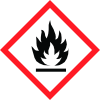
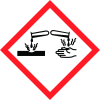
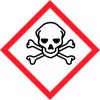
Hazard pictograms
GHS02 GHS05 GHS06 GHS07 H225 Highly flammable liquid and vapour. H302+H332 Harmful if swallowed or if inhaled. H311 Toxic in contact with skin. H314 Causes severe skin burns and eye damage. H412 Harmful to aquatic life with long lasting effects.
Precautionary statements
P101 If medical advice is needed, have product container or label at hand. P202 Do not handle until all safety precautions have been read and understood. P210 Keep away from heat, hot surfaces, sparks, open flames and other ignition sources. No smoking. P233 Keep container tightly closed. P240 Ground and bond container and receiving equipment. P241 Use explosion-proof equipment. P242 Use non-sparking tools. P243 Take action to prevent static discharges. P260 Do not breathe dust/fume/gas/mist/vapours/spray. P271 Use only outdoors or in a well-ventilated area. P273 Avoid release to the environment. P280 Wear protective gloves/protective clothing and eye/face protec- tion. P301+P330+P331 IF SWALLOWED: Rinse mouth. Do NOT induce vomiting. P303+P361+P353 IF ON SKIN (or hair): Take off immediately all con- taminated clothing. Rinse skin with water. P304+P340 IF INHALED: Remove person to fresh air and keep com- fortable for breathing. P305+P351+P338 IF IN EYES: Rinse cautiously with water for sev- eral minutes. Remove contact lenses, if present and easy to do. Continue rinsing. P321 Specific treatment (see Section 4 on this SDS). P333+P313 If skin irritation or rash occurs: Get medical advice/attention. P342+P311 If experiencing respiratory symptoms: Call a POISON CENTER/doctor. P370+P378 In case of fire: Use dry sand to extinguish. P391 Collect spillage. P403+P235 Store in a well-ventilated place. Keep cool. P405 Store locked up. P501 Dispose of contents/container to hazardous waste disposal.
Supplemental label elements
None
2.3 Other hazards
Other Classification Hazards This substance/mixture contains no components consid- ered to be either persistent, bioaccumulative and toxic (PBT), or very persistent and very bioaccumulative (vPvB) at levels of 0.1% or higher.
ECOLOGICAL INFORMATION
This substance/mixture contains no components consid- ered to have endocrine disrupting properties for environ- ment , according to REACH Article 57(f), Commission Regulation (EU) 2018/605 or Commission Delegated Regulation (EU) 2017/2100.
TOXICOLOGICAL INFORMATION
This substance/mixture contains no components consid- ered to have endocrine disrupting properties affecting hu- man health, according to REACH Article 57(f), Commission Regulation (EU) 2018/605 or Commission Delegated Regulation (EU) 2017/2100.
2.1 Classification of the substance or mixture
Classification H225 Flam. Liq. 2 H302+H332 Acute Tox. 4 H311 Acute Tox. 3 H314 Skin Corr. 1B H412 Aquatic Chronic 3



