



Note: Ingredients listed on restricted chemical lists
EC/CAS
13463-67-7
Name of the chemical
Reaction mass of titanium dioxide and silver chloride
Concentration
10-20
EC/CAS
14807-96-6
Name of the chemical
Talc
Concentration
1-5
EC/CAS
68333-79-9
Name of the chemical
Polyphosphoric acids, ammonium salts
Concentration
30-40
EC/CAS
108-78-1
Name of the chemical
Melamine
Concentration
15-20
EC/CAS
80-62-6
Name of the chemical
methacrylic acid, methyl ester
Concentration
25-30
EC/CAS
103-11-7
Name of the chemical
acrylic acid, 2-ethylhexyl ester
Concentration
5-10
General Information
Version
0.7
Revision date
2025-10-21
Product name
FlameOFF IX2
Product name
FlameOFF IX2
Identification on the label/Trade name
at 50 °C not more than 110 kPa); PAINT RELATED MATERIAL
Product Synonyms
3912S0250 (L2502555) 2K Acrylic FR Paint PAINT (including paint, lacquer, enamel, stain, shellac, varnish, polish, liquid filler and liquid lacquer base) (vapour pressure at 50 °C more than 110 kPa); PAINT (including paint, lacquer, enamel, stain, shellac, varnish, polish, liquid filler and liquid lacquer base) (vapour pressure than 110 kPa); PAINT (including paint, lacquer, enamel, stain, shellac, varnish, polish, liquid filler and liquid lacquer base) (vapour pressure
1.2.1 Relevant identified uses
Industrial Paint
Emergency telephone
+61 3 9573 3188
Icons in SDS


Company Information
company name
FlameOff Coatings
e-mail address of the competent person responsible for the Safety Data Sheet
info@flameoff.com
GHS Information
Signal word
Danger
Hazard Codes
Hazard statements (CLP)
H225, H315, H317, H319, H335+H336, H341, H351, H373, H413
Hazard statements
Code
Statements
H225
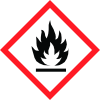
Highly Flammable liquid and vapour
Section 2
SECTION 2: Hazards identification
Classification of the substance or mixture Chemwatch Hazard Ratings Min Flammability 3 Toxicity 2 Body Contact 2 0 Reactivity Chronic 4
Signal word
Danger
Hazard statements
Page 1 continued... H225 Highly flammable liquid and vapour. H315 Causes skin irritation. H317 May cause an allergic skin reaction. H319 Causes serious eye irritation. H335+H336 May cause respiratory irritation or drowsiness or dizziness. H341 Suspected of causing genetic defects. H351 Suspected of causing cancer. H373 May cause damage to organs through prolonged or repeated exposure. (Inhalation) H413 May cause long lasting harmful effects to aquatic life. Hazard(s) not otherwise classified Not Applicable
Precautionary statements
P101 If medical advice is needed, have product container or label at hand. P102 Keep out of reach of children.
Prevention
P201 Obtain special instructions before use. P210 Keep away from heat, hot surfaces, sparks, open flames and other ignition sources. No smoking.
Response
P304+P340 IF INHALED: Remove person to fresh air and keep comfortable for breathing. P308+P313 IF exposed or concerned: Get medical advice/ attention.
Storage
P403+P233 Store in a well-ventilated place. Keep container tightly closed. P403+P235 Store in a well-ventilated place. Keep cool.
Disposal
P501 Dispose of contents/container to authorised hazardous or special waste collection point in accordance with any local regulation. No further product hazard information.
2.1 Classification of the substance or mixture
Category 2A, Specific Target Organ Toxicity - Single Exposure Category 3, Germ Cell Mutagenicity Category 2, Carcinogenicity Category 2, Specific Target Organ Toxicity - Repeated Exposure Category 2, Hazardous to the Aquatic Environment Long-Term Hazard Category 4



