



Note: Ingredients listed on restricted chemical lists
EC/CAS
202-860-4/100-52-7
Name of the chemical
benzaldehyde
Concentration
<=100
General Information
Revision date
2022-12-06
Product name
Benzaldehyde
Product Synonyms
Benzenecarboxaldehyde; artificial almond oil; benzene carbaldehyde
CAS No.
100-52-7
Emergency telephone
Department
Icons in SDS


Company Information
company name
Alfa Aesar
e-mail address of the competent person responsible for the Safety Data Sheet
uktech@alfa.com
GHS Information
Signal word
Danger
Hazard Codes
Hazard statements (CLP)
H302, H302+H332, H315, H319, H332, H335, H360D, H411
Hazard statements
Code
Statements
H302
Harmful if swallowed
Section 2
Physical hazards
Based on available data, the classification criteria are not met
Health hazards
Acute oral toxicity Category 4 (H302) Acute Inhalation Toxicity - Vapors Category 4 (H332) Skin Corrosion/Irritation Category 2 (H315) Serious Eye Damage/Eye Irritation Category 2 (H319) Reproductive Toxicity Category 1B (H360D) Specific target organ toxicity - (single exposure) Category 3 (H335)
Environmental hazards
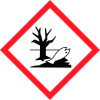
Chronic aquatic toxicity Category 2 (H411)
Hazard statements
see section 16 H315 - Causes skin irritation H319 - Causes serious eye irritation H335 - May cause respiratory irritation H360D - May damage the unborn child H411 - Toxic to aquatic life with long lasting effects H302 + H332 - Harmful if swallowed or if inhaled Combustible liquid
Signal word
Danger
Precautionary statements
P280 - Wear protective gloves/protective clothing/eye protection/face protection P301 + P330 + P331 - IF SWALLOWED: rinse mouth. Do NOT induce vomiting P304 + P340 - IF INHALED: Remove person to fresh air and keep comfortable for breathing P302 + P352 - IF ON SKIN: Wash with plenty of soap and water P305 + P351 + P338 - IF IN EYES: Rinse cautiously with water for several minutes. Remove contact lenses, if present and easy to do. Continue rinsing P312 - Call a POISON CENTER or doctor if you feel unwell Additional EU labelling Restricted to professional users
2.3 Other hazards
Substance is not considered persistent, bioaccumulative and toxic (PBT) / very persistent and very bioaccumulative (vPvB) Prolonged skin contact may defat the skin and produce dermatitis Toxicity to Soil Dwelling Organisms Toxic to terrestrial vertebrates



