

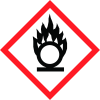


General Information
Product name
Ammonium Persulfate; GB-2, Ammonium Peroxydisulfate; Peroxydisulfuric Acid, Diammonium Salt; Diammonium peroxydisulfate
CAS No.
7727-54-0
1.2.1 Relevant identified uses
and uses advised against (if any) Oxidizer for Oil & Gas Wells and Industrial Use
supplier name
Finoric LLC
Icons in SDS
Company Information
company name
Finoric LLC
GHS Information
Signal word
Danger
Hazard Codes
Hazard statements (CLP)
H272, H302, H315, H317, H319, H334, H335
Hazard statements
Code
Statements
H272
May intensify fire; oxidizer
H302
Harmful if swallowed
H315
Causes skin irritation
H317
May cause an allergic skin reaction
H319
Causes serious eye irritation
H334
May cause allergy or asthma symptoms or breathing difficulties if inhaled
H335
May cause respiratory irritation
Section 2
SECTION 2: Hazards identification
Classification According to Directive 67/548/EEC or 1999/45/EC: GHS, Globally Harmonized System Classification in accordance with 29 CFR 1910
CLP CLASSIFICATION
Acute toxicity - Oral Category 4 Skin corrosion/irritation Category 2 Serious eye damage/eye irritation Category 2A Respiratory sensitization Category 1 Skin sensitization Category 1 Specific target organ toxicity (single exposure) Category 3 Oxidizing Solids Category 3 Labeling according to GHS USA & Regulation (EC) No 1272/2008
2.2 Label elements
GHS Label Elements Oxidizing Solid Irritant
Signal word
Danger
Hazard statements
H272 - May intensify fire; oxidizer H302 - Harmful if swallowed H315 - Causes skin irritation H317 - May cause an allergic skin reaction H319 - Causes serious eye irritation H334 - May cause allergy or asthma symptoms or breathing difficulties if inhaled H335 - May cause respiratory irritation R 8 = Contact with combustible material may cause fire. R22 = Harmful if swallowed. R36/37/38 = Irritating to eyes, respiratory system and skin. R42/43 May cause sensitization by inhalation and skin contact.
Prevention
P210: Keep away from heat/sparks/open flames/hot surfaces. - No smoking. P220: Keep/Store away from clothing/combustible materials P221: Take any precaution to avoid mixing with combustibles P261: Avoid breathing dust. P264: Wash face, hands and any exposed skin thoroughly after handling P270: Do not eat, drink or smoke when using this product P271: Use only outdoors or in a well-ventilated area P272: Contaminated work clothing should not be allowed out of the workplace. P280: Wear protective gloves/ protective clothing/ eye protection/ face protection P285: In case of inadequate ventilation wear respiratory protection
Response
P301 + P312 IF SWALLOWED Call a POISON CENTER or doctor if you feel unwell P302 + P352 IF ON SKIN Wash with plenty of water P304 + P341 IF INHALED If breathing is difficult, remove to fresh air and keep at rest in a position comfortable for breathing. P305 + P351 + P338 IF IN EYES Rinse cautiously with water for several minutes. Remove contact lenses, if present and easy to do. Continue rinsing. P314: Get Medical advice/attention if you feel unwell. P330: If swallowed, rinse mouth. P333 + P313 If skin irritation or rash occurs Get medical advice/ attention P337 + P313 If eye irritation persists Get medical advice/ attention P342 + P311 If experiencing respiratory symptoms Call a POISON CENTER or doctor P362: Take off contaminated clothing and wash before reuse. P370 + P378 In case of fire Use water for extinction
Storage
P402: Store in a dry place. P403 + P233 - Store in a well-ventilated place. Keep container tightly closed P501: Dispose of contents/container in accordance with local, regional, national, international regulations.
EU Classification
Directives 67/548/EEC or 1999/45/EC
Hazard pictograms
O Oxidizing R 8 Xn Harmful R22 Xi Irritant R36/37/38; R42/43
Further information
Risk of decomposition by moisture, heat or by contact with incompatible materials


