

Note: Ingredients listed on restricted chemical lists
EC/CAS
231-159-6/7440-50-8
Name of the chemical
Copper
Concentration
8,95-
EC/CAS
231-100-4/7439-92-1
Name of the chemical
Blei, massiv: [Partikeldurchmesser ≥ 1 mm]
Concentration
0-48
Listed in
EC/CAS
231-072-3/7429-90-5
Name of the chemical
Aluminium
Concentration
0-29 002-00-
EC/CAS
618-392-2/9004-70-0
Name of the chemical
Nitrocellulose
Concentration
5,4-24 037-00-
EC/CAS
231-141-8/7440-31-5
Name of the chemical
Organometallic tin
Concentration
0-20
EC/CAS
231-175-3/7440-66-6
Name of the chemical
Zinc ()
Concentration
0,045- 001-01-
EC/CAS
231-111-4/7440-02-0
Name of the chemical
Nickel
Concentration
<0,97 00-7
EC/CAS
200-240-8/55-63-0
Name of the chemical
Nitroglycerin; Propane-1,2,3-triyl trinitrate
Concentration
0,4-10 034-00-
EC/CAS
231-146-5/7440-36-0
Name of the chemical
Antimony
Concentration
0-8
EC/CAS
239-290-0/15245-44-0
Name of the chemical
Blei-2,4,6-trinitroresorcinat
Concentration
0,01- 019-00-
EC/CAS
231-149-1/7440-39-3
Name of the chemical
Barium
Concentration
0,01-
General Information
Version
2.1
Revision date
2024-06-20
Product name
Speer Rifle & Pistol Ammunition
1.2.1 Relevant identified uses
Small arms ammunition
Emergency telephone
1-800-424-9300, 01-703-527-3887
Icons in SDS


Company Information
company name
Federal Cartridge Company (dba CCI/Speer)
e-mail address of the competent person responsible for the Safety Data Sheet
dangerous.goods@tkghunt.com
GHS Information
Signal word
Danger
Hazard Codes
Hazard statements (CLP)
H204, H300, H300+H310+H330, H310, H330, H373, H412
Hazard statements
Code
Statements
H204
Fire or projection hazard
H300
Fatal if swallowed
H300+H310+H330
Fatal if swallowed, in contact with skin or if inhaled
H310
Fatal in contact with skin
H330
Fatal if inhaled
H373
May cause damage to organs through prolonged or repeated exposure
H412
Harmful to aquatic life with long lasting effects
Section 2
SECTION 2: Hazards identification
Hazard statements
see section 16 : H204 - Fire or projection hazard H300+H310+H330 - Fatal if swallowed, in contact with skin or if inhaled H373 - May cause damage to organs through prolonged or repeated exposure H412 - Harmful to aquatic life with long lasting effects
Adverse physicochemical, human health and environmental effects
No additional information available
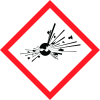
Hazard pictograms
GHS01
Signal word
Danger
Precautionary statements
P210 - Keep away from heat, hot surfaces, sparks, open flames and other ignition sources. No smoking. P250 - Do not subject to grinding/shock/friction. P260 - Do not breathe dust or fumes. P264 - Wash hands, forearms, and other exposed areas thoroughly after handling. P270 - Do not eat, drink or smoke when using this product. P271 - Use only outdoors or in a well-ventilated area. P273 - Avoid release to the environment. P280 - Wear protective gloves, protective clothing, and eye protection. P284 - [In case of inadequate ventilation] wear respiratory protection. P301+P310 - IF SWALLOWED: Immediately call a POISON CENTER or doctor. P302+P352 - IF ON SKIN: Wash with plenty of water. P304+P340 - IF INHALED: Remove person to fresh air and keep comfortable for breathing. P310 - Immediately call a POISON CENTER or doctor. P314 - Get medical advice/attention if you feel unwell. P320 - Specific treatment is urgent (see section 4 on this SDS). P330 - Rinse mouth. P361+P364 - Take off immediately all contaminated clothing and wash it before reuse. P370+P380 - In case of fire: evacuate area. P372 - Explosion risk in case of fire. P373 - DO NOT fight fire when fire reaches explosives. P401 - Store in accordance with local, regional, national, and international regulations. P403+P233 - Store in a well-ventilated place. Keep container tightly closed. P405 - Store locked up. P501 - Dispose of contents/container in accordance with local, regional, national, and international regulations.
Supplemental label elements
EUH208 - Contains Nickel (7440-02-0). May produce an allergic reaction
Other hazards which do not result in classification
Many of the health hazards listed above are associated with the internal contents of the ammunition and the propellant. When in its unfired state some of these hazards may not be applicable. Safe handling practices should still be observed. Exposure may aggravate pre-existing eye, skin, or respiratory conditions. If heated to the point of fume generation, zinc fumes may cause metal fume fever. Otherwise, zinc is non-toxic. This product contains copper, nickel, aluminum, lead, zinc, tin, and antimony in a solid massive state. Lead in its powder form (diameter < 1mm) is a known reproductive hazard and causes damage to the central nervous system, blood and kidneys through prolonged or repeated exposure by inhalation or ingestion. Additional hazardous products may be formed during processing, see hazardous decomposition products. Toxic or irritating substances may be released during the firing of ammunition. Care should be taken in the cleaning of range facilities to minimize the exposure potential to these substances.


