



Note: Ingredients listed on restricted chemical lists
EC/CAS
108-88-3
Name of the chemical
Toluene
Concentration
<0.05% 625-9
EC/CAS
100-41-4
Name of the chemical
Ethylbenzene
Concentration
0.001% 849-4 0.001% 753-7
EC/CAS
64742-49-0
Name of the chemical
Naphtha (petroleum), hydrotreated light
Concentration
N/A
General Information
Revision date
2012-11-28
Product name
Cleaner Fluid
CAS No.
64742-49-0
REACH No
05-2117850959-22-0000
1.2.1 Relevant identified uses
• Tire repair surface preparation
Manufacturer Name
Patch Rubber Company
Emergency telephone
1-800-424-9300, +1 703-527-3887
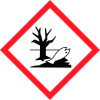
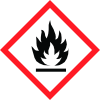
Icons in SDS


Company Information
company name
EU
GHS Information
Signal word
DANGER
Hazard Codes
Hazard statements (CLP)
H225, H304, H315, H336, H400, H410
Hazard statements
Code
Statements
H225
Highly Flammable liquid and vapour
Section 2
SECTION 2: Hazards identification
29 CFR 1910.1200) EU/EEC
2.1 Classification of the substance or mixture
CLP • Flammable Liquids 2 - H225 Preparation Date 28/November/2012 Fom1at EU CLP/REACH Language English (US) Revision Date: 21/0ctober/2014 _ ___ .UNGHS Liquids 2-- H225 ~ Flammable Skin Irritation 2 - H315 Aspiration 1 - H304 Specific Target Organ Toxicity Single Exposure 3: Narcotic Effects - H336 Hazardous to the aquatic environment Acute 1 - H400 Hazardous to the aquatic environment Chronic 1 - H410
Hazard statements
H225 - Highly flammable liquid and vapour H336 - May cause drowsiness or dizziness H315 - Causes skin irritation H304 - May be fatal if swallowed and enters airways H410 - Very toxic to aquatic life with long lasting effects H225 - Highly flammable liquid and vapour H315 - Causes skin irritation H336 - May cause drowsiness or dizziness H304 - May be fatal if swallowed and enters airways H410 - Very toxic to aquatic life with long lasting effects
Prevention
Response• Storage/Disposal • P102 - Keep out of reach of children. P210 - Keep away from heat, sparks, open flames and/or hot surfaces. - No smoking. P273 - Avoid release to the environment. P280 - Wear protective gloves/protective clothing/eye protection/face protection. P301+P310 - IF SWALLOWED: Immediately call a POISON CENTER or doctor/physician. P331 - Do NOT induce vomiting. P501 - Dispose of content and/or container in accordance with local, regional, national, and/or international regulations. DSD/DPD Risk phrases• Safety phrases• R11 - Highly flammable. R38 - Irritating to skin. R65 - Harmful: may cause lung damage if swallowed. R67 - Vapours may cause drowsiness and dizziness. R50 - Very toxic to aquatic organisms. R53 - May cause long-term adverse effects in the aquatic environment. S2 - Keep out of reach of children. S9 - Keep container in a well ventilated place S16 - Keep away from sources of ignition - No Smoking. S29 - Do not empty into drains. S33 - Take precautionary measures against static discharges. S60 - This material and its container must be disposed of as hazardous waste. S61 - Avoid release to the environment. Refer to special instructions/ Safety Data Sheets. S62 - If swallowed, do not induce vomiting. Seek medical advice immediately and show the container or label. 2.3 Other Hazards CLP Response• Storage/Disposal • P210 - Keep away from heat, sparks, open flames and/or hot surfaces. - No smoking. P235 - Keep cool. P243 - Take precautionary measures against static discharge. P240 - Ground and/or bond container and receiving equipment. P242 - Use only non-sparking tools. P241 - Use explosion-proof - electrical, ventilating and/or lighting equipment. P271 - Use only outdoors or in a well-ventilated area. P233 - Keep container tightly closed. P261 - Avoid breathing dust, fume, gas, mist, vapours and/or spray. P280 - Wear protective gloves and eye/face protection , . P285 - In case of inadequate ventilation wear respiratory protection. P264 - Wash thoroughly after handling. P273 - Avoid release to the environment. P370+P378 - In case of fire: Use appropriate media for extinction . P304+P340 - IF INHALED: Remove victim to fresh air and keep at rest in a position comfortable for breathing. P312 - Call a POISON CENTER or doctor/physician if you feel unwell. P302+P352 - IF ON SKIN: Wash with plenty of soap and water. P362 - Take off contaminated clothing and wash before reuse. P332+P313 - If skin irritation occurs: Get medical advice/attention. P301+P310 - IF SWALLOWED: Immediately call a POISON CENTER or doctor/physician. P331 - Do NOT induce vomiting. P391 - Collect spillage. P403+P235 - Store in a well-ventilated place. Keep cool. P405 - Store locked up. P501 - Dispose of content and/or container in accordance with local, regional, national, and/or international regulations.
2.2 Label elements
UN GHS DANGER ~¢ ~ ~
Other hazards
UN GHS • According to the Globally Harmonized System for Classification and Labeling (GHS) Preparation Date 28/November/2012 Format EU CLP/REACH Language English (US) Revision Date 21/0 ctober/2014
Further information
NFPA See Section 12 for Ecological Information.



