

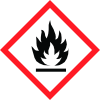


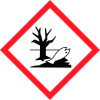
Note: Ingredients listed on restricted chemical lists
EC/CAS
7440-02-0
Name of the chemical
Nickel
Concentration
40-50
EC/CAS
7631-86-9
Name of the chemical
Silver adsorbed on silicon dioxide
Concentration
5-15
EC/CAS
1313-99-1
Name of the chemical
Nickel monoxide
Concentration
1-10
General Information
Revision date
2021-04-15
Product name
PS32
Chemical name
PS32
1.2.1 Relevant identified uses
UHP Gas Purifier
Icons in SDS


Company Information
company name
Entegris, Inc
e-mail address of the competent person responsible for the Safety Data Sheet
Product.stewardship@entegris.com
GHS Information
Signal word
Danger
Hazard Codes
Hazard statements (CLP)
H251, H317, H319, H334, H341, H350, H370, H372, H400, H412
Hazard statements
Code
Statements
H251
Self-heating; may catch fire
Section 2
SECTION 2: Hazards identification
Chemical Hazard(s) Classification: Self-Heating Substances and Mixtures - Category 1 Serious Eye Damage/Eye Irritation - Category 2A Respiratory Sensitization - Category 1 Skin Sensitization - Category 1 Germ Cell Mutagenicity - Category 2 Carcinogenicity - Category 1A Specific Target Organ Toxicity - Single Exposure - Category 1 ( kidneys , respiratory system ) Specific Target Organ Toxicity - Repeated Exposure - Category 1 ( respiratory system , immune system , kidneys , lungs ) Hazardous to the Aquatic Environment - Acute - Category 1 Hazardous to the Aquatic Environment - Chronic - Category 3 Label content:
Signal word
Danger
Hazard statements
H251 Self-heating; may catch fire. H319 Causes serious eye irritation. H334 May cause allergic or asthmatic symptoms or breathing difficulties if inhaled. H317 May cause an allergic skin reaction. H341 Suspected of causing genetic defects. H350 May cause cancer. H370 Causes damage to organs. (kidneys , respiratory system ) H372 Causes damage to organs through prolonged or repeated exposure. (respiratory system , immune system , kidneys , lungs ) H400 Very toxic to aquatic life. H412 Harmful to aquatic life with long lasting effects.
Prevention
P235+P410 Keep cool. Protect from sunlight. P260 Do not breathe dust. P264 Wash thoroughly after handling. P280 Wear protective gloves/protective clothing/eye protection/face protection. P284 Wear respiratory protection. P272 Contaminated work clothing should not be allowed out of the workplace. P270 Do not eat, drink or smoke when using this product. P201 Obtain special instructions before use. P202 Do not handle until all safety precautions have been read and understood. P273 Avoid release to the environment.
Response
P308+P311 If exposed or concerned: Call a POISON CENTER or doctor/physician. P304+P340 IF INHALED: Remove person to fresh air and keep comfortable for breathing. P342+P311 If experiencing respiratory symptoms: Call a POISON CENTER/doctor. P302+P352 IF ON SKIN: Wash with plenty of soap and water. P333+P313 If skin irritation or rash occurs: Get medical advice/attention. P362+P364 Take off contaminated clothing and wash before reuse. P305+P351+P338 IF IN EYES: Rinse cautiously with water for several minutes. Remove contact lenses, if present and easy to do. Continue rinsing. P337+P313 If eye irritation persists: Get medical advice/attention. P391 Collect spillage.
Storage
P405 Store locked up. P407 Maintain air gap between stacks/pallets. P413 Store bulk masses at temperatures not exceeding manufacturer recommendations. P420 Store away from other materials.
Disposal
P501 Dispose of contents/container in accordance with local/regional/national/international regulations. Statement(s) of Unknown Aquatic Toxicity 35.1% of the mixture consists of ingredient(s) of unknown acute aquatic toxicity. 40% of the mixture consists of ingredient(s) of unknown chronic aquatic toxicity.
2.3 Other hazards
In normal use, as installed and maintained according to product literature, this material in its final form is not expected to be hazardous. May form combustible dust concentrations in air.



