


Note: Ingredients listed on restricted chemical lists
EC/CAS
215-239-8/1314-62-1
Name of the chemical
Vanadium pentoxide (orthorhombic crystalline form)
Concentration
=0.05
General Information
Version
2.0
Revision date
2024-02-16
Product name
VANADIUM PENTOXIDE
Substance name
VANADIUM PENTOXIDE
Chemical name
divanadium pentaoxide; vanadium pentoxide
CAS No.
1314-62-1
1.2.1 Relevant identified uses
Professional use
Emergency telephone
+44 (0) 7990 767375
Icons in SDS


Company Information
company name
Elemental Microanalysis Ltd
e-mail address of the competent person responsible for the Safety Data Sheet
enquiries@microanalysis.co.uk
GHS Information
Signal word
Danger
Hazard Codes
Hazard statements (CLP)
H301, H330, H335, H341, H350, H361, H361fd, H362, H372, H411
Hazard statements
Code
Statements
H301
Toxic if swallowed
Section 2
SECTION 2: Hazards identification
According to Regulation (EC) No. 1272/2008 (CLP)] Classification of the substance or mixture
Adverse physicochemical, human health and environmental effects
May cause cancer. Suspected of causing genetic defects. May cause harm to breast-fed children. Suspected of damaging fertility or the unborn child. Causes damage to organs through prolonged or repeated exposure. Fatal if inhaled. Toxic if swallowed. May cause respiratory irritation. Toxic to aquatic life with long lasting effects
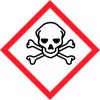
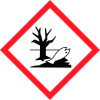
Hazard pictograms
GHS06 GHS08 GHS09
Signal word
Danger
Hazard statements
H341 - Suspected of causing genetic defects. H350 - May cause cancer. H361fd - Suspected of damaging fertility. Suspected of damaging the unborn child. H362 - May cause harm to breast-fed children. H301 - Toxic if swallowed. H330 - Fatal if inhaled. H335 - May cause respiratory irritation. H372 - Causes damage to organs (respiratory tract) through prolonged or repeated exposure (inhalation). H411 - Toxic to aquatic life with long lasting effects.
Precautionary statements
P201 - Obtain special instructions before use. P260 - Do not breathe dust/fume/gas/mist/vapours/spray. P263 - Avoid contact during pregnancy and while nursing. P280 - Wear protective gloves/protective clothing/eye protection/face protection/hearing protection. P301+P310 - IF SWALLOWED: Immediately call a POISON CENTER or doctor. P304+P340+P310 - IF INHALED: Remove person to fresh air and keep comfortable for breathing. Immediately call a POISON CENTER or doctor.
Other hazards
Contains no PBT and/or vPvB substances ≥ 0.1% assessed in accordance with REACH Annex XIII
2.1 Classification of the substance or mixture
Classification according to Regulation (EC) No. 1272/2008 [CLP] Germ cell mutagenicity, Category 2 H341 Carcinogenicity, Category 1B H350 Reproductive toxicity, Category 2 H361fd Reproductive toxicity, Additional category, Effects on or via lactation H362 Acute toxicity (oral), Category 3 H301 Acute toxicity (inhal.), Category 2 H330 Specific target organ toxicity – Single exposure, Category 3, Respiratory H335 tract irritation Specific target organ toxicity – Repeated exposure, Category 1 H372 Hazardous to the aquatic environment – Chronic Hazard, Category 2 H411 Full text of H- and EUH-statements: see section 16 Adverse physicochemical, human health and environmental effects May cause cancer. Suspected of causing genetic defects. May cause harm to breast-fed children. Suspected of damaging fertility or the unborn child. Causes damage to organs through prolonged or repeated exposure. Fatal if inhaled. Toxic if swallowed. May cause respiratory irritation. Toxic to aquatic life with long lasting effects.



