


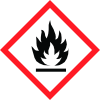


Note: Ingredients listed on restricted chemical lists
EC/CAS
7732-18-5
Name of the chemical
Water, distilled, conductivity or of similar purity H2O
Concentration
>99
General Information
Revision date
2015-07-24
Product name
GC Acrylic Plastic
CAS No.
7732-18-5
Emergency telephone
(800) 424-9300
Icons in SDS


Company Information
company name
ELECTRONICS
GHS Information
Signal word
DANGER
Hazard Codes
Hazard statements (CLP)
H222, H280, H304, H315, H319, H336
Hazard statements
Code
Statements
H222
Extremely flammable aerosol
Section 2
SECTION 2: Hazards identification
OSHA Hazards Classification of the substance or mixture
Signal word
DANGER
Hazard statements
Extremely fiammable aerosol. Contains gas under pressure; may explode if heated. Causes serious eye irritation. Causes skin irritation. May cause drowsiness or dizziness. May be fatal if swallowed and enters airways.
Precautionary statements
Keep away from heat, hot surfaces, sparks, open flames and other ignition sources. No smoking. Do not spray on an open flame or other ignition source. Do not pierce or burn, even after use. Wear protective gloves/protective clothing/eye protection/face protection. Avoid breathing dust/fume/gas/mist/vapours/spray.
2.3 Other hazards
Toxic to aquatic life. aT, None known.
Additional information
None SECTION 7. HANDLING AND STORAGE Precautions for safe handling Keep away from heat/sparks/open flames/hot surfaces. — No smoking. Avoid contact with skin and eyes. Use product in a well-ventilated area only. Avoid breathing spray. Conditions for safe storage, including any incompatibilities -Storage temperature Keep in a cool, well ventilated place. Store at temperatures not exceeding 50 °C / 122 °F. -Incompatible materials This product should be stored away from sources of strong heat or oxidizing chemicals. Specific end use(s) Coating
Further information
Not availiable SECTION 10. STABILITY AND REACTIVITY Reactivity Stable under normal conditions. Chemical stability Stable. Possibility of hazardous reactions None anticipated. Conditions to avoid Avoid contact with heat and ignition sources. Incompatible materials Strong oxidizing agents Hazardous decomposition product(s) Carbon monoxide, Carbon dioxide, Acrid smoke
ECOLOGICAL INFORMATION
Ecotoxicity Xylene (CAS No. 1330-20-7) Acute toxicity LO50 (96 hour) = 2.6 mg/l (Oncorhynchus mykiss) IG50 (24 hour(s}) = 1 mg/l (Daphnia magna) EC50 (73 hourfs)) = 1.9 mg/l (Pseudokirchnerella subcapitata) Long Term Toxicity NOEC (56 days) > 1.3 mg/l (Oncorhynchus mykiss) NOEC (7 days) 1.17 mg/l (Ceriodaphnia dubia) NOEC (73 hours) 1.9 mg/l (Pseudokirchnerella subcapitata) Persistence and degradability Readily biodegradable. Bioaccumulative potential The product has no potential for bioaccumulation. Mobility in soil The product has high mobility in soil.
Results of PBT and vPvB assessment
Not classified as PBT or vPvB.
Other hazards
None known. SECTION 13. DISPOSAL CONSIDERATIONS Waste treatment methods Disposal should be in accordance with local, state or national legislation. Consult an accredited waste disposal contractor or the local authority for advice. SECTION 14. TRANSPORT INFORMATION U.S. DOT Sea transport Air transport —e (IMDG} (ICAQ/IATA)
UN Number
1950 Proper Shipping Name Aerosols, flammable Aerosols, flammabie Transport hazard class(es) 2.1 Packing group Not applicable
Environmental hazards
None assigned Special precautions for user None assigned Transport in bulk according to Annex Il of MARPOL73/78 and the IBC Code: Not applicable
2.2 Label elements
Not a hazardous substance or mixture.
2.1 Classification of the substance or mixture
OSHA HCS (29 CFR 1910.1200) Flarn. Aerosol 1; Liquefied gas; Eye Irrit. 2; Skin Irrit. 2; STOT SE 3; Asp. Tox. 4



