

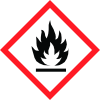
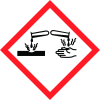

General Information
Revision date
2017-05-26
Product name
SODIUM ETHYLATE
CAS No.
141-52-6
1.2.1 Relevant identified uses
Laboratory chemicals
Icons in SDS
Company Information
company name
Electron Microscopy Sciences
e-mail address of the competent person responsible for the Safety Data Sheet
sgkcck@aol.com
GHS Information
Signal word
Danger
Hazard Codes
Hazard statements (CLP)
H228, H251, H302, H314, H318, H335, H336
Hazard statements
Code
Statements
H228
Flammable solid
Section 2
2.1 Classification of the substance or mixture
GHS02 Flame Flammable Solids - Category 1 H228 Flammable solid. Self-heating Substances and Mixtures - Category 1 H251 Self-heating; may catch fire. GHS05 Corrosion Skin Corrosion - Category 1B H314 Causes severe skin burns and eye damage. Serious Eye Damage - Category 1 H318 Causes serious eye damage. GHS07 Acute Toxicity (Oral) - Category 4 H302 Harmful if swallowed. Specific Target Organ Toxicity - Single Exposure - H335-H336 May cause respiratory irritation. May Category 3 cause drowsiness or dizziness.
2.2 Label elements
The substance is classified and labeled according to the Globally Harmonized System (GHS)
Hazard pictograms
GHS02 GHS05 GHS07
Signal word
Danger
Hazardous Ingredients
sodium ethanolate
Hazard statements
Flammable solid. Self-heating; may catch fire. Harmful if swallowed. Causes severe skin burns and eye damage. May cause respiratory irritation. May cause drowsiness or dizziness. · WHMIS-symbols: B6 - Reactive flammable material D2B - Toxic material causing other toxic effects E - Corrosive material
Precautionary statements
Keep away from heat, hot surfaces, sparks, open flames and other ignition sources. No smoking. Use explosion-proof [electrical/ventilating/lighting] equipment. Do not breathe dust/fume/gas/mist/vapours/spray. Wear protective gloves/protective clothing/eye protection/face protection. Keep cool. Ground and bond container and receiving equipment. Wash thoroughly after handling. Do not eat, drink or smoke when using this product. Use only outdoors or in a well-ventilated area. IF ON SKIN (or hair): Take off immediately all contaminated clothing. Rinse skin with water [or shower]. IF IN EYES: Rinse cautiously with water for several minutes. Remove contact lenses, if present and easy to do. Continue rinsing. Immediately call a POISON CENTER/doctor. Specific treatment (see on this label). IF SWALLOWED: Call a POISON CENTER/doctor if you feel unwell. IF INHALED: Remove person to fresh air and keep comfortable for breathing. Wash contaminated clothing before reuse. IF SWALLOWED: Rinse mouth. Do NOT induce vomiting. In case of fire Use for extinction CO2, powder or water spray Store locked up. Store separately. Store in a well-ventilated place. Keep container tightly closed. Maintain air gap between stacks or pallets. Dispose of contents/container in accordance with local/regional/national/international regulations.
Classification system
NFPA ratings (scale 0 - 4) 3 Health = 3 3 2 Fire = 3 W — Reactivity = 2 The substance demonstrates unusual reactivity with water. · HMIS-ratings (scale 0 - 4) HEALTH 3 Health = 3 3 Fire = 3 FIRE REACTIVITY 3 Reactivity = 3



