

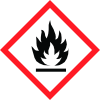
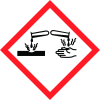
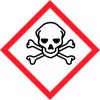


Note: Ingredients listed on restricted chemical lists
EC/CAS
50-00-0
Name of the chemical
Formaldehyde
Concentration
N/A
General Information
Revision date
2016-08-16
Product name
FORMALIN SOLUTION, 50%
1.2.1 Relevant identified uses
Laboratory chemicals
Emergency telephone
1-800-424-9300 Contract CCN7661
Icons in SDS
Company Information
company name
Electron Microscopy Sciences
e-mail address of the competent person responsible for the Safety Data Sheet
sgkcck@aol.com
GHS Information
Signal word
Danger
Hazard Codes
Hazard statements (CLP)
H224, H302, H311, H314, H317, H318, H331, H341, H350
Hazard statements
Code
Statements
H224
Extremely flammable liquid and vapour
Section 2
2.1 Classification of the substance or mixture
GHS02 Flame Flammable Liquids - Category 1 H224 Extremely flammable liquid and vapour. GHS06 Skull and crossbones Acute Toxicity (Dermal) – Category 3 H311 Toxic in contact with skin. Acute Toxicity (Inhalation) - Category 3 H331 Toxic if inhaled. GHS08 Health hazard Germ Cell Mutagenicity - Category 2 H341 Suspected of causing genetic defects. Carcinogenicity - Category 1A H350 May cause cancer. GHS05 Corrosion Skin Corrosion - Category 1B H314 Causes severe skin burns and eye damage. Serious Eye Damage - Category 1 H318 Causes serious eye damage. GHS07 Acute Toxicity (Oral) - Category 4 H302 Harmful if swallowed. Skin Sensitizer - Category 1 H317 May cause an allergic skin reaction.
2.2 Label elements
The product is classified and labeled according to the Globally Harmonized System (GHS)
Hazard pictograms
GHS02 GHS05 GHS06 GHS07 GHS08
Signal word
Danger
Hazardous Ingredients
formaldehyde Ethyl Alcohol, denatured
Hazard statements
Extremely flammable liquid and vapour. Harmful if swallowed. Toxic in contact with skin or if inhaled. Causes severe skin burns and eye damage. May cause an allergic skin reaction. Suspected of causing genetic defects. May cause cancer. · WHMIS-symbols: B2 - Flammable liquid D1B - Toxic material causing immediate and serious toxic effects D2A - Very toxic material causing other toxic effects E - Corrosive material
Precautionary statements
Keep away from heat, hot surfaces, sparks, open flames and other ignition sources. No smoking. Use explosion-proof [electrical/ventilating/lighting] equipment. Do not breathe dust/fume/gas/mist/vapours/spray. Wear protective gloves/protective clothing/eye protection/face protection. Ground and bond container and receiving equipment. Use non-sparking tools. Take actions to prevent static discharges. Wash thoroughly after handling. Do not eat, drink or smoke when using this product. Use only outdoors or in a well-ventilated area. Contaminated work clothing should not be allowed out of the workplace. Obtain special instructions before use. Do not handle until all safety precautions have been read and understood. IF ON SKIN (or hair): Take off immediately all contaminated clothing. Rinse skin with water [or shower]. IF IN EYES: Rinse cautiously with water for several minutes. Remove contact lenses, if present and easy to do. Continue rinsing. Immediately call a POISON CENTER/doctor. Specific measures (see on this label). IF SWALLOWED: Call a POISON CENTER/doctor if you feel unwell. IF INHALED: Remove person to fresh air and keep comfortable for breathing. Wash contaminated clothing before reuse. IF exposed or concerned: Get medical advice/attention. If skin irritation or rash occurs: Get medical advice/attention. IF SWALLOWED: Rinse mouth. Do NOT induce vomiting. In case of fire Use for extinction CO2, powder or water spray Take off contaminated clothing and wash it before reuse. Store locked up. Store in a well-ventilated place. Keep container tightly closed. Store in a well-ventilated place. Keep cool. Dispose of contents/container in accordance with local/regional/national/international regulations.
Classification system
NFPA ratings (scale 0 - 4) Health = 3 4 Fire = 4 3 0 Reactivity = 0 · HMIS-ratings (scale 0 - 4) HEALTH *4 Health = *4 4 Fire = 4 FIRE REACTIVITY 0 Reactivity = 0



