

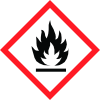

Note: Ingredients listed on restricted chemical lists
General Information
Revision date
2020-10-01
Product name
Pentane(n)
CAS No.
109-66-0
1.2.1 Relevant identified uses
Laboratory Investigations
Emergency telephone
+64 9 480 4386, +64 9 480 4385
Icons in SDS


Company Information
company name
ECP Limited
GHS Information
Signal word
Danger
Hazard Codes
Hazard statements (CLP)
H224, H303, H304, H313, H401
Hazard statements
Code
Statements
H224
Extremely flammable liquid and vapour
Section 2
SECTION 2: Hazards identification
GHS Classification Flammable Liquids (Category A) Acute toxicity, Oral (Category E) Acute toxicity, Dermal (Category E) Aquatic toxicity (Acute or Chronic) (Category D)
Signal word
Danger
Hazard statements
H224 Extremely flammable liquid and vapour. H303 May be harmful if swallowed. H304 May be fatal if swallowed and enters airways. H313 May be harmful in contact with skin. H401 Toxic to aquatic life.
Prevention
P210 Keep away from heat/sparks/open flames/hot surfaces. - No smoking. P233 Keep container tightly closed. P240 Ground/bond container and receiving equipment. P241 Use explosion-proof electrical/ ventilating/ lighting/ equipment. P242 Use only non-sparking tools. P243 Take precautionary measures against static discharge. P273 Avoid release to the environment. P280 Wear protective gloves/ protective clothing/ eye protection/ face protection.
Response
P301 + P310 IF SWALLOWED: Immediately call a POISON CENTER or doctor/ physician. P303 + P361 + P353 IF ON SKIN (or hair): Remove/ Take off immediately all contaminated clothing. Rinse skin with water/ shower. P312 Call a POISON CENTER or doctor/ physician if you feel unwell. P331 Do NOT induce vomiting. P370 + P378 In case of fire: Use dry sand, dry chemical or alcohol-resistant foam for extinction.
Storage
P403 + P235 Store in a well-ventilated place. Keep cool. P405 Store locked up.
Disposal
P501 Dispose of contents/ container to an approved waste disposal plant.
2.3 Other hazards
Repeated exposure may cause skin dryness or cracking.
2.1 Classification of the substance or mixture
Flammable Liquids (Category A) Acute toxicity, Oral (Category E) Acute toxicity, Dermal (Category E) Aquatic toxicity (Acute or Chronic) (Category D) 2.2 GHS Label elements, including precautionary statements
HSNO Classifications
Classified as 3.1B - A substance that is flammable liquid: High hazard Classified as 6.1E - A substance that is mildly acutely toxic. Classified as 6.3B - A substance that is mildly irritating to the skin Classified as 6.4A - A substance that is irritating to the eye Classified as 9.1D - A substance that is slightly harmful to the aquatic environment or is otherwise designed for biocidal action Australia: Classified as Hazardous, according to criteria of National Occupational Health & Safety Commission, Australia (NOHSC). Classified as Dangerous Goods, according to the Australian Code for the Transport of Dangerous Goods by Road and Rail.



