



Note: Ingredients listed on restricted chemical lists
EC/CAS
6484-52-2
Name of the chemical
Ammonium Nitrate (AN)
Concentration
0-75
EC/CAS
55-63-0
Name of the chemical
Nitroglycerin; Propane-1,2,3-triyl trinitrate
Concentration
3-32
EC/CAS
9004-70-0
Name of the chemical
Nitrocellulose
Concentration
0.1-3
General Information
Revision date
2025-05-01
Product name
Dynamite
Product name
Dynamite
Identification on the label/Trade name
D-GEL 1000
Emergency telephone
800-424-9300
Icons in SDS


Company Information
company name
Dyno Nobel LTD
e-mail address of the competent person responsible for the Safety Data Sheet
dna.healthsafety@am.dynonobel.com
GHS Information
Signal word
Danger
Hazard Codes
Hazard statements (CLP)
H201, H301, H310, H319, H330, H373, H401, H411
Hazard statements
Code
Statements
H201
Explosive; mass explosion hazard
Section 2
SECTION 2: Hazards identification
Classification (GHS-US) Classification of the Substance or Mixture Classification (GHS-US) Expl. 1.1 Acute Tox. 3 (Oral) Acute Tox. 2 (Dermal) Acute Tox. 2 (Inhalation:dust,mist) Eye Irrit. 2A STOT RE 2 Aquatic Acute 2 Aquatic Chronic 2 H201 H301 H310 H330 H319 H373 H401 H411
2.2 Label elements
GHS-US Labeling
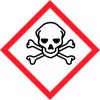
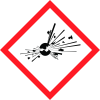
Hazard pictograms
GHS01 GHS06 GHS07 GHS08
Signal word
Danger
Hazard statements
H201 - Explosive; mass explosion hazard. H301 - Toxic if swallowed. H319 - Causes serious eye irritation. H373 - May cause damage to organs through prolonged or repeated exposure. H401 - Toxic to aquatic life. H411 - Toxic to aquatic life with long lasting effects.
Precautionary statements
P210 - Keep away from heat, hot surfaces, open flames, sparks. - No smoking. P241 - Use explosion-proof electrical, lighting, ventilating equipment. P250 - Do not subject to friction, grinding, shock. P260 - Do not breathe dust, mist, vapors. P262 - Do not get in eyes, on skin, or on clothing. P264 - Wash hands, forearms and exposed areas thoroughly after handling. P270 - Do not eat, drink or smoke when using this product. P271 - Use only outdoors or in a well-ventilated area. P273 - Avoid release to the environment. P280 - Wear eye protection, protective clothing, protective gloves. P284 - In case of inadequate ventilation wear respiratory protection. P301+P310 - If swallowed: Immediately call a doctor/POISON CENTER. P304+P340 - IF INHALED: Remove person to fresh air and keep at rest in a position comfortable for breathing. P305+P351+P338 - IF IN EYES: Rinse cautiously with water for several minutes. Remove contact lenses, if present and easy to do. Continue rinsing. P314 - Get medical advice/attention if you feel unwell. P321 - Specific treatment (see Section 4). P330 - Rinse mouth. P337+P313 - If eye irritation persists: Get medical advice/attention. P361 - Take off immediately all contaminated clothing. P363 - Wash contaminated clothing before reuse. P370+P378 - In case of fire: DO NOT attempt to fight fire. P370+P380 - In case of fire: Evacuate area. P372 - Explosion risk in case of fire. P373 - DO NOT fight fire when fire reaches explosives. P391 - Collect spillage. P401 - Store as defined in the Explosives Act of Canada and the provisions of the Bureau of Alcohol, Tobacco and Firearms regulations contained in 27 CFR part 555. P403+P233 - Store in a well-ventilated place. Keep container tightly closed. P405 - Store locked up. P501 - Dispose of contents/container according to local, regional, national, territorial, provincial, and international regulations.
2.3 Other hazards
Exposure may aggravate those with pre-existing eye, skin, or respiratory conditions. Ingestion may cause methemoglobinemia. Initial manifestation of methemoglobinemia is cyanosis, characterized by navy lips, tongue and mucous membranes, with skin color being slate grey. Further manifestation is characterized by headache, weakness, dyspnea, dizziness, stupor, respiratory distress and death due to anoxia. If ingested, nitrates may be reduced to nitrites by bacteria in the digestive tract. Signs and symptoms of nitrite poisoning include methemoglobinemia, nausea, dizziness, increased heart rate, hypotension, fainting and, possibly shock.
2.1 Classification of the substance or mixture
Classification (GHS-US) Expl. 1.1 H201 Acute Tox. 3 (Oral) H301 Acute Tox. 2 (Dermal) H310 Acute Tox. 2 (Inhalation:dust,mist) H330 Eye Irrit. 2A H319 STOT RE 2 H373 Aquatic Acute 2 H401 Aquatic Chronic 2 H411



