




Note: Ingredients listed on restricted chemical lists
EC/CAS
78-11-5
Name of the chemical
Pentaerithrityl tetranitrate (INN)
Concentration
N/A
EC/CAS
13424-46-9
Name of the chemical
Bleiazid
Concentration
N/A
EC/CAS
61790-53-2
Name of the chemical
diatomaceous earth
Concentration
N/A
EC/CAS
7440-36-0
Name of the chemical
Antimony
Concentration
N/A
EC/CAS
7758-97-6
Name of the chemical
Bleichromat (790/2009)
Concentration
N/A
EC/CAS
7782-49-2
Name of the chemical
Selenium
Concentration
N/A
EC/CAS
1314-41-6
Name of the chemical
Orange lead (lead tetroxide)
Concentration
N/A
EC/CAS
13463-67-7
Name of the chemical
Reaction mass of titanium dioxide and silver chloride
Concentration
N/A
EC/CAS
7439-92-1
Name of the chemical
Blei, massiv: [Partikeldurchmesser ≥ 1 mm]
Concentration
N/A
General Information
Revision date
2016-08-04
Product name
NONEL NON-ELECTRIC DETONATORS
1.2.1 Relevant identified uses
Name
Icons in SDS


Company Information
company name
Dyno Nobel Asia Pacific Pty Limited
GHS Information
Signal word
Danger
Hazard Codes
Hazard statements (CLP)
H201, H302, H317, H332, H341, H350, H360, H373, H411
Hazard statements
Code
Statements
H201
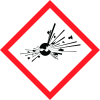
Explosive; mass explosion hazard
Section 2
Classification according to GHS
Classified as Hazardous according to the Globally Harmonised System of Classification and labelling of Chemicals (GHS) including Work, Health and Safety regulations, Australia Classified as Dangerous Goods according to the Australian Code for the Transport of Dangerous Goods by Road and Rail. (7th edition) Acute Toxicity - Inhalation: Category 4 Acute Toxicity - Oral: Category 4 Carcinogenicity: Category 1 Explosives: Division 1.1 Germ Cell Mutagenicity: Category 2 Hazardous to the Aquatic Environment - Acute Hazard: Category 2 Hazardous to the Aquatic Environment - Long-Term Hazard: Category 2 Sensitization - Skin: Category 1 STOT Repeated Exposure: Category 2 Toxic to Reproduction: Category 1A
Signal word
DANGER
Hazard statements
H201 Explosive; mass explosion hazard. H302 Harmful if swallowed. H317 May cause an allergic skin reaction. H332 Harmful if inhaled. H341 Suspected of causing genetic defects . H350 May cause cancer . H360 May damage fertility or the unborn child . H373 May cause damage to organs through prolonged or repeated exposure . H411 Toxic to aquatic life with long lasting effects.
Hazard pictograms
Exploding bomb,Exclamation mark,Health hazard,Environment
Prevention
P201 Obtain special instructions before use. P202 Do not handle until all safety precautions have been read and understood. P210 Keep away from heat/sparks/open flames/hot surfaces. – No smoking. P240 Ground/bond container and receiving equipment. P250 Do not subject to grinding/shock//friction. P260 Do not breathe dust/fume/gas/mist/vapours/spray. P264 Wash contaminated skin thoroughly after handling P270 Do not eat, drink or smoke when using this product. P271 Use only outdoors or in a well-ventilated area. P272 Contaminated work clothing should not be allowed out of the workplace. P273 Avoid release to the environment. P280 Wear protective gloves/protective clothing/eye protection/face protection.
Response
P301+P312 IF SWALLOWED: Call a POISON CENTER or doctor/physician if you feel unwell. P302+P352 IF ON SKIN: Wash with plenty of soap and water. P304+P340 IF INHALED: Remove victim to fresh air and keep at rest in a position comfortable for breathing. P308+P313 IF exposed or concerned: Get medical advice/attention. P312 Call a POISON CENTER or doctor/physician if you feel unwell. P314 Get medical advice/attention if you feel unwell. P330 Rinse mouth. P333+P313 If skin irritation or rash occurs: Get medical advice/attention. P363 Wash contaminated clothing before reuse. P370+P380 In case of fire: Evacuate area. P372 Explosion risk in case of fire. P373 DO NOT fight fire when fire reaches explosives. P391 Collect spillage.
Storage
P401 Store in accordance with supplier P405 Store locked up.
Precautionary statements
Disposal P501 Dispose of contents/container to an approved waste disposal plant.
Further information
This is a packaged product that will not result in exposure to the explosive material under normal conditions of use. Exposure concerns are primarily with post-detonation reaction products, particularly heavy metal compounds.


