



Note: Ingredients listed on restricted chemical lists
EC/CAS
238-878-4/14808-60-7
Name of the chemical
Silica, crystalline
Concentration
35-40
General Information
Revision date
2021-11-01
Product name
API Class K Grade HSR
1.2.1 Relevant identified uses
Cements are used in industrial installations to manufacture/formulate hydraulic binders for building and construction work, such as ready-mixed concrete, mortars, renders, grouts, plasters as well as precast concrete Common cements and cement containing mixtures (hydraulic binders) are used industrially, by professionals as well
Emergency telephone
+49 6131 19240 (Poison Control Center Mainz
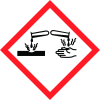
Icons in SDS


Company Information
company name
Dyckerhoff GmbH
e-mail address of the competent person responsible for the Safety Data Sheet
reach@dyckerhoff.com
GHS Information
Signal word
Danger
Hazard Codes
Hazard statements (CLP)
H315, H317, H318, H335, H373
Hazard statements
Code
Statements
H315
Causes skin irritation
Section 2
Hazard statements
Skin irritation 2 H315: Causes skin irritation Serious eye damage/eye irritation 1 H318: Causes serious eye damage Specific target organ toxicity single 3 H335: May cause respiratory irritation exposure respiratory tract irritation Specific target organ toxicity repeated 2 H373: May cause damage to lung through exposure aspiration hazard prolonged or repeated exposure by inhalation H315 Causes skin irritation H318 Causes serious eye damage H335 May cause respiratory irritation H373 May cause damage to lung through prolonged or repeated exposure by inhalation
2.2 Label elements
Labelling according to Regulation (EC) No 1272/2008
Signal word
Danger
Precautionary statements
P102 Keep out of reach of children. P280 Wear protective gloves/protective clothing/eye protection/face protection. P305+P351+P338+P310 IF IN EYES: Rinse cautiously with water for several minutes. Remove contact lenses, if present and easy to do. Continue rinsing. Immediately call a POISON CENTER or doctor/physician. P302+P352+P333+P313 IF ON SKIN: Wash with plenty of soap and water. If skin irritation or rash occurs: Get medical advice/attention. P260+P304+P340+P312 Do not breathe dust. IF INHALED: Remove victim to fresh air and keep at rest in a position comfortable for breathing. Call a POISON CENTER or doctor/ physician if you feel unwell. P501 Dispose of contents/container to appropriate waste collection point. Supplemental Skin contact with wet cement, fresh concrete or mortar may cause irritation, dermatitis or informationen burns. May cause damage to products made of aluminium or other non-noble metals. This product contains respirable quartz as an impurity and therefore is classified as STOT RE 2 according to criteria defined in the Regulation (EC) No. 1272/2008. Depending on the type of handling and use (e.g. grinding, drying), airborne respirable crystalline silica may be generated. Prolonged and/or massive inhalation of respirable crystalline silica dust may cause lung fibrosis, commonly referred to as silicosis. Principal symptoms of silicosis are cough and breathlessness. Occupational exposure to respirable crystalline silica dust should be monitored and controlled. This product should be handled with care to avoid dust generation.
2.3 Other hazards
Cement does not meet the criteria for PBT or vPvB in accordance with Annex XIII of REACH (Regulation (EC) No 1907/2006). The product contains chromate reducing agent. As a result, the content of soluble chromium (VI) is less than 2 ppm. If the storage conditions are not appropriate or the storage period is exceeded, the effectiveness of the reducing agent can diminish, and the cement can become skin sensitizing (H317 or EUH203).



