



Note: Ingredients listed on restricted chemical lists
EC/CAS
9016-87-9
Name of the chemical
4,4'-Methylendiphenyldiisocyanat tech. (Polymeres) MDI, pMDI (in Form atembarer Aerosole, A-Fraktion)
Concentration
24-<75%
EC/CAS
287-477-0/85535-85-9
Name of the chemical
Alkanes, C14-17, chloro
Concentration
19-<24% 602-095-
General Information
Revision date
2015-10-30
Product name
D-2
1.2.1 Relevant identified uses
Polyurethane foam
1.2.2. Uses advised against
All uses not specified in this section or in section 7.3
Emergency telephone
210 7793 777
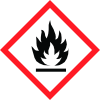
Icons in SDS


Company Information
company name
DUROSTICK SA
e-mail address of the competent person responsible for the Safety Data Sheet
info@durostick.gr
GHS Information
Signal word
Danger
Hazard Codes
Hazard statements (CLP)
H222, H229, H315, H317, H319, H332, H334, H335, H351, H362, H373, H413
Hazard statements
Code
Statements
H222
Extremely flammable aerosol
Section 2
2.1 Classification of the substance or mixture
CLP Regulation (EC) nº 1272/2008: Classification of this product has been carried out in accordance with CLP Regulation (EC) nº 1272/2008. Acute Tox. 4: Acute inhalation toxicity, Category 4, H332 Aerosol 1: Flammable aerosols, Category 1, H222 Aerosol 1 Pressurised container May burst if heated., H229 Aquatic Chronic 4: Hazardous to the aquatic environment, long-term hazard, Category 4, H413 Carc. 2: Carcinogenicity, Category 2, H351 Eye Irrit. 2: Eye irritation, Category 2, H319 Lact.: Reproductive toxicity, effects on or via lactation, H362 Resp. Sens. 1: Sensitisation, respiratory, Category 1, H334 Skin Irrit. 2: Skin irritation, Category 2, H315 Skin Sens. 1: Sensitisation, skin, Category 1, H317 STOT RE 2: Specific target organ toxicity, repeated exposure, Category 2, H373 STOT SE 3: Respiratory tract toxicity, single exposure, Category 3, H335
2.2 Label elements
CLP Regulation (EC) nº 1272/2008: Danger
Hazard statements
Acute Tox. 4: H332 - Harmful if inhaled Aerosol 1: H222 - Extremely flammable aerosol Aerosol 1 H229 - Pressurised container May burst if heated Aquatic Chronic 4: H413 - May cause long lasting harmful effects to aquatic life Carc. 2: H351 - Suspected of causing cancer Eye Irrit. 2: H319 - Causes serious eye irritation Lact.: H362 - May cause harm to breast-fed children Resp. Sens. 1: H334 - May cause allergy or asthma symptoms or breathing difficulties if inhaled Skin Irrit. 2: H315 - Causes skin irritation Skin Sens. 1: H317 - May cause an allergic skin reaction STOT RE 2: H373 - May cause damage to organs through prolonged or repeated exposure STOT SE 3: H335 - May cause respiratory irritation
Precautionary statements
Changes with regards to the previous version D-2 ** (continued) P101: If medical advice is needed, have product container or label at hand P102: Keep out of reach of children P210: Keep away from heat, hot surfaces, sparks, open flames and other ignition sources. No smoking P211: Do not spray on an open flame or other ignition source P251: Do not pierce or burn, even after use P260: Do not breathe dust/fume/gas/mist/vapours/spray P263: Avoid contact during pregnancy and while nursing P271: Use only outdoors or in a well-ventilated area P273: Avoid release to the environment P280: Wear protective gloves/protective clothing/eye protection/face protection P302+P352 IF ON SKIN Wash with plenty of water P304+P340 IF INHALED Remove person to fresh air and keep comfortable for breathing P305+P351+P338 IF IN EYES Rinse cautiously with water for several minutes. Remove contact lenses, if present and easy to do Continue rinsing P410+P412: Protect from sunlight. Do no expose to temperatures exceeding 50 °C/122°F P501: Dispose of the contents/containers in accordance with the current legislation on waste treatment
Supplemental label elements
EUH204: Contains isocyanates. May produce an allergic reaction
Additional information
Annex XVII, REACH) Persons already sensitised to diisocyanates may develop allergic reactions when using this product. Persons suffering from asthma, eczema or skin problems should avoid contact, including dermal contact, with this product. This product should not be used under conditions of poor ventilation unless a protective mask with an appropriate gas filter (i.e. type A1 according to standard EN 14387) is used.
2.3 Other hazards
Product fails to meet PBT/vPvB criteria ** Changes with regards to the previous version



