


Note: Ingredients listed on restricted chemical lists
EC/CAS
227-561-6/5888-33-5
Name of the chemical
Exo-1,7,7-trimethylbicyclo[2.2.1]hept-2-yl acrylate
Concentration
<21.28
EC/CAS
221-950-4/3290-92-4
Name of the chemical
1,1,1-trimethylolpropane trimethacrylate
Concentration
<5
EC/CAS
278-355-8/75980-60-8
Name of the chemical
Diphenyl(2,4,6-trimethylbenzoyl)phosphinoxid
Concentration
≤1
EC/CAS
276-957-5/72869-86-4
Name of the chemical
11,14-Dioxa-2,9-diazaheptadec-16-enoic Acid, 4,4,6,16-tetramethyl-10,15-dioxo, 2-[(2-methyl-1-oxo-2-propenyl)oxy]ethyl ester (31)
Concentration
≤0.28635
EC/CAS
203-625-9/108-88-3
Name of the chemical
Toluene
Concentration
<0.05
EC/CAS
203-806-2/110-82-7
Name of the chemical
Cyclohexane
Concentration
<0.03
General Information
Version
optiprint interim
Revision date
2023-11-12
Product name
optiprint interim
1.2.1 Relevant identified uses
3 D Druckkunststoff für die additive Herstellung von Interimsprothesen Only to be used in the 3 D printer and by trained personnel
Icons in SDS


Company Information
company name
dentona AG
e-mail address of the competent person responsible for the Safety Data Sheet
info@dentona.de
GHS Information
Signal word
Warning
Hazard Codes
Hazard statements (CLP)
H315, H317, H319, H332, H335, H411
Hazard statements
Code
Statements
H315
Causes skin irritation
Section 2
SECTION 2: Hazards identification
According to Regulation (EC) No. 1272/2008 (CLP) Classification of the substance or mixture
Hazard pictograms
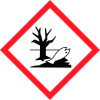
GHS07 GHS09 Exclamation mark
Hazard statements
H315 Causes skin irritation. H317 May cause an allergic skin reaction. H319 Causes serious eye irritation. H332 Harmful if inhaled. H335 May cause respiratory irritation.
Environmental hazards
H411 Toxic to aquatic life with long lasting effects.
Supplemental label elements
EUH208
Contains
7,7,9(or 7,9,9)-trimethyl-4,13-dioxo-3,14-dioxa-5,12-diazahexadecane-1,16- diylbismethacrylate, Triethylene glycol Dimethacrylate. May produce an allergic reaction.
Prevention
P261 Avoid breathing dust/fume/gas/mist/vapours/spray. P272 Contaminated work clothing should not be allowed out of the workplace. P273 Avoid release to the environment. P280 Wear protective gloves/protective clothing/eye protection/face protection/hearing protection/....
Response
P332 + P313 If skin irritation occurs: Get medical advice/attention. P333 + P313 If skin irritation or rash occurs: Get medical advice/attention.
Special rules for supplemental label elements for certain mixtures
43,5 % percent of the mixture consists of ingredient(s) of unknown acute toxicity (oral). 64,7 % percent of the mixture consists of ingredient(s) of unknown acute toxicity (dermal). 78,0 % percent of the mixture consists of ingredient(s) of unknown acute toxicity (inhalative). 43,5 % percent of the mixture consists of components of unknown hazards to the aquatic environment.
2.3 Other hazards
No data available
2.1 Classification of the substance or mixture
Classification according to Regulation (EC) No 1272/2008 [CLP] Hazard classes and hazard Hazard statements Classification procedure categories Skin corrosion/irritation (Skin Irrit. 2) H315: Causes skin irritation. Calculation method. Respiratory or skin sensitisation H317: May cause an allergic skin Calculation method. (Skin Sens. 1) reaction. Serious eye damage/eye irritation H319: Causes serious eye irritation. Calculation method. (Eye Irrit. 2) Acute toxicity (inhalative) H332: Harmful if inhaled. Calculation method. (Acute Tox. 4) STOT-single exposure (STOT SE 3) H335: May cause respiratory irritation. Calculation method. Hazardous to the aquatic environment H411: Toxic to aquatic life with long Calculation method. (Aquatic Chronic 2) lasting effects.



