

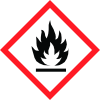


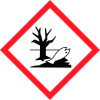
Note: Ingredients listed on restricted chemical lists
EC/CAS
64742-81-0
Name of the chemical
Kerosine (petroleum), hydrodesulfurized
Concentration
0-100
EC/CAS
91-20-3
Name of the chemical
Naphthalene,3
Concentration
0-1
EC/CAS
98-82-8
Name of the chemical
Cumol (2022/692)
Concentration
0-1
General Information
Revision date
2020-09-30
Product name
Jet A
Emergency telephone
Spill Information
Icons in SDS


Company Information
company name
Deer Park Refining
GHS Information
Signal word
Danger
Hazard Codes
Hazard statements (CLP)
H226, H304, H315, H336, H401, H411
Hazard statements
Code
Statements
H226
Flammable liquid and vapour
Section 2
SECTION 2: Hazards identification
OSHA HCS 2012 GHS classification in accordance with the
Aspiration hazard
Category 1 Specific target organ toxicity Category 3 (Narcotic effects) - single exposure (Inhalation) Short-term (acute) aquatic Category 2 Long-term (chronic) aquatic Category 2
Signal word
Danger
Physical hazards
H226 Flammable liquid and vapour.
Health hazards
H304 May be fatal if swallowed and enters airways. H315 Causes skin irritation. H336 May cause drowsiness or dizziness.
Environmental hazards
H401 Toxic to aquatic life. H411 Toxic to aquatic life with long lasting effects.
Prevention
P210 Keep away from heat, hot surfaces, sparks, open flames and other ignition sources. No smoking. P233 Keep container tightly closed. P240 Ground and bond container and receiving equipment. P241 Use explosion-proof electrical/ ventilating/ lighting equip- ment. P242 Use non-sparking tools. P243 Take action to prevent static discharges. P261 Avoid breathing dust/ fume/ gas/ mist/ vapours/ spray. P264 Wash skin thoroughly after handling. P271 Use only outdoors or in a well-ventilated area. P273 Avoid release to the environment. P280 Wear protective gloves/ protective clothing/ eye protection/ face protection.
Response
P301 + P310 IF SWALLOWED: Immediately call a POISON CENTER/ doctor. P302 + P352 IF ON SKIN: Wash with plenty of water and soap. P303 + P361 + P353 IF ON SKIN (or hair): Take off immediately all contaminated clothing. Rinse skin with water/ shower. P304 + P340 IF INHALED: Remove person to fresh air and keep comfortable for breathing. P312 Call a POISON CENTER/doctor if you feel unwell. P321 Specific treatment (see supplemental first aid instructions on this label). P331 Do NOT induce vomiting. P333 + P313 If skin irritation or rash occurs: Get medical advice/ attention. P362 + P364 Take off contaminated clothing and wash it before reuse. P370 + P378 In case of fire: Use water spray, alcohol-resistant foam, dry chemical or carbon dioxide to extinguish. P391 Collect spillage.
Storage
P403 + P233 Store in a well-ventilated place. Keep container tightly closed. P403 + P235 Store in a well-ventilated place. Keep cool. P405 Store locked up.
Disposal
P501 Dispose of contents/ container to an approved waste dis- posal plant.
Other hazards which do not result in classification
Slightly irritating to respiratory system. Liquid evaporates quickly and can ignite leading to a flash fire, or an explosion in a confined space. Vapour in the headspace of tanks and containers may ignite and explode at temperatures ex- ceeding auto-ignition temperature, where vapour concentrations are within the flammability range. May ignite on surfaces at temperatures above auto-ignition temperature. This material is a static accumulator. Even with proper grounding and bonding, this material can still accumulate an electrostatic charge. If sufficient charge is allowed to accumulate, electrostatic discharge and ignition of flammable air- vapour mixtures can occur. The classification of this material is based on



