


Note: Ingredients listed on restricted chemical lists
EC/CAS
202-849-4/100-41-4
Name of the chemical
Ethylbenzene
Concentration
100 ppm
EC/CAS
202-849-4/106-97-8
Name of the chemical
n-Butan, enthält 0,1% Butadien
Concentration
125 ppm
EC/CAS
200-827-9/13463-67-7
Name of the chemical
Reaction mass of titanium dioxide and silver chloride
Concentration
1000 ppm
EC/CAS
215-535-7/67-64-1
Name of the chemical
acetone
Concentration
150 ppm
EC/CAS
203-448-7
Name of the chemical
n-Butan, enthält 0,1% Butadien
Concentration
800 ppm
General Information
Revision date
2013-08-07
Product name
Transformer Gray
Chemical name
[420]PRODUCT CODE
Manufacturer Name
CUSTOMER IDENTIFICATION
Emergency telephone
800-424-9300, 703-527-3887
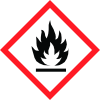
Icons in SDS


Company Information
company name
CUSTOMER IDENTIFICATION
Hazard Codes
Hazard statements (CLP)
H222, H302, H315, H320, H332
Hazard statements
Code
Statements
H222
Extremely flammable aerosol
Section 2
SECTION 2: Hazards identification
--------------------------------------------------------------------------- EMERGENCY OVERVIEW: Harmful if swallowed. Harmful if inhaled. Harmful if absorbed through skin. Causes eye irritation. Causes skin irritation. Vapors irritating to eyes and respiratory tract. Extremely flammable liquid and vapor. Vapors may cause flash fire or explosion. Extremely flammable aerosol. Contents under pressure. EYE: May cause severe eye irritation. SKIN: Contact with skin may cause irritation with discomfort or rash. Prolonged contact with the skin can cause chemical burns. Harmful if absorbed through the skin. Skin contact may aggravate an existing dermatitis. INHALATION: Harmful if inhaled. Prolonged inhalation may be harmful. Exposure to high concentrations of vapors may cause dizziness, breathing difficulty, headaches or respiratory irritation. Extremely high concentrations may cause drowsiness, staggering, confusion, unconsciousness, coma or death. Excessive inhalation of vapors can cause nasal and respiratory irritation. Liquid or vapor may be irritating to skin, eyes, throat or lungs. Intentional misuse by deliberately concentrating and inhaling the contents of this product can be harmful or fatal. Respiratory symptoms associated with pre-existing lung disorders may be aggravated by exposure to material(s) is this product. INGESTION: Moderately toxic. May cause stomach discomfort, nause, vomiting, diarrhea, and narcosis. May cause serious health effects if swallowed. Aspiration of material into the lungs if swallowed or if vomiting occurs can cause chemical pneumonitis which can be fatal. May cause nausea, vomiting and diarrhea.
Potential chronic health
Chronic overexposure to a component or components in this material has been found to cause the following effects in laboratory animals: Kidney damage Eye damage Liver damage Anemia Chronic overexposure to a component or components is this product has been suggested as a cause of the following effects in humans: Cardiac abnormalities Reports have associated repeated and prolonged overexposure to solvents with permanent brain and nervous system damage. Rats exposed to titanium dioxide dust at 250 mg/m3 developed lung cancer, however, such exposure levels are not attainable in the workplace with this material. Copper dust may be irritating to the respiratory system. Repeated exposure to toluene has been associated with high frequency hearing loss in laboratory animals. The human consequences of this finding is uncertain. In February 2000 the International Agency for Research on Cancer (IARC) classified ethylbenzene as possibly carcinogenic to humans (Group 2B) on the basis of sufficient evidence for carcinogenicity in experimental animals but inadequate evidence for cancer in humans. ---------------------------------------------------------------------------



