


Note: Ingredients listed on restricted chemical lists
EC/CAS
26447-40-5
Name of the chemical
Methylenediphenyl diisocyanate (see also specific isomers)
Concentration
N/A
EC/CAS
101-68-8
Name of the chemical
4,4’-Methylenediphenyl diisocyanate
Concentration
N/A
General Information
Revision date
2019-10-31
Product name
Syntho-Glass
1.2.2. Uses advised against
N/A
supplier name
CSNRI
Emergency telephone
+1 703.741.5970 (Outside the US
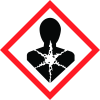
Icons in SDS
Company Information
company name
CSNRI
GHS Information
Signal word
Danger
Hazard Codes
Hazard statements (CLP)
H302, H312, H315, H317, H319, H332, H334, H335
Hazard statements
Code
Statements
H302
Harmful if swallowed
Section 2
2.1 Classification of the substance or mixture
Acute toxicity oral – Category 4 Acute toxicity/dermal – Category 4 Sensitization/respiratory – Category 1 Skin corrosion/irritation – Category 2 Acute toxicity/inhalation – Category 4 Eye damage/eye irritation – Category 2A Sensitization/skin – Category 1 Specific Target Organ Toxicity (SE) – Category 3
Hazard statements
H302 Harmful if swallowed H312 Harmful in contact with skin H334 May cause allergy or asthma symptoms or breathing difficulties if inhaled H315 Causes skin irritation. H332 Harmful in inhaled H319 Causes serious eye irritation H317 May cause an allergic skin reaction H335 May cause respiratory irritation
Signal word
DANGER!
Precautionary statements
P264 Wash thoroughly after handling P280 Wear protective gloves/protective clothing/eye protection/face protection. P262 Do not get in eyes, on skin, or on clothing. P261 Avoid breathing dust/fume/gas/mist/vapours/spray P304+P340 IF INHALED: Remove person to fresh air and keep comfortable for breathing. P302+P352 IF ON SKIN: Wash with plenty of water. P305+P351+P338 IF IN EYES: Rinse cautiously with water for several minutes. Remove contact lenses if present and easy to do. Continue rinsing - 1 of 7 - National Fire Protection Association Hazard Ratings – NFPA(R):
Health hazards
2 Flammability: 1 Reactivity: 0



