



Note: Ingredients listed on restricted chemical lists
EC/CAS
231-912-9/7778-74-7
Name of the chemical
Potassium Perchlorate
Concentration
>50% 10-25%
EC/CAS
231-072-3/7429-90-5
Name of the chemical
Aluminium
Concentration
<10%
EC/CAS
231-111-4/7440-02-0
Name of the chemical
Nickel
Concentration
<10%
EC/CAS
231-176-9/7440-67-7
Name of the chemical
Zirconium and its compounds, with the exception of the substances listed under reference number 50 in Annex III, and the zirconium lakes, pigments or salts of the colouring agents when listed in Annex IV
Concentration
<10%
EC/CAS
209-774-6/592-87-0
Name of the chemical
Lead thiocyanate
Concentration
N/A
General Information
Revision date
2013-05-02
Product name
Explosive product
1.2.2. Uses advised against
No further relevant information available
Emergency telephone
(800)255-3924, +1 (813)248-0585
Icons in SDS


Company Information
company name
Combined Systems, Inc
GHS Information
Signal word
Warning
Hazard Codes
Hazard statements (CLP)
H204, H302, H317, H351, H373
Hazard statements
Code
Statements
H204
Fire or projection hazard
Section 2
SECTION 2: Hazards identification
NFPA Rating Classification of the substance or mixture
Hazard pictograms
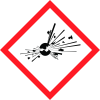
GHS01 GHS07 GHS08
Hazardous Ingredients
potassium perchlorate nickel barium chromate
Hazard statements
H204 Fire or projection hazard. H302 Harmful if swallowed. H317 May cause an allergic skin reaction. H351 Suspected of causing cancer. H373 May cause damage to organs through prolonged or repeated exposure. · WHMIS-symbols: D2A - Very toxic material causing other toxic effects (Contd. of page 2) F - Dangerously reactive material · NFPA ratings (scale 0 - 4) Health = 2 0 Fire = 0 2 4 Reactivity = 4 This substance possesses oxidizing properties. · HMIS-ratings (scale 0 - 4) HEALTH *2 Health = *2 0 Fire = 0 FIRE REACTIVITY 4 Reactivity = 4 Warning: Contains lead salt(s). Long-term health hazard. * - Indicates a long term health hazard from repeated or prolonged exposures. · HMIS Long Term Health Hazard Substances 7778-74-7 potassium perchlorate 7440-02-0 nickel
Precautionary statements
P210 Keep away from heat/sparks/open flames/hot surfaces. - No smoking. P250 Do not subject to grinding/shock/friction. P260 Do not breathe dust/fume/gas/mist/vapours/spray. P281 Use personal protective equipment as required. P373 DO NOT fight fire when fire reaches explosives. P363 Wash contaminated clothing before reuse. P372 Explosion risk in case of fire. P333+P313 If skin irritation or rash occurs: Get medical advice/attention. P302+P352 IF ON SKIN: Wash with plenty of soap and water.
Additional information
Contains nickel. May produce an allergic reaction.
PBT Substances
Not applicable
vPvB Substances
Not applicable · Explosive Product Notice PREVENTION OF ACCIDENTS IN THE USE OF EXPLOSIVES - The prevention of accidents in the use of explosives is a result of careful planning and observance of the best known practices. The explosives user must remember that he is dealing with a powerful force and that various devices and methods have been developed to assist him in directing this force. He should realize that this force, if misdirected, may either kill or injure both him and his fellow workers. WARNING - All explosives are dangerous and must be carefully handled and used following approved safety procedures either by or under the direction of competent, experienced persons in accordance with all applicable federal, state, and local laws, regulations, or ordinances. If you have any questions or doubts as to how to use any explosive product, DO NOT USE IT before consulting with your supervisor, or the manufacturer, if you do not have a supervisor. If your supervisor has any questions or doubts, he should consult the manufacturer before use.
2.1 Classification of the substance or mixture
· Classification according to Regulation (EC) No 1272/2008 GHS01 exploding bomb Expl. 1.4 H204 Fire or projection hazard. GHS08 health hazard Carc. 2 H351 Suspected of causing cancer. STOT RE 2 H373 May cause damage to organs through prolonged or repeated exposure. GHS07 Acute Tox. 4 H302 Harmful if swallowed. Skin Sens. 1 H317 May cause an allergic skin reaction. · Classification according to Directive 67/548/EEC or Directive 1999/45/EC Xn; Harmful R20/22-40-48/20: Harmful by inhalation and if swallowed. Limited evidence of a carcinogenic effect. Harmful: danger of serious damage to health by prolonged exposure through inhalation. Xi; Sensitising R43: May cause sensitisation by skin contact. E; Explosive (Contd. of page 1) R3: Extreme risk of explosion by shock, friction, fire or other sources of ignition. · Information concerning particular hazards for human and environment: The product has to be labelled due to the calculation procedure of the "General Classification guideline for preparations of the EU" in the latest valid version. · Classification system: The classification is according to the latest editions of the EU-lists, and extended by company and literature data. The classification is in accordance with the latest editions of international substances lists, and is supplemented by information from technical literature and by information provided by the company.



