



Note: Ingredients listed on restricted chemical lists
EC/CAS
111-76-2
Name of the chemical
Ethylene glycol monobutyl ether (EGBE)
Concentration
0.01 - 0.02
EC/CAS
64742-82-1
Name of the chemical
Naphtha (petroleum), hydrodesulfurized heavy
Concentration
0.25 - 0.50
General Information
Revision date
2022-03-04
Product name
NP PUR LITE BS 9102 WHITE (BASE)
1.2.1 Relevant identified uses
Top coat for exterior and interior
Manufacturer Name
Code
Emergency telephone
603-5125 0888, 603-5191 4849
Icons in SDS


Company Information
company name
Code
GHS Information
Signal word
Danger
Hazard Codes
Hazard statements (CLP)
H226, H315, H340, H350, H412
Hazard statements
Code
Statements
H226
Flammable liquid and vapour
Section 2
SECTION 2: Hazards identification
GHS Classification ______________________________________________________________________________________________________________________ Class (GHS) Classification Physical Hazard Flammable Liquids Category 3
Health hazards
Carcinogenicity Category 1 B Germ Cell Mutagenicity Category 1 B Skin Corrosion/irritation Category 2
Environmental hazards
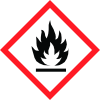
Hazardous To The Aquatic Environment-Chronic Hazard Category 3 Class (GHS) Pictogram
Signal word
Danger Hazard Statement H226: Flammable liquid and vapour H350: May cause cancer (route of exposure inhalation or dermal) H340: May cause genetic defects (route of exposure inhalation or dermal) H315: Causes skin irritation H412: Harmful to aquatic life with long lasting effects
Precautionary statements
P210: Keep away from heat/sparks/open flames/hot surfaces No smoking. P233: Keep container tightly closed. P240: Ground/bond container and receiving equipment. P241: Use explosion-proof electrical/ ventilating/lighting / equipment. P242: Use only non-sparking tools. P243: Take precautionary measures against static discharge. P280: Wear protective gloves/protective clothing/eye protection/face protection. P201: Obtain special instructions before use. P202: Do not handle until all safety precautions have been read and understood. P281: Use personal protective equipment as required. P264: Wash thoroughly after handling. P273: Avoid release to the environment
Response
P303+P361+P353 IF ON SKIN (or hair) Remove/take off immediately all contaminated clothing Rinse skin with water/shower. P370+P378 In case of fire Evacuate area P308+P313 IF exposed or concerned Get medical advice/attention P302+P352 IF ON SKIN Wash with plenty of soap and water P321: Specific treatment (see information on this label). P332+P313 If skin irritation occurs Get medical advice/attention P362: Take off contaminated clothing and wash before reuse.
Storage
P403+P235: Store in a well-ventilated place. Keep cool. P405: Store locked up.
Disposal
P501: Dispose of content/container to appropriate waste site or reclaimer in accordance with local or national regulations. ______________________________________________________________________________________________________________________ 3. COMPOSITION AND INFORMATION OF THE INGREDIENTS OF THE HAZARDOUS CHEMICAL ______________________________________________________________________________________________________________________ This product is a mixture Ingredient CAS NO. % BUTYL CELLOSOLVE 111-76-2 0.01 - 0.02 WHITE SPIRIT, NAPHTHA (PETROLUEM) 64742-82-1 0.25 - 0.50 POLYACRYLATE DNA 0.10 - 0.10 XYLENE 1330-20-7 18.80 - 18.80 ETHYL 3-ETHOXYPROPIONATE ______________________________________________________________________________________________________________________ 763-69-9 2.98 - 4.68 4. ______________________________________________________________________________________________________________________
2.1 Classification of the substance or mixture
Class (GHS) Classification : Physical Hazard Flammable Liquids Category 3 Health Hazard Carcinogenicity Category 1 B Germ Cell Mutagenicity Category 1 B Skin Corrosion/irritation Category 2 Environmental Hazard Hazardous To The Aquatic Environment-Chronic Hazard Category 3 Class (GHS) Pictogram Signal Word Danger Hazard Statement H226: Flammable liquid and vapour. H350: May cause cancer (route of exposure inhalation or dermal) H340: May cause genetic defects (route of exposure inhalation or dermal). H315: Causes skin irritation. H412: Harmful to aquatic life with long lasting effects.



